Bicycle Empowerment at Sibley Bike Depot

By Cecelia Watkins

As you may have experienced, the traditional bike shop model goes like this: you, the melancholy owner of a sticky geared, no shifting, wheel-missing, untrue, spoke popped, flat tire, screechy brake broken mess of metal (or who knows, maybe you just want a tune up), enter the shop and drop off your bicycle with the shop mechanics. You wait, maybe leave to take a stroll or run some errands. You come back and voila! Magically, your bike is fixed. You pay up for the services and walk out of the store. Your bike is fixed, yes, but beyond that all you’ve gained is a lighter wallet.

This is how it works at Sibley Bike Depot: You enter the building and roll your bike down a sweet-smelling hallway between a donut shop and a fabric store. Ten feet in you’ve passed these window front stores, and suddenly a colorful world of bikes opens before you. To your right is the sales floor, where Sibley sells used bikes and parts at affordable prices. To your left is the shop floor. You wheel your bike in, sign up on the list, and sit down for a short wait—Sibley is often throbbing with community members eager to work on their bikes—but luckily there are nice couches and stools made of tree stumps for you to wait on. While you wait you chat with the other people there, maybe about bikes, maybe about donuts, maybe about something totally unrelated. Eventually your name is called, and you bring your bike over to a stand. Here an experienced volunteer or staff person helps you figure out what’s wrong with your bike and walks you through the steps in fixing it. Unless you need a replacement part, this service is entirely free (and even the replacement parts are wonderfully cheap). When you leave the shop you’ve gained so much more than a working bike: you’ve gained new knowledge of bike repairs and along with it a sense of personal empowerment. And your wallet feels about the same as when you entered.
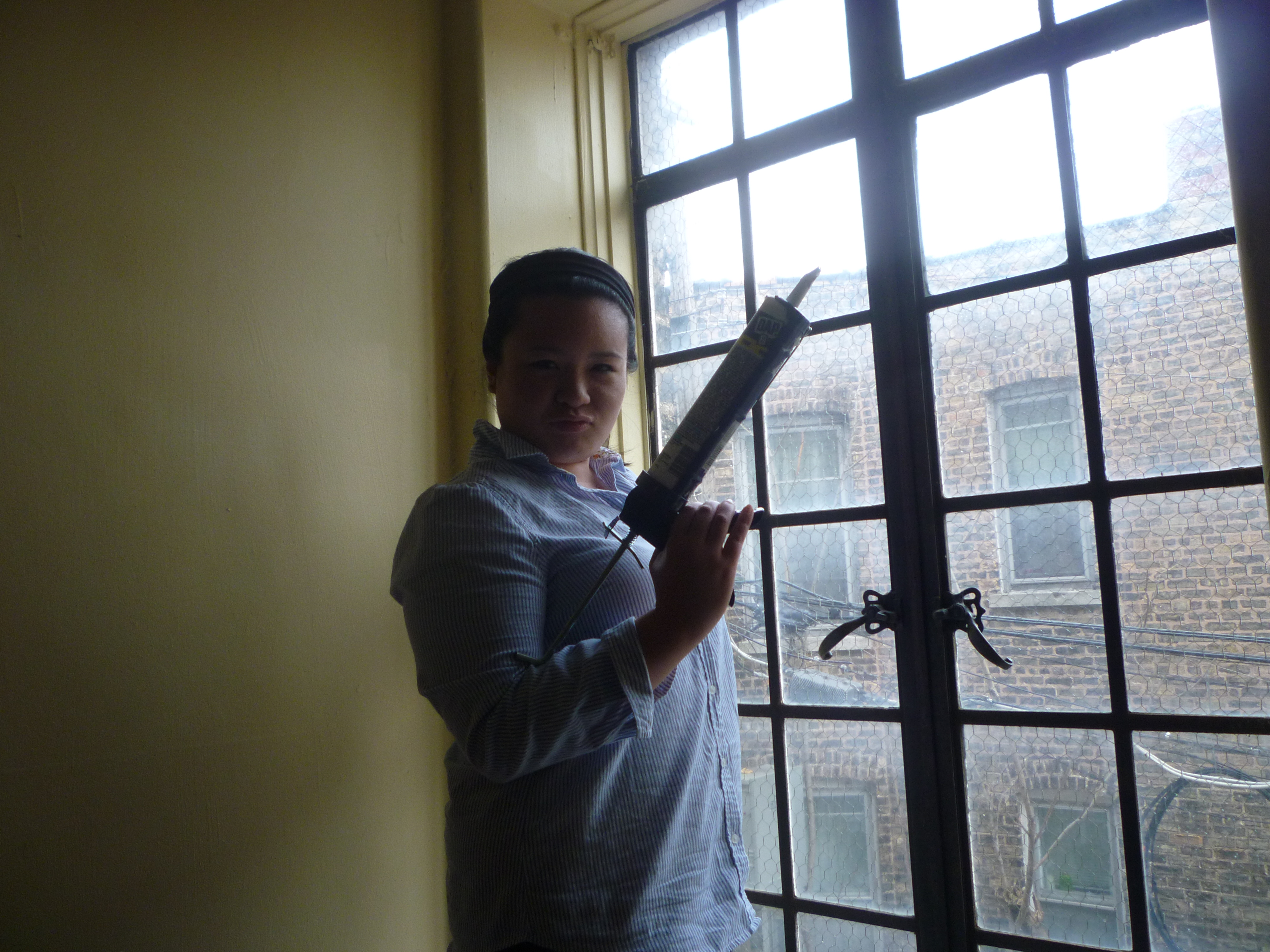
(more after the break…read on!)

Continue reading

Worried about Defecits and Unemployment?: Community Powered Energy

As the federal government eyes a shutdown and Minnesota cautiously creeps towards the end of its state-level closure, the underlying questions remain unanswered:

  • How do we balance budgets and live within our means by raising income and cutting waste without sacrificing the essentials, whether at the government level or for people already living on the edge?
  • How do we create lasting jobs and economic opportunity when the costs of living keep rising and people have less money to spend?
  • How do we bridge traditional divides (partisan, ideological, socioeconomic, and cultural) to work together creatively for public health, geopolitical stability, climate and energy solutions, community resiliency, and social justice?

For the neighborhoods around Midtown in South Minneapolis, where the recession has left unemployment edging towards 40%, foreclosure running rampant, violent crime rising, and neighborhoods and community organizations struggling with funding cuts, these questions are at the fore. Things have always been challenging here; absentee landlords control much of the housing, and a large portion of people’s income leaves the community to pay for goods and services elsewhere. Many local residents (the area is primarily low-income, people of color, and has many recent immigrants and non-English speakers) feel they have little agency in corporate and governmental decisions affecting the neighborhood.

In times of crisis, communities can turn against each other in a desperate attempt to protect what remains, or towards each other to work together to create new opportunities and long term solutions. In the Twin Cities Summer of Solutions, we’re helping the community use the opportunities that clean energy and energy efficiency provides to make the latter choice. Scaled up, we hope this work may serve as an example for a world facing challenging times.

The seven neighborhoods (over 13,000 households and over 500 businesses) we’re focusing on together spend over $63 million each year paying for electricity, heating, and gasoline – that number will only go up as prices rise. That money is creating few local jobs – the majority of it pays for coal mining, oil drilling, natural gas extraction, power plants, natural gas pipelines, and more. I don’t need to recite the list of problems these things create for both the local community already plagued with asthma and other respiratory illnesses and for our broader nation and planet. 30-80% of this $63 million/year  can be avoided through behavioral changes and available technologies that pay for themselves, reducing the negative impacts created. Collectively implementing these practices cuts the cost of implementing them (opening access to people and making it easier to finance) and dramatically increases demand for local green business and green jobs, putting people back to work (or into it for the first time). Eliminating those costs helps individuals and businesses balance their own budgets and create new jobs and income. This in turn reduces reliance on public subsidies and increases public income, making economic recovery and fiscal responsibility connected instead of opposed. In doing so, we help create a win-win-win scenario for residents and businesses and across cultural and socioeconomic groups; building community and helping people unite across difference for a common goal.

We believe energy efficiency and clean energy can be a driver for stronger communities and a renewed economy. And more than our belief; we’re making it happen.

So here’s the low down on what’s happening around energy in the Twin Cities …

Continue reading

From the Ground Up: Solidarity Economy in the Pioneer Valley

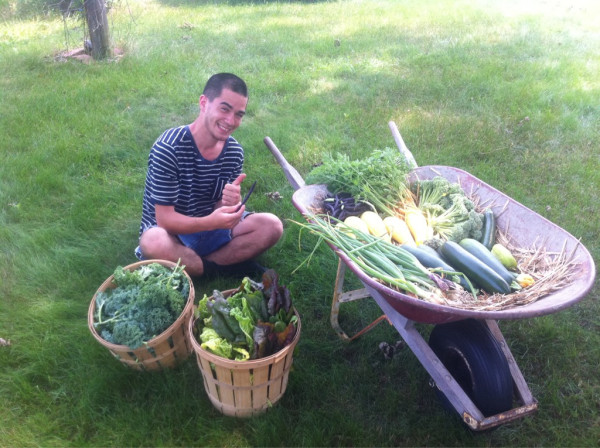
We’re working on a local farm this summer in exchange for space to grow our own produce, which these days we harvest in over-abundance.  The zucchini, kale, and chard all grow faster than we can eat, so we traded some friends a basket of greens for potato spuds just ready to plant.  At our Grow Your Own Food Class the next day we planted the potatoes with local kids, who will come back to tend them and harvest later in the year. Our small garden at the Brick House Community Resource Center will yield food to share around the neighborhood. This is just one instance of the generosity and interdependence we have experienced this summer.

Duncan with some of our latest produce.

This Saturday, I’ll be heading to Worcester, Mass. for the Green Solidarity conference.  As programs across the country engage in a Day of Action, I’ll be sitting in with innovators, activists and organizers from Massachusetts to learn, and contemplate further how people can transform our economy to work socially and ecologically.  How can the benefits of cooperation and solidarity I have enjoyed this summer extend to the larger community?

Coming from an environmental organizing background, and as a student of political economy, I believe that structural re-invention of our economic system is necessary to halt environmental destruction and environmental racism.  It won’t be possible to buy our way to sustainability. Change is needed beyond a “green” makeover of our current economic system.  To sustain ourselves and the earth, we need an economy that functions to meet peoples’ basic needs and aspirations.  When the demands of capital and profit drive an economy these needs aren’t met.  I refuse to believe we have no other options.

I see the change we need in the solidarity economy movement.  It originated with people’s movements in Latin and South America to self-organize economic activity to meet basic needs, when state government and structural adjustment programs failed them.  My definition of a solidarity economy is an economy people own and operate with the understanding that their self-interest is bound up in the interests of their neighbors- both down the street and around the world, both human and non-human.  A solidarity economy is made up of many parts- cooperatives, non-profits, mutual aid societies, land trusts, extended families.  What binds it together is the understanding that working in solidarity will yield far greater benefits than pursuing self-interest and profit.

The work we are doing as Pioneer Valley Summer of Solutions is helping build the solidarity economy in our community.  We are hosting free classes through the Summer Workshop Series, on practical and sustainable topics; we are learning to fix bikes and make them available as affordable local transportation; were using the Time Bank to share goods and services; we are supporting local farmers by helping grow their produce, and consuming it.  Working together, we as a community can meet our needs, and make sure our neighbors are able to do the same.  As we work to meet the needs of our local community, we in turn understand the importance of environmental stewardship.

I can’t wait, on this year’s Day of Action, to explore how we can bridge the work of the solidarity and green economy movements.  Sounds like a task worthy of Summer of Solutions Pioneer Valley!

Urban Ponics

By Bryne Hadnot

Cross-posted from letsgochicago.wordpress.com

When we’re not busy building compost bins, raising chicken coop frames, and removing vicious 6 foot weeds, we here at LETS GO Chicago like to kick back… by waking up at 6:45 am and taking an hour long train ride to Chinatown.

While we didn’t get any Chinese take-out, we got something that was even better than hand-made ramen: a FREE tour of one of Chicago’s urban farming centers, UrbanPonics, LLC.

Urban Ponics Trip

Lee talking with Erin and Bryne

UrbanPonics is the brainchild of Bral Spight and Lee Reid, two men from extraordinarily different backgrounds thrown together during a leadership conference. The result of a bit of collaboration was a hydroponics concept lab in the Riverfront Work Lofts, a thriving part of Chicago’s Creative Industry district right next to Chinatown. Now, Urbanponics employs several economically disadvantaged men and women and has successfully produced a high yield of lettuce, tomatoes, and herbs.

Urban Ponics Trip

Greens and herbs a'growing

UrbanPonics uses a technique called hydroponics to grow plants without soil. Instead, minerals are dissolved into purified water and streamed through the plant’s roots, providing everything a plant needs to grow without any soil borne diseases or pests; lights of varying wattage provide year-round ‘sunlight’ for the plants, while inorganic “growing mediums” like rock wool offer structure for the stems. These four components- minerals, water, light, and structure- are all the plants need to grow, and thrive, indoors.

Urban Ponics Trip

The LET'S GO team exploring the facilities.

But UrbanPonics is more than just a lab for indoor farming; it’s a lab for science skills and business knowledge, and for engineering techniques and artistic finesse. In short, it is as much a center for innovation as it is a center of contradictions; the work conducted at UrbanPonics is nothing short of a miracle, but it is so intuitive that we had to wonder: why isn’t every city doing this?

Urban Ponics Trip

Look at that basil!

For as much or as little as you care about agribusiness or monocrops, hydroponics is still pretty cool. Imagine getting fresh lettuce NOT from the other side of the country, or the world, but from a farm in your city. A farm you can visit easily- via public transportation perhaps?- that also has a wide variety of greens, tomatoes, cucumbers, and other crops.

Fortunately, our days of dreaming of a full scale urban farm may be at an end. Mr. Spight and Mr. Reid plan to expand their concept lab into a 4 acre facility in Chicago’s South Side, complete with 50 bee hives, rain water collection, and a co-generative energy system.

UrbanPonics made for an exciting, inspiring, super-fun, and informative field trip!! To visit yourself, go to 500 W. Cermak Road, Chicago, Il, a few blocks from the Red Line.

-Bryne

My Education

Today, I helped facilitate a session for the Twin Cities program to review our personal goals from training week. One of the questions we asked participants to reflect upon was “How would it feel to fall short of meeting your goals this summer?” I remember that when I was asked this question on my first day of Summer of Solutions as participant last summer, my response was something like “I would feel hopeless…like I couldn’t breathe.” This year, the first thing that came to my head was “If I fail to meet my goals this summer, I will sure learn a lot about how I can improve.”

This transition from responding to challenges with despair to responding to challenges with curiosity, perseverance, and optimism is one of the key things I have gained from working with Summer of Solutions. I think this switch comes from the value I now place on learning as an end in itself. I find that the way I approach my work as a solutionary is generally more effective when I stop focusing on what I want the results of my work to be, and rather be attentive to how whatever I am doing is preparing me to take on even greater things. Through the long hours I spent this year doing sometimes tedious work of writing grants, making color-coded spreadsheets, and wading through difficult conversations, my mantra was consistently “This is how I learn.”

I’ve realized this school year that Summer of Solutions is significantly more educational for me than any schooling that money can buy. I often feel that my university does not take education seriously enough to prepare me to be the person I need to be to make the changes I want to make. On the other hand, Summer of Solutions is a space that I feel encourages each of us to identify what it is we need to learn and take responsibility for making it happen.

One of my favorite things about our program this year is that it is an incredible learning community. Throughout each week, we have sessions scheduled for learning about the green economy, urban farming, and anti-oppression for collective liberation. For each of these sessions, the group identifies what we want to learn about the topic and then searches through the collective knowledge of the SoS participants to find someone who can teach us what we want to know. If no one in the group knows about it, the chances are pretty high that one of us knows someone else who does. Or, someone will step up to first research the topic and then become a teacher for the rest of the group. Summer of Solutions does not make the trainers and facilitators out to be the experts, but rather people who are stepping up to learning through the process of teaching and leading.  

I think one of the most distinctive features of the SoS Twin Cities program is the culture of “I act not because I know what I am doing, but because only through acting do I have any hope of learning what to do and only through acting do I have any hope at all.” The amazing thing about this focus on learning is that does not conflict with achieving tangible results. Rather, it means that I care about this work too much to get in my own way by imagining that I know it all already.

Our Wonderful Volunteers!

We have been very lucky this summer to have some wonderful help from community members! The camp would not be the same without them and we appreciate them so much! To show our appreciation we are going to give some of them a big shout out in this post!

First, we have Alice Ammerman who joined us on the last day of Strong Home Camp to help us learn and cook local foods.  Alice is a nutritionist and professor at the School of Public Health at UNC and well known advocate for local foods and the importance of a nutrient rich diet.  We explored the colors of the rainbow in the fascinating food “show-n-tell” that Alice brought, including purple sweet potatoes, stripped beets, and purple cabbage.  The girls learned how to make their very own pesto with fresh basil, olive oil, cheese, and the money saving ingredients – walnuts! Our pesto was eaten with pasta, diced baked potatoes, and a cabbage and local sausage dish.  The meal was finished with some local cantaloupe for dessert.  We were very grateful to have Alice join us and we hope to keep her as a close partner in the future!

We have also had some other wonderful and outstanding volunteers, many who have been with us for more than one day at the camp! Hopefully no one will be left of the list, but we would like to thank Joel, John, Emily, Amanda, Katie, Joe, Rebekah, Jane, Kaleb (and anyone else who has helped the camp run smoothly!).  These volunteers have helped us do activities with the girls including screen printing and upcycling (a wonderful activity where old possessions are dazzled up to make them look like cool, new, possessions that can be reused). We are truly grateful to all these people! THANK YOU! We hope to see many more new volunteer faces next week and at the Strong Neighbor Camp in August!

Expanding My View of Agriculture

One of my job titles for the summer is “mushroom specialist”. This means that my car is full of big orange 5 gallon buckets, my freezer is full of coffee grounds, and sitting on my kitchen table is a 5lb block of sawdust inoculated with shiitake mushroom spores. Although my job title is mushroom specialist, I must admit that I can’t remember the last time I ate a mushroom and before this summer I didn’t know much about them. When I signed up for Summer of Solutions- Twin Cities I knew I wanted to do something with urban agriculture. I figured I’d be weeding a couple of gardens, maybe harvesting a crop of carrots or beats, and if I got lucky I might even get to take some of the produce home. Since I’ve started working with Summer of Solutions my idea of urban agriculture has expended. I don’t just think of big community gardens and rows of carrots and beats. I think of tilapia, vermacomposting, and of course mushrooms.

Did you know that mushrooms can break down radioactive waste, and then be converted into bio-fuels? Or that mushroom mycelium can be used as a filter to remove biological contaminants from surface water that pass directly into sensitive watersheds? How about that the waste substrate from many mushrooms can be used as feed for animals or as garden compost? Mushrooms are amazing organisms and when I learned some of the cool things that they could do I knew I had to know more. So I volunteered to become a mushroom specialist for Yea Corps.

Yea Corps is a partner of SOS-Twin Cities that works with schools in Minneapolis to empower youth with job skills and sustainable education. A major component of this mission has been the development of an aquaponics system that gets students to think about closed loop systems and new ways to view waste. This summer nine SOS interns will be working to maintain what Yea Corps has done in the past, and expand on their vision for the future. For me that means cultivating mushrooms. For other interns it means building a new aquaponics system, growing algae to feed the fish, or producing videos to share the mission of Yea Corps. For all of us it means finding what interests us and seeing how we can apply that to creating a green economy. It’s exciting to think about where all of this will take us and how we as a group can expand the way people think about agriculture.

Building up community immunity

During High School I volunteered at a local food shelf and
was discouraged to see the same people for almost the entire year. It made me realize that much of my efforts were merely a small, cheerfully-printed band-aid on a pervasive wound that wasn’t just skin deep.  If anything it masked the true nature of poverty, which requires larger shifts in political and social norms.

Though band-aids can suffice in some instances, other problems need an alternative, more direct type of treatment.  What I’ve been learning this summer about community organizing for environmental justice can best be explained by Paul Hawken’s analogy about antibodies in his book Blessed Unrest.” Hawken relates environmental and social justice groups, like Summer of Solutions, to antibodies which are essential for our immune system.

They arise as a response to foreign invaders and systematically undermine threats to our bodies, like viruses and certain types of bacteria. Antibodies will collaborate with B cells to create a “blueprint” after they combat toxins, so that more antibodies can be created quickly if the same type of toxin returns. Also important to note is that “the immune system depends on diversity to maintain resiliency, with which it can maintain homeostasis, respond to surprises, learn from pathogens, and adapt to sudden changes.”

Summer of Solution’s is an antibody. It’s anti-oppression sessions and focus on social entreprenuership has challenged me to identify and address the root causes of social and environmental injustice in my community while being watchful of a “savior mentality.”

One of my projects this summer has been to work with Cooperative Energy Futures. CEF seeks to make insulation and weatherization more affordable and to educate people about other ways to improve energy efficiency. Their focus is to empower people to improve their home energy efficiency and generate savings.

I’m still figuring out what effective community organizing looks like, but like the immune system, it is diverse. It needs to draw on the resources available and be able to adapt quickly – and ultimately find a way to create homeostasis.

-Kirsten Theden

Mid-Summer Reflections on Social Entrepreneurship in Raleigh

It’s so hard to believe that it is already July!  This time last year, I was feeling disappointed wih the present and anxious about the future.  Like a lot of young people, I had graduated from college and discovered that the recession I had been reading about in the newspapers wasn’t just notional.  Jobs were scarce and the ones that I could find barely paid the bills and in no way satisfied my desire to help build a sustainable, restorative economy, which I believe is our generation’s calling.  I still volunteered a good deal of my time as a climate justice advocate, but I was stir-crazy for a change in strategy.  I was expending a lot of effort trying to convince people with “more power” than me to change their historically selfish and stunningly short-sighted policies and attitudes so that I could have a secure future along with generations to come. This approach didn’t seem to be bearing change at the speed and the scale that we needed it to.

One afternoon, on an especially gloomy day, I decided to outline the most meaningful, world-transforming vocation I could imagine for myself, the sweet spot between ‘What the world needs,’ ‘What I am good at,’ ‘What I enjoy,’ and ‘What provides for my life.’  I described a vocation in which I would work with girls to advance gender justice, economic justice, and environmental justice.  The injustices perpetrated against girls and women, money-poor people, and the earth itself have proven themselves exceptionally persistent and are fundamentally connected; they cannot be addressed in isolation of eachother.  However, their connection also represents enormous potential – by advancing genuine economic justice, we advance genuine gender justice and environmental justice (and vice versa all the way around).

My vocation would be a combination of some of the ventures I most admire – the Harlem Children’s Zone, a poverty-eradication with a long-term (birth through college), community-powered approach;  the Green Belt Movement, a venture started by Wangari Maathai that addresses deforestation in Kenya by empowering women economically; and the Grameen Bank, which has transformed rural Bangladesh through its world-renowned microlending program.  ‘Full Circles Foundation’ would matriculate girls as kindergartners – specifically girls who have high potential but face big obstacles.  These girls would be paced thorough a long-term series of best practice programs including:

– summer camps and afterschool programming focused on the connections between personal, community, and environmental health;
– a community organizing training program through which they identify an improvement they would like to see in their community and build a campaign around it;
– apprenticeships with local artisans and small businesses;
– and a microventure program that would give the girls social entrepreneurial experience as well as generate resources for summer camps and after-school programming.

This was all just an outline in my journal until I started hearing murmurings about the idea of social entrepreneurship – a strategy of sustainable change that works to leverage the wealth that surrounds everyday people to build the new, restorative economy.  I was so different from the charity and advocacy models I had been working through!  I first heard about this idea from Grand Aspirations (www.grandaspirations.org), an organization working to build social entrepreneurial capacity among young people and to connect them, their experiences, and their models.  I submitted my still-vague outline to Grand Aspirations in hopes Raleigh would be selected as one of their national “Summer of Solutions” sites – cities around the country where young people gather from June to August to get elbow-deep in the birthing of the new, restorative economy.

Looking back, it was a somewhat spur-of-the-moment decision to submit that application – Full Circles Foundation was a crazy dream and it was difficult for me to suspend my skepticism at my own idea enough to even imagine that such a thing would be possible.

But thankfully, I was able to do so long enough to finish and send in our application, and on Friday, July 1, the Full Circles Foundation’s 10-person pilot team wrapped up Strong Home Camp, the first installment of the Strong Camps, a series of free, holistic summer day camps focused on illuminating the connections between personal, community, and environmental health!  We have been working with approximately 20 girls whose ages range from 4 to 15.  Strong Home Camp was focused on fostering environmental literacy through place-based education.  It was an adventure!  Most of our girls had never been on a hike, been on or in a natural body of water, or asked a tree a question – things they were asked to do for the first time during Strong Home Camp.  Among many other great workshops, campers rolled up their sleeves in food labs with whole, local food, learned about the mathematical mysteries found in nature, and made all-natural body lotion. This camp will be followed by Strong Self Camp (creative communication and personal health & wellness) and Strong Neighbor Camp (community health & engagement).

One of the most exciting features of Strong Home Camp was getting to make Flower Bombs.  Flower Bombs are concentrated balls of compost, clay, water, and wildflower seeds, that when dehydrated become virtual “bombs” of perennial flower power!  You can throw them in your backyard, in vacant lots, or on the shoulder of roads, as a way to enliven our communities with color and aroma.  Flower Bombs (and “bombs” of edible plants) became popular through the ‘Geurilla Gardening’ movement – a effort spanning the globe to reclaim public spaces and transform them into beautiful (and tasty!) spots for folks to rediscover community.  FCF campers made over 450 flower bombs – a delightfully messy endeavor!  This project was led by Jenn Hales, an amazing artist and entrepreneur in Raleigh who runs the Patina Collaborative (www.patinacollaborative.com).

After making the Flower Bombs, the campers packaged them in cloth sachets which they adorned with hand-made construction paper tags.  On Friday, our campers and instructors packed themselves and their wares onto the Raleigh city bus and headed downtown for First Friday, a monthly event at which the Raleigh community comes out to celebrate our city center, local businesses, and local music.  This was the first opportunity for our campers to raise resources to support their own summer camp.

It was amazing to watch.  The girls were absolutely fearless.  Even our four and five year-olds were explaining the compelling logic of Flower Bombs to potential buyers in between hopscotch rounds!  The environment was so much fun – there were hula-hoopers, fire-dancers, drummers, and community members of all stripes.  It was amazing to watch our campers absorb the experience.  They had had the opportunity to create something that generated social, environmental, and financial rewards – an opportunity that I didn’t get until I was 24! Moreover, through that experience, they became allies. These aren’t girls whom we are “serving”; these are girls (and families) with whom we are partnering to create an unforgettable summer experience that they want!  At some point during the evening, the thought occuring to me, “This is what health looks like. This is the type of world I am wanting to build.”

Implicit in the exercise of social entrepreneurship is the question, “What does the world I’m trying to create look like?”  The beauty and the weight of social entrepreneurship is that WE have to answer that question.  We can’t just identify a problem and shout at someone “smarter” or “richer” or “more powerful” than us to find a solution.  With social entrepreneurship, individuals and communities can’t ‘outsource’ the question of what our world should look like – we have to decide, we have to explore our potential to realize our decision, and we have to take responsibility for whatever the outcome of our decision may be.  But, this is what it means to self-govern; this is what it means to be human.

by Marcie Hawkins Smith, mhsmith@fullcirclesfoundation.org