My 40 New Best Friends

Five days ago I remember sitting nervously around a bowl of cherries at a fellow program leader’s kitchen table. Our conversation kept switching with the tense energy of those with much to say but too many thoughts to clearly express any of them. Have we figured out housing for everyone? How much money do we still need to fundraise? What time are we going to start tomorrow? Have you emailed the group the address yet?

Now I look around at a sea of young faces, all different races, different backgrounds and with different reasons why we decided to spend our summer working to create ingenuitive grassroots solutions to Oakland’s most challenging environmental and social problems. Despite our differences, I can confindently say that there is not a single person in the room who I wouldn’t feel comfortable talking to and confiding in. Moreover, there are many people in the room whom I’ve told more personal things about myself than I have to friends I’ve known for years.

This story of immediate friendship might be written off as “cute” just as Summer of Solutions is often written off as just another “summer camp.” But in many ways, I believe that the community we are creating is a model for how the rest of the world should function. Imagine if diverse groups of people, from all different income levels and racial backgrounds, came together to really think about the problems that their community was facing and then worked together to solve those problems? Sound idealistic? Maybe, but if you truly believe as I do that at some point all of these smiling faces sitting around me are going to take the knowledge that they’ve learned this summer to become even better leaders in their communities and country then perhaps a solutionary world isn’t that far off in the future.

A Sneak Peek at Pioneer Valley Summer of Solutions

About a dozen of us filled the living room, sitting on all surfaces available and balancing plates on knees or floor boards. The room was full of relative strangers, from high school up to mid-20s, from nearby towns and every corner of New England, sharing company and a meal of lasagna. Energy was high as we discussed the projects that lie ahead this summer, and the ideas we have for our two months together.

This is Summer of Solutions Pioneer Valley, a program in sustainable community development and youth leadership, based in the towns of Turners Falls and Greenfield in northern Massachusetts.

We are a group of about fifteen full and part-time members who are all dedicated to learning how to create solutions in our communities. This summer, that means working on a local farm, learning home weatherization techniques, improving our bike maintenance skills, facilitating and organizing free local classes on topics from food preservation to stone-masonry and much more. Beyond these tangible skills, we’re learning the pieces that make it all fit together.

How do you start a community project? How can you make environmental solutions accessible? What is solidarity? What does it mean to be a sustainable business? How do you sustain yourself while you’re at it?

Working with an exciting variety of community partners, our participants will have the chance to:
1. Become competent in bike commuting and bike maintenance. In our rural corner of New England, cars are a near necessity. We will explore how transportation in our area can become more sustainable, starting with ourselves.
2. Grow their own food and share it with the local community. Through a partnership with Harvest Moon Farm, we will be doing a “workshare” to exchange our labor for produce. We will also be creating a garden at a local community resource center, the Brick House, to provide food and education in the center of Turners Falls.
3. Weatherize a local home and public building under the guidance of a local cooperative, Co-op Power. We will also develop materials to help renters secure energy audits and improvements on their homes.
4. Take and facilitate courses at the Brick House Summer Workshop Series, which offers free classes to the community on topics from gardening to wood working to meditation.

Summer of Solutions goes beyond the tangible work we will be doing, to instill a mindset for the rest of our lives. It’s the mindset that we have everything we are looking for to solve environmental, economic and social challenges. It’s the mindset that people are the key ingredient to make the changes communities are desperately seeking. It’s the mindset that the future can actually look brighter than our present today, and rolling up our sleeves to make it so.

How to Overcome Fear: Canvassing for Energy Efficiency in Highland Park

Written by GELT Participant – Dan Tompkins

It was an afternoon in summer. Me, this guy James, and a girl named Marion walked down the middle of the road. We were in a rough area. It’s called Highland Park.

The three of us were working with GELT, a community organization that wanted to get some energy efficiency to houses that needed it most. It was a local nonprofit that believed in a green economy. The headquarters was just down the street.

James was tough. He seemed to approach the situation like he had seen the worst of human nature and come back from it unscathed. He moved like a man who had transcended arrogance and conceit and replaced those lesser emotions with pure independence. He talked in clipped, information filled, sentences. One of the first things he said was something like, “If I could get away with it, I would threaten the life of every single person who ever knocked on my door. I would make it so everyone interrupting me during my favorite show would fear death.” He then alluded to intimate knowledge of the abandoned buildings around us.

I laughed and repeated the last thing he said. I’d only met him that morning and was still trying to get a read of his sense of humor. When in doubt, I look for the humor. Maybe he sensed my tension, because from there on out he kept insisting that “people are just people” and regardless of where they have a house, they are just as angry, just as sad, and just as friendly as the rest of us. He was talking about the people ahead of us. They gathered in driveways around barbeques and in loose circles close to their porches. A lot of them wore do-rags that I had come to associate with rap culture, ghetto culture, and crime. It seemed like there were kids everywhere.

As I looked at the men, women, and children, I thought of Detroit and its reputation for violence. People at GELT had heard gunshots almost every night at three and four in the morning. They claim to only really get worried when they hear shots from another gun following the first.

Our mission was to talk with these people about cutting energy bills. We offered a free service that involved going into their house to replace some light bulbs, insulate some pipes, and hopefully cut their bills by three or four hundred dollars a year. It was all part of a greater mission to make a green, truly sustainable, economy.

I walked over a stream of water on the sidewalk. It was bubbling up through a crack in the concrete. There were subtle marks of erosion, which was a sign that a pipe had broken underground and the local utility company had decided to ignore the problem, instead of rip through the layers of excavation work. Apparently the utility company had a reputation for willfully ignoring such problems in Highland Park. The city owed the company around six million dollars and it costs a lot to replace water lines. Suffices to say, the locals didn’t think much of anyone associated with utilities.

Approaching the first door, I tried hard to remember some of the things we had gone over in class back at GELT. I was supposed to get the person talking, make good eye contact, keep it simple, and let them know I came from just down the street.

The woman who came to the door had a stiff lower lip. Her arms were crossed and when she opened her mouth to breath, I felt terrified of her two missing teeth. Narrow eyes suggested suspicion. They told me that no con of mine could outsmart their intuition.

I felt like I owed her something. That I should apologize for some slight I had unknowingly incurred. I wanted to give her what she wanted. I wanted to slip away.

But then it struck me. That was the big moment.

I reminded myself that I was there to do one of the only truly noble things I’ve ever done. So many times in my life some sort of guilt clings to my actions. Do write the paper or play videogames? Do I drink one more, or try to save some money? For me, every occupation comes with a web of doublethink and legitimization of ulterior motives. I tell customers that the whitefish is “amazing” even though I know everyone should stick with burger and fries. I rationalize. I say, “it’s a job.” Even when reaching for ice cream I’m filled with small, nagging questions. I ignore the guilt almost every time because lets be honest; life without ice cream isn’t life at all, but nothing seems to come without a small price of inner guilt. This situation was different though. I didn’t need any money, any work, or even any appreciation. From this woman, I desired only a small chance to help make her life a little better.

In my moment of hesitation, the woman surveyed my companions. Marion, beautiful, sweet, Marion, came to my rescue. She hit all the key points, and in a moment James and I jumped in to back her up.

The woman’s expression softened. Her daughter came out from the shadows of the house. She was ten years old, her name was Stephanie, and she was almost in fifth grade. Stephanie had just trained her dog to lay down. She, “would really like to learn my name.”

The woman called her husband—a man who seemed all smiles and good intentions—and she sat on the porch. She told us that all her neighbors could use the service and that it sounded like a real good thing. She cracked jokes. She smiled.

She made me remember that when you do a truly good deed, people will appreciate you. Causes and purpose aside, if nothing else, it’s hard to hold contempt for a person with dedication.

It’s a weird feeling to do something I so completely believe in. No matter what angle I approach it, I know that there is something inherently good, or noble, or pure about sustainability. Not everyone may agree on global warming, but I doubt a person on the planet really believes that sustainability creates destruction. Also, because I lived in Detroit, I’m familiar—if removed—with many of the struggles some of these people face. Almost all of them need and deserve a cut in their utility bills.

By the end, we invited the family to a GELT planned event that involved building a hoop house followed by a barbeque. The woman pointed us away from the houses that were vacant and the ones where no one was home. She waved goodbye.

To get to the next house we had to use the sidewalks. Some of the empty lots remind me of the nature preserves back in my hometown. The unmanaged grass gets so tall that I imagined moving slowly into the fold and letting the barrier embrace me. The three of us clung to the winding path of broken concrete.

As we worked down the rest of the street, a lot of people either ignored us, or shouted from behind closed curtains. In a perfect world, all of them would take the service, and embrace its motivations, however, I feel it’s pointless to dwell on missed opportunities. It takes no amount of doublethink to do such a purely honest deed and for that fact alone I’m happy to do it, over and over. Door to door, no fraud looms in the back of my mind. Economics, intelligence, and politics aside, people pick up on that.

I started to realize that James was right; they are just people. Some put up an intimidating front, but maybe I would too if I ever worried about someone like Stephanie. I’m not about to stop locking my car or wander the streets after midnight, but people are just people and there’s no reason to be afraid of that.

Creating Our Own Jobs

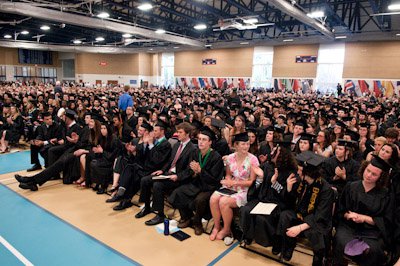
Next weekend I’m heading down south to celebrate my sister’s graduation from college. Although the festivities are sure to be merry, they are slightly tempered by the fact that she will be joining my class, the “class of the great recession,”  and enter the labor force at a time when more than half of recent graduates have not be able to get a full-time, salaried job with benefits; nearly half of us find ourselves in jobs that do not even require a college diploma, and nearly one in 10 of us are unemployed. The worst recession in decades and the slow economic recovery has clearly punished those full of big ideas but short on work experience or skills.

And yet, as Rahm Emanuel famously said at the start of the Obama administration amidst the financial collapse,  “You never want a serious crisis to go to waste.”

The dearth of employment in the formal work force has provided an opportunity for recent graduates to travel, volunteer or even take the risk of trying to create their own jobs. A recent article in the Wall Street Journal showed that a growing number of us are–at least temporarily–opting out of the labor force entirely, as measured by the drop in labor force participation rate among college graduates under 25. This summer, I’m joining that demographic as a volunteer program leader for the Summer of Solutions in Oakland, subsisting off of a meager stipend and the generosity of my parents.

While sometimes I wish I had the stability and salary of a formal job like some of my friends, most days I am incredibly exited not to have to sit in an office and instead have the opportunity to work at the grassroots level on the issues I truly care about  in my own backyard of Oakland. Summer of Solutions is a is a 2-month program that trains participants how to develop the green economy by creating hands-on, community-based solutions to environmental and social injustices. Throughout the summer, participants learn not just valuable leadership skills that will be useful no matter what they choose to do after the summer ends, but also how to make grassroots community change that integrates climate and energy solutions, economic security, and social justice.

For too long, I have been part of the youth climate movement that has been busy telling politicians what we don’t want–coal plants, factory farms, gas subsidies etc.–without showing them examples of practical solutions. Now, I am part of a new movement of over 250 young people around the country who are working in their local communities to create change under the umbrella of 15  Summer of Solutions programs. Although the program doesn’t officially start for another couple of weeks, I’ve already been impressed by the qualifications, enthusiasm and dedication of the other leaders and participants. While we don’t yet have specifics on all of the projects we’ll be working on since many of these depend on the group desires and community needs, we’ve already formed valuable partnerships with local organizations within our focus areas of food justice, clean energy, transformational media and thriving communities.

Of course, in order to successfully implement all of these solutions, we’re fundraising like crazy. We’re hoping to raise $8,000 in the next two weeks in order to provide stipends to low-income youth participants, subsidize food and housing for all program participants and purchase materials for our projects. If you or anyone you know wants to make a tax-deductible donation to support our program, please visit http://www.indiegogo.com/SoS-Oakland. Every penny really does count, particularly since there isn’t any administrative cost (remember, we’re all volunteers)!

All-the-time of Solutions: Building my own green job post-graduation

I'm to the right of the girl in the pink dress.

Macalester College graduation 2011. Photo by Sher Stoneman.

As of Saturday, I am officially a college graduate. This is an extremely exciting time for me and one in which I am asked at least once a day, “What’s next?” I give people my elevator pitch on Summer of Solutions — “I’m a program leader for the Summer of Solutions, a summer program for youth ages 14-30 who want to build the green economy right here in the Twin Cities” — which prompts a, “Cool! What about after that?”  I reply, “I’m going to make Summer of Solutions be my job.” Depending on the person, the response is a more or less enthusiastic, “Cool!” As I have repeated this interaction, I have become more and more confident that I mean what I’m saying. Continue reading

How to Build a Clean Economy in a Weekend

5th May, 2011 – Posted by Brandon Knight – No Comments

Al Gore at Powershift 2011 Photo Credit: Energy Action Coalition

The third national Powershift conference was held last month in Washington D.C. It was also my third national Powershift conference. The conference overall was a big success, reports were that close to 10,000 people turned out to the Convention Center in Washington D.C.

The 2011 Powershift was framed by an Obama Administration wavering on its support of clean energy, the anniversary of the BP oil spill and the nuclear disaster in Japan.

Powershift conferences are the single most effective event in mobilizing young people around energy and climate issues in the past 5 years. National and Regional Powershift conferences have effectively mobilized 40,000 youth across the country during this time, with those 40,000 youth leaving the conferences and joining the efforts of the Energy Action Coalition partner organizations, including Global Exchange.

Powershift 2011 Protestors Photo Credit: Sustainability At SIUC

While the conferences have brought together young people from a diversity of backgrounds and experiences, the general message coming out of Powershift conferences is to demand action from governments and corporations.

And rightfully so.

The Federal Government has stalled out on significant action to pass a comprehensive climate & energy bill, and fossil fuel energy corporations have recorded an unparalleled series of blunders that have threatened peoples lives and the very ecosystem from which we depend on.

For most Powershift attendees, the conference has been a relief to know that they are not alone in witnessing the insanity of humanity to not deal with climate change and to not unlock the revolutionary power of a transition from dirty fossil fuels to community wealth building renewable energy.

Youth Celebrate in Movement Building Session Photo Credit: Energy Action Coalition

The 2011 conference had a significantly different feel to it than the conferences over the past four years. The collective experience of the young people at the conference brought forth a more diverse message and a movement that is now prepared to take deeper action.

Powershift Nation was less optimistic in President Obama’s ability to make the changes that many in the movement either campaigned directly for him to make or voted for him with the belief that this President would be different. The conference was a wake up call for the grassroots of Powershift that now is the time to start building a more radical and aggressive movement on the ground in communities across the country. Without or without the support of President Obama!

This sentiment even broke through to the national media. Global Exchange partner organization Grand Aspirations’ Matt Kazinka summed this up well in an article from the NY Times:

“I feel like in many ways, a big opportunity was missed to do climate legislation,” said Matt Kazinka, a junior environmental studies major at Macalester College in St. Paul, Minn. “Right now it seems like there isn’t a lot of opportunity to push large-scale climate legislation through.

“But I also think it’s a good moment for the climate movement to step back and say, ‘Maybe right now the large-scale political approach isn’t going to work,’ just given what’s happening,” he said.

Kazinka volunteered for Obama’s campaign two years ago. Now he’s torn over what he sees as a lack of leadership from Obama on the issue and the reality of a political climate that’s limiting the president, he said. Kazinka isn’t alone.

Powershift 2011 Speaker Photo Credit: Energy Action Coalition

Not only was the larger conference impacted by the political and economic realities of the past 4 years, our Global Exchange Powershift team from Detroit brought forth a unique strategy to the 2011 conference. In collaboration with Green For All and Grand Aspirations, we facilitated the Clean Economy Track, which presented information and strategies being used across the country to specifically build an economic engine that matches the political activism being created by Energy Action Coalition.

It offered a concurrent program to conference participants. While some participants were learning how to tell their story and build organizing teams through the training organized by the New Organizing Institute, the Clean Economy Track presented to people that opportunity to “be” the story and focused more specifically on what organizing teams can do once they are built.

The twin tracks complimented each other and gave a coordinated parting message from Powershift 2011 that young people are ready to start building the clean economy on the ground as opposed to just protest and organize for actions.

This new message was the most easily distinguishable quality of the 2011 conference compared to Powershifts from the past. Powershifters were effectively dismissing the political climate and the disappointment in Obama’s inaction by reorienting and diversifying the movement from lobbying nationally to action locally and from campaigning to business development. We all know we need both, Powershift 2011 was the manifestation of a movement’s collective epiphany.

——————————————————————————————————————

NOW, IT’S TIME FOR YOU TO TAKE ACTION

Powershift 2011 is over. But there is a new opportunity to join the movement coming up. It’s called the Green Economy Leadership Training.

Today, you are being presented with a choice, an opportunity that could ultimately shape the rest of your life. Today, you are learning for the first time about the Green Economy Leadership Training.  Today, you are being invited to join the ranks of the most committed, well trained, impactful people of your generation.  If you choose to accept this invitation, you will shape the future of Highland Park and Detroit.

What you will be learning:

  • You will grow food, produce renewable energy & use energy more efficiently, transform infrastructure.
  • You will become a solution focused individual that recognizes opportunities to participate in improving communities, corporations, governments and institutions.
  • You will learn how to lead projects that will alter the course of the 21st century.
  • You will learn how Detroit and Highland Park are the silicon valley of the green economy.

——————————————————–

Program Details:
Location: Highland Park, MI
Dates: June 6th – August 8th.
Sign-up: www.distributedpower.org

See you there?

Where the Youth Climate Movement Needs to Grow

The youth climate movement has become very good at articulating what we don’t want. At Power Shift, we fully exercised our ability to condemn dirty energy. We demanded that Lisa Jackson put a ban on fracking. We marched on big polluters and their allies like the Chamber of Commerce and the Department of the Interior. We heard Tim DeChristopher put out a call for thousands of activists to collectively shut down coal plants.

Power Shift demonstrated the energy and passion the youth climate movement brings to stopping the polluters who are creating chaos on our earth. But we as a movement have a long way to go in promoting what we do want, and more importantly, knowing how we are going to get there.

 Its one thing to shut down a coal plant, but it’s only going to hurt the neighboring community if we don’t have an alternative energy system ready to take its place. Its one thing to know that Monsanto is “evil” but it’s a whole different level if you know how to produce sustainable agriculture. Its one thing to chant “Clean energy now!” but you’re going to be much more convincing if you understand how to make renewable energy economically viable.

That’s where programs like Summer of Solutions come in. Summer of Solutions is a 2-month program that trains participants how to develop the green economy by creating hands-on, community-based solutions to climate change. Throughout the summer, participants learn not just what is wrong with the current system, but also how to make changes that integrate climate and energy solutions, economic security, and social justice.  

 At Power Shift, Summer of Solutions leaders and past participants, known as “Solutionaries”, ran around with jumbo sunglasses that we called the “Solutionary Lens”. We encouraged people to look through the Solutionary Lens to discover how it feels to use an actively participatory approach to create holistic solutions that confront a broad range of local and global problems through people power, rather than addressing individual issues. The Solutionary Lens views economic collapse, global development, local inequalities and global justice, environmental sustainability and personal fulfillment as not only linked, but sharing the same root causes and transformative solutions. 

This summer, there will be 15 programs across the country engaging in their own green economy development projects. We will pioneer urban agriculture ventures, retrofit homes and businesses, create distributed renewable energy opportunities, make biking more accessible, and work towards green manufacturing facilities. Each program engages in its own solutions, which you can learn more about at www.grandaspirations.org/programs.

The final deadline to apply as a full-time participant for Summer of Solutions is THIS SUNDAY, April 24 at midnight, PST. Part-time volunteer participants can apply up until the summer.  The application is available at www.grandaspirations.org/apply2sos. There are need-based stipends available for participation, and we will do our best to support you this summer. With just a few days until the deadline, don’t wait to apply for a transformative experience that will provide you with the tools you need to bring the youth climate movement to a new level of understanding not only what the problems are, but how we can create solutions. 

Youth Forge Solutions Nationwide – All Are Welcome

At a youth climate meeting in Minnesota in January 2008, a neat idea emerged from discussion:

‘We need to start training young people, not just FOR green jobs, but TO CREATE green jobs. We should start in the Twin Cities  this summer.’

Fast-forward three years, and over 250 young people have been trained over three years in Summer of Solutions programs around the country to create innovative and self-sustaining solutions around energy efficiency, green industry, renewable energy, sustainable agriculture, and smart transportation and design that advance job creation, social justice, and community empowerment. A network of over 70 youth leaders has coalesced to launch a national organization from nothing and develop 2011 Summer of Solutions programs that will support hundreds of youth in creating the clean energy economy in 15 cities nationwide.  These programs have expanded rapidly in number, quality, and sustainability over the years without grant support, and with a major influx of funding and leadership in late 2010, we’re just hitting our stride.

As you read on, I’d encourage you to think of any young people (individuals or groups) who might be interested in a summer program based on community-based innovation in the clean energy economy. If so, please invite them to apply to any of our 15 programs nationwide by April 24th at www.grandaspirations.org/apply2sos

Continue reading

charms and challenges in the pioneer valley

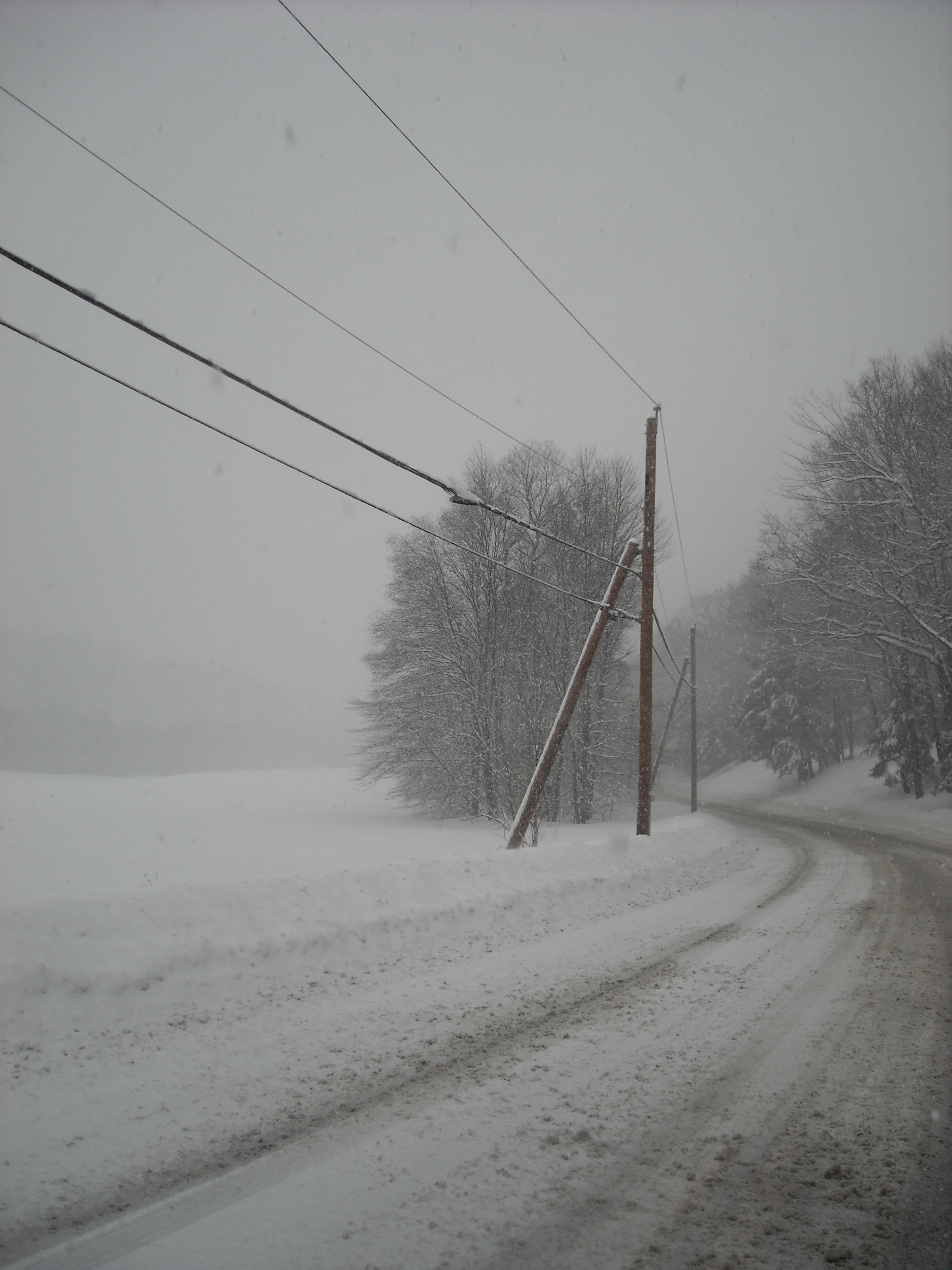
The substance coming out of the sky at this point was somewhere between sleet, hail and snow. My windshield wipers and headlights weren’t really enough to keep my vision clear, so I took the mountainous curves in the road slowly.  The kind voice on the other end of the phone line had told me, “If you reach the Vermont line, you’ve gone too far.  We’re a mile back.”  I passed out of Greenfield, into Bernardstown, out of Bernardstown, and on down the road.  I hadn’t hit Vermont but I was starting to wonder.  The radio announcer kept reminding me to, “drive carefully out there,” until the radio faded into static.  Finally I came upon number 682, pulled onto the shoulder, narrow with huge snow drifts, and popped the grant proposal into the mailbox.  This is only one of many moments when my expectations for planning a Summer of Solutions have been turned on their head by working in the Pioneer Valley.

En route to dropping off a grant north of Greenfield.

The Pioneer Valley spans from Springfield, Mass. in the south, north through the college towns of Amherst and Northampton, up to Greenfield and Turners Falls.  The Connecticut River snakes through this fertile and mountainous region of Western Massachusetts, which was the site of some of the earliest mills in the United States.   Greenfield and Turners Falls will be the focus of our program.  It’s the smallest location of Summer of Solutions, population-wise; Greenfield and Turners Falls combined are home to around 40,000 people.

All these factors make organizing our program an interesting and surprising experience each step of the way.

The first day Erika and I visited the Brick House Community Resource Center in Turners Falls, which was to become one of our main partners, their program coordinator walked us around town.  “I’ll have to introduce you to everybody,” she said.

However the challenges of the community are just as present as the charms.  Transportation limits many youth and adults from finding employment opportunities.  For most, having a car is a prerequisite for holding a job or pursuing higher education.  Entering Turners Falls is notoriously difficult and depends upon crossing the one bridge into town.

The employment base has been depleted over time, though new industries are emerging.   Co-op Power, a cutting-edge energy efficiency business, is based here and works around New England.  A new solar farm is being erected near-by.  The music and art scene locally is blossoming.

At a potluck for the local Time Bank (a method of skill sharing without money) at the Brick House I learned an inspiring activity that speaks to my optimism and excitement for the summer.  The dozen of us stood in a circle. One person, holding a ball of yarn, said something they needed, physically, or emotionally.  Anyone who could offer it shouted that out and they got the ball of yarn.

For example, Martin needed someone to walk his dogs while he was at work.  Turned out Ashley was in his neighborhood and could lend a hand.  Then Ashley said something he needed and so forth.  Before long we were all tied up in a web of reciprocity, having learned things about each other that would have never come up otherwise.

The lesson is that for all the needs in our communities, someone is out there with the solution, and willing to help.   If you work to build relationships, try new things and keep an open mind, whats you’ve been looking for starts to materialize.  In the Pioneer Valley we’re looking forward to sharing and receiving every step of the way.

APPLICATIONS OPEN FOR SUMMER OF SOLUTIONS

In just three years, the Summer of Solutions program has expanded from a single site in Saint Paul, MN, and a partner program in Portland, OR, to fifteen programs across the country. As an emerging leader in youth empowerment and green economic development, we are excited to open the opportunity to work with Summer of Solutions to creative, dedicated young people who believe in improving their communities, advancing social justice, and improving the environment. We believe that together, people hold the ideas and inspiration for change. By tapping the vision and skills of individuals, Summer of Solutions programs work in collaboration with community partners to create self-sustaining green economy projects that will continue to have a direct positive impact.

We welcome all participants ages 14-30 regardless of race, culture, class, gender, sexual orientation, and religion. Positions as volunteer participants (up to 20 hours a week) and full-time participants (40+ hours a week) are open. The program is free, and full-time participants are eligible to receive need-based financial support, the application for which is here. We are currently working to generate funding to support participants with all levels of need.

To learn more about Summer of Solutions and find a program, visit Grand Aspirations, the host organization of Summer of Solutions, at http://www.grandaspirations.org/programs. The page for applications can be found at http://www.grandaspirations.org/apply2sos. The priority deadline for full-time applicants is Sunday, March 13th at midnight PST, and the final deadline for full-time applicants is Sunday April 24th at midnight PST. Volunteer applications are accepted on a rolling basis.

We look forward to receiving your application, and working together, hands-on, to create stronger, self-sustaining communities across the country.

APPLY NOW!