Paying Attention to Traffic

A common community concern that people brought up Saturday while canvassing was traffic congestion and limited parking. Throughout Lents and specifically on 82nd street there are a lot of businesses on the main road with no parking lots. People are forced to park on the street and in front of houses. It becomes an inconvenience for drivers, homeowners and is detrimental to businesses as well. Often times business are forced out of business simply from having difficult customer access and something many people in Lents cherish is their local businesses.

Traffic incidents, roadwork, and weather conditions can make the roads irritating and dangerous to drive on. Numerous people said they have had bumper-to-bumper car accidents from the constant commotion and cluster on the streets. The question is how do we fix traffic congestion? How can we construct parking lots for some of these businesses without clearing out other businesses or homes?

Neighbors said that the city recently put in a crosswalk on 82nd street that allowed for people to safely cross the street. The crosswalk is strategically placed and saves people lot of time. Now they don’t have to walk hundreds of feet just to cross the street at the next stoplight to get to their destination. Others suggestions were more to have more bike paths. Maybe then people would start riding their bikes, instead of driving their cars, especially when they need to travel only a short distance.

Portland is notorious for its public transportation system and it is able to help a lot of people in the city in their day-to-day lives. It’s great for people who don’t have cars, it makes for less traffic, it’s cheaper than spending money on gas, and its environmentally friendly. People also can relax on public transportation and not have to worry about getting in a car accident.

Others have said that public transportation can be dangerous and slow. Everybody has their own opinions and there will always be positives and negatives to newly implemented ideas. But public transportation is something that many people see as a convenience and it definitely benefits many cities. Streets years ago were not built to support many of the cities that have blossomed around us today.  I believe it’s important to find the causes of traffic congestion/problems and try to not make those same mistakes when developing new cities.
A Time of Transition

By Casey Wojtalewicz

My introduction to Summer of Solutions was in 2010, when I was a full-time participant in the Twin Cities program. As it has done for hundreds of other young people, the program and its model of cyclical empowerment transformed my self-identity from something akin to “just another student” to an organizer / agent of change / Solutionary.

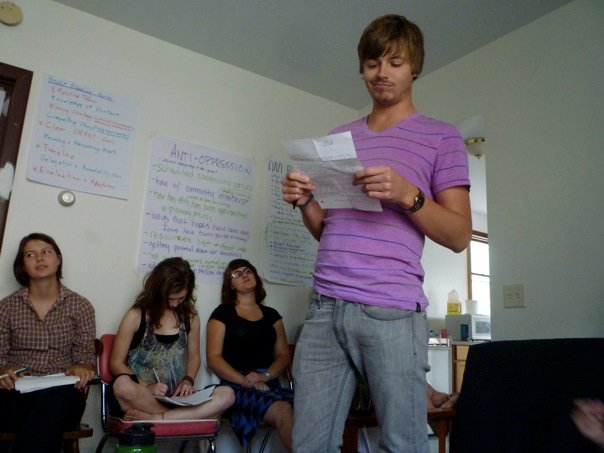
Me reading goals as a participant in the 2010 Twin Cities Summer of Solutions program.

Fast forward two years: I’m sitting in a classroom at LA CAUSA (Los Angeles Communities Advocating Unity, Social Justice and Action) in East LA. I’m helping lead the LA CAUSA Summer of Solutions program. We’re at week two, having wrapped up our training launch last week. I’m sitting in on a meeting of our clean energy team as they lay out the groundwork to bring community-owned solar panels to this area. Several weeks ago, I knew none of these people. Now we operate together in well-constructed and organized teams. We’ve created shared visions, set goals to help us achieve our vision, and outlined steps to get there–literally.

Pam, Maite, Tony & Miguel during LA CAUSA SOS’s training week.

It’s a sunny day outside in this industrial part of town. A lot of trucks pass by on the roads. It’s busy. Everything’s moving. The crosswalks usually don’t give enough time for one to walk casually across the streets. Concrete is everywhere. But there’s a cool breeze. I can see the San Gabriel mountains in the distance, and large white clouds are slowly moving across the sky to the north. Inside LA CAUSA, we are laying out plans to create a healthy environment that works for everyone. Everything’s moving.

It feels to be a great time of transition for our planet. I recognize the conflicts and challenges we face today as profound opportunities for transformation. I can feel the potential and momentum building up for change across the city, the state, the country, the world; just like I can feel it building in this very room. And as a Summer of Solutions affiliate, I feel connected to people feeling and doing the same things across the United States right now.

Some LA Solutionaries

Surrounded by these other young people who are turning ideas and visions into reality, I feel the completion of a cycle. Two years ago, I was given the inspiration and skills to become an agent of change. Today, I have given them, and the cycle continues.

This is what the world changing looks like. There’s a feeling of transition, of momentous energy. Like clouds moving on a windy day. People are coming together, working to make changes in their lives and their immediate surroundings.

It feels wonderful to be a part of it.

When I Say “Community,” You Say “Space!”

Canvassing can either be great or incredibly discouraging.

Generally those two reactions are interspersed throughout any time period spent canvassing.

One good interaction, one awful, a few mediocre.

Wednesday I had the pleasure of enjoying myself while canvassing, and feeling like I was canvassing for something actually meaningful.

Summer of Solutions Pioneer Valley has been working on a community space project, so dubbed because we are interested in creating drive behind a community space in Greenfield.

We have talked about the idea a lot and pulled together some materials, but this was our first time really pounding the pavement and talking to people about the idea.

I had the pleasure of pairing up with my buddy Duncan for this adventure.

C’mon, who wouldn’t want to canvass with this guy?

One reason I’m interested in creating a community space for Greenfield is the stark divisions I see between different parts of the local population.  It’s a town of 18,000.  As someone from the city, it definitely has that small town vibe which makes me think everyone should know each other.  In some ways that’s true, and it can start to feel like a very small place.   In other ways however people of differing class or race backgrounds rarely interact.

Many aspects of life here are really wonderful and desirable, like the beautiful natural surroundings, the accessible downtown area, the strong local businesses.  In a way, I think that makes people hesitant to acknowledge the issues which do exist for the community.  Just as other places across the country, unemployment and poverty rates are high.  Addiction and homelessness are deeply engrained cycles many people in the community are struggling to break out of.  Youth finish (or don’t) public school and have few local options for employment.

Look, it’s really pretty. All our societal ills have gone away!

These realities don’t fit into the picture a lot of people hold in their mind about this place, so they often are overlooked.

These attributes have made it difficult for me to find a place in the local mix.  While I am an environmentalist, I view environmental issues through an intersectional lens.  I don’t just want to talk about carbon emissions, but also inequality and hierarchy in our communities.

I haven’t found that in the somewhat siloed aspects of local politics.

So that’s just why I want a community space, a place where people can get together to talk about these things,and  have musical and cultural events.

Duncan and I started walking east down Main Street, with some flyers and surveys in hand (longboard too).

We first stopped to talk to a group of guys standing on the sidewalk.  Duncan bummed a cigarette and we asked them what they thought of the community space idea.  They all took a survey and wrote in their ideas.  A few gave us their numbers so we could be in touch about future activities.

We then headed down to Greenfield Community TV to borrow a camera to document some of the day.  We talked awhile with one of the directors and got set up with a camera, tripod and boom mic to film on the street. Back outside, the first woman we talked to, pushing a stroller down the street, seemed particularly excited about the idea. She is a teacher at the closest elementary school and said she’d be happy to help.

If at any point we had started to wonder about the importance or utility of this project idea, we were certainly reassured yesterday.  It’s clear when you ask someone a question that strikes at their own desires.  Whether it’s because they feel targeted by police on the street, or want a place which offers free programs for kids, or they want to share their music more with their neighbors, we’re talking about an idea that rings true to many people.

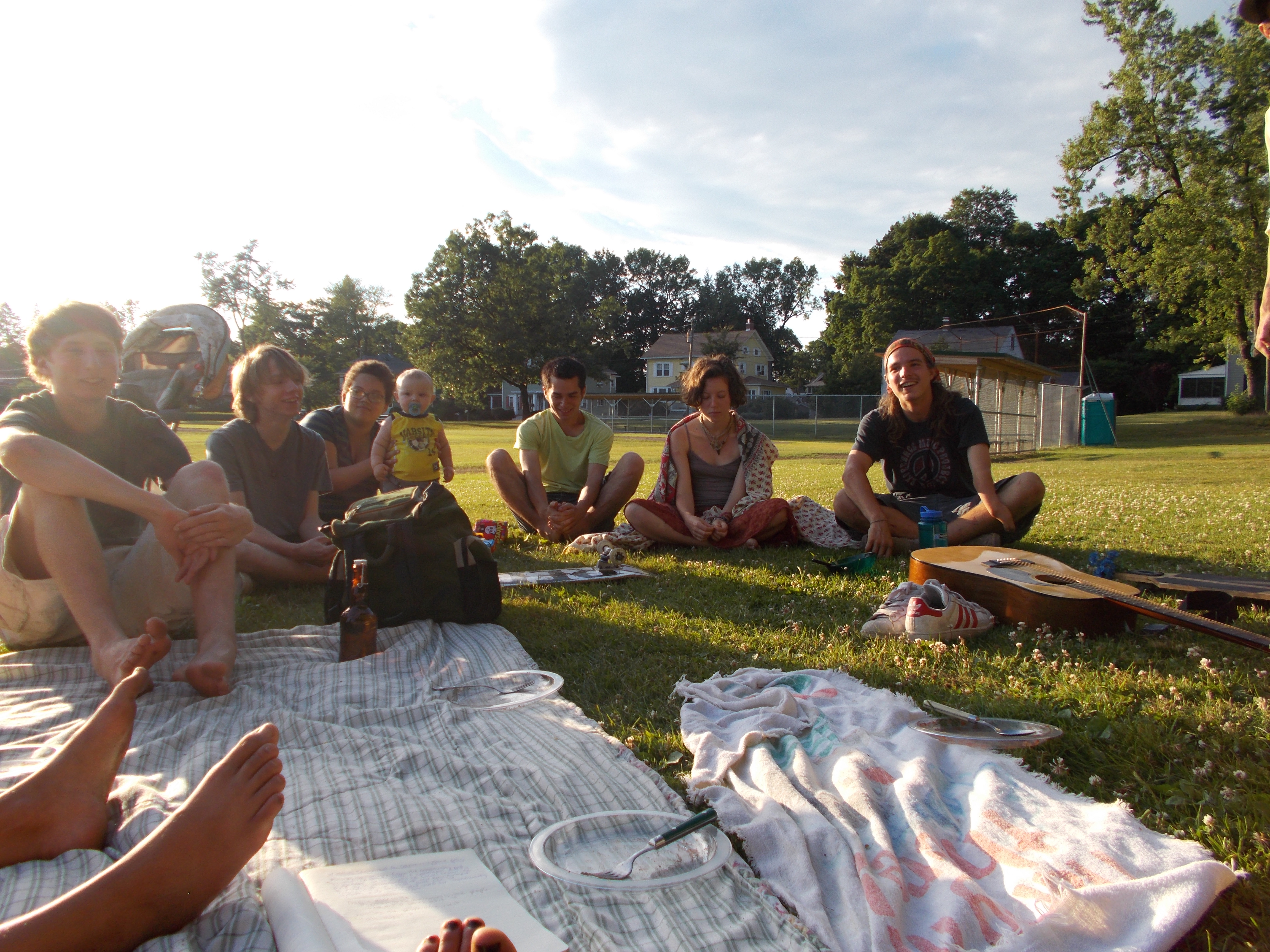
Some assorted characters at our first community space potluck.

That was exciting to see, and while we only have a few weeks left in Summer of Solutions to move this project along, I can see it has real potential to carry on past our program and be taken on by others around us.

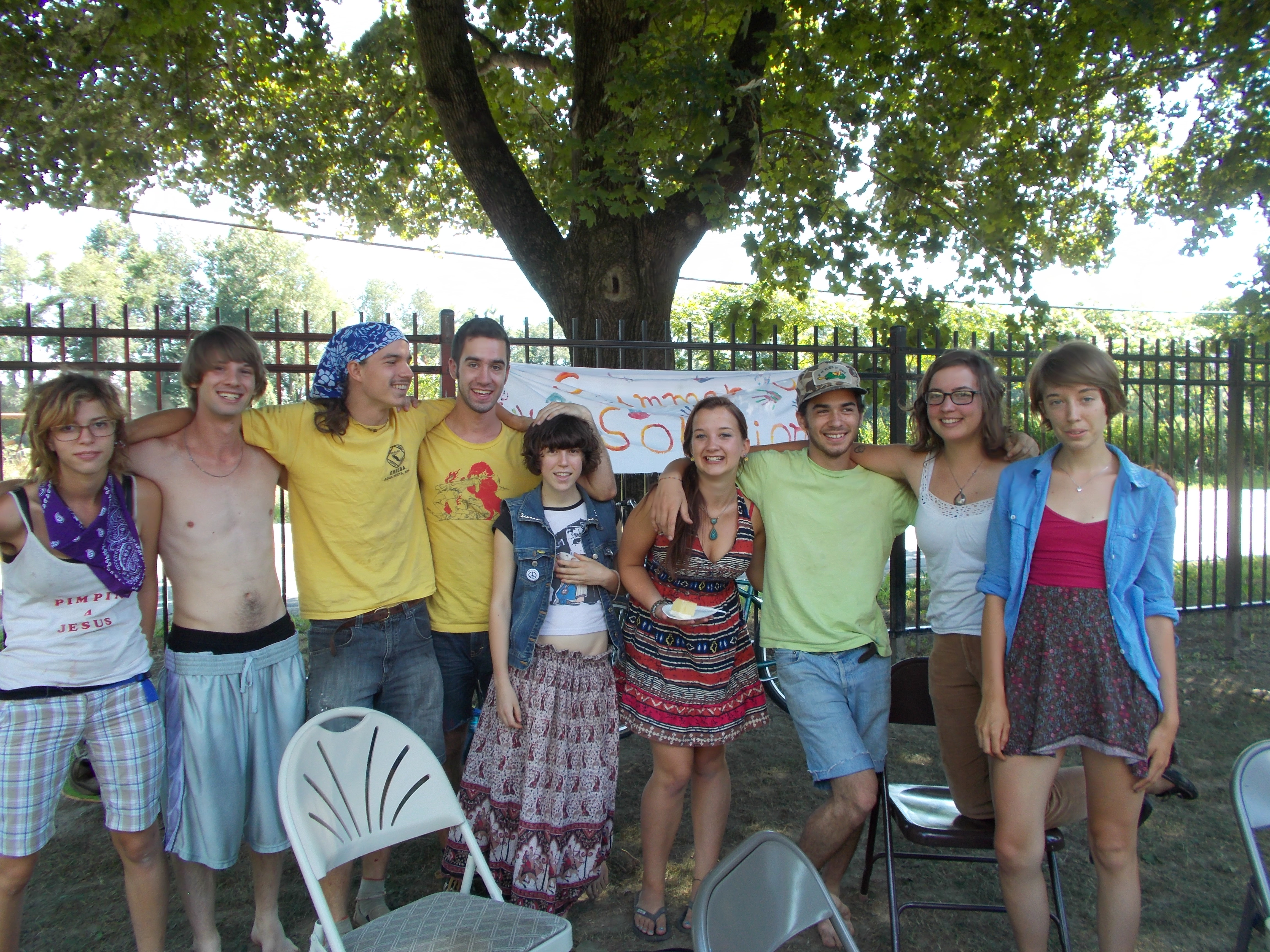
The SoS crew at a recent community event.

Water week in Chicago

Greetings from Chicago, fellow Solutionaries! The following is cross-posted from LetsGoChicago.org. After Middleton’s post below, it seems there is a water conscious trend happening here in the Midwest. We are glad to be a part of it! Read on to learn about our take on water awareness and water conservation.

Molly and children in the garden during water week

The week of July 9, which focused on water issues, was so busy we didn’t have time for a mid-week blog post, but we have plenty of water-themed stories to tell. We kicked off the week by watching a documentary called Flow: For Love of Water on Monday. It’s about issues of clean water scarcity, and how the privatization of clean water sources by big business is hurting our communities and forcing people to suffer. It was shocking to see such a phenomenon taking place, but it energized our discussion of global water issues, and inspired us with stories of how communities have successfully fought for their right to clean water.

Participants showing off their complete sub-irrigated planter (SIP)

We continued to work with water Tuesday by making rain barrels out of materials that we purchased at the hardware store for about thirty bucks per unit, using large plastic trash cans. It was great fun using power tools, teflon tape, and various brass doodads to make a functional and highly economical water management solution that any home owner could easily accomplish. On Wednesday, we also made sub-irrigated planters from discarded 5-gallon pickle buckets that would have ended up in the city landfill. Instead, using pieces of copper pipe and a homemade soil mixture, we created cheap, highly efficient devices for growing huge tomato plants with minimal water usage! Check out the link to learn more about SIPs and the great work of Green Roof Growers.

Aquaponics Facility at Whitney Young Magnet High School

One of our Solutionaries, Anna Greenberg, shares responsibility for maintaining a small greenhouse and aquaponics facility at Whitney Young Magnet High School, where she is entering her senior year. Our team visited her school on Thursday, where she gave us a tour of the project and put us to work on everything from rotating compost to testing the chemical concentrations in the fish tank. It was a great hands-on learning experience to work on an aquaponics system which both produces perch, a delicious edible fish, and sustains a large number of useful plants.

Volunteering at the Center for Neighborhood Technology

We took another field trip Friday to the new CNT-Energy headquarters in Chicago, where we worked on their rain garden, which is centered around a massive elm tree. It’s a beautiful sight in the middle of the city, standing starkly between the office buildings on either side, and it soaks up plenty of excess rainwater, but the downside is the multitude of tiny elm saplings that need to be pulled out by hand.

After a couple of hours working and learning about their plants, we took a tour of the facility, which is still in the earliest stages of sustainable retrofitting but already buzzing with activity. Then we enjoyed a pizza lunch and a presentation from our partner in landscape architecture, the incredible Alexia Paul, who spoke to us about stormwater management issues in Chicago (especially relevant given the downpour that shortly followed – see her video of the rain garden in action here).

Moving dirt for the construction of our French drain

Overall, we had a fantastic week of learning and getting things done. My project team, which focuses on green infrastructure, finally completed the French Drain component of our first rain garden contract! We finished right on schedule despite the unbelievable challenges we faced, and I could not be more proud of our Solutionaries. Look out for an upcoming post all about our project (with lots of pictures)!

-Pavan

You Never Miss the Water Till the Well Runs Dry

The unbelievably dry conditions in Wisconsin the past couple of months have been rough on everyone, and Growing Food and Sustainability was no exception. Everyone working in our gardens has put so much effort into quenching our plants’ constant thirst. Even so, our poor crops looked persistently parched. This past week, however, we’ve been thrilled and grateful to receive SO MUCH RAIN!

Our older youth program participants were with us when we felt the first drops one afternoon. It was only five or ten minutes worth, and hardly heavy, but it seemed to lift everyone’s spirits. Our participants and program kids danced in the rain and couldn’t stop smiling.


It made us realize that, rain (or simply natural balance) has a real influence on every person, agriculturally linked or not. Since then, Middleton has had two deep rains (and some awesome thunderstorms to boot). It seems to have revived both our plants and our participants.

The garden looking nice and refreshed post-rain

It is hard to believe that the program is already halfway over, but we have done so many great things and have SO many still to look forward to:

• We have been planning for our end of summer Harvest Festival on
Saturday, August 11th. It will be really fun for everyone and an amazing way to share what we’ve been doing this summer with the community.

• We have a training next week on how to grow mushrooms and hopefully we can learn to grow some on the coffee grounds we pick up from Bloom Bake Shop each week! The training THIS week is on how to can vegetables so that we can sell them at the Harvest Festival to save up for….

THE GRAND ASPIRATIONS NATIONAL GATHERING! As of this week, we are pretty sure that both Ain and Lauren (our two full-time participants) will be able to join Gabrielle and Natalie (program leaders) and Colin (part-time participant) at the national gathering in Hartford, CT at the end of August! YAY.

Other Exciting Garden News:

• Our youth program has painted beautiful signs to go outside of our youth farm and outdoor classroom space. We will be putting them up this week!


This week was our heaviest harvest yet! (111 lbs) The beautiful potatoes, beets, onions, radishes, and eggplants really added something extra awesome to our harvest day and we can’t wait to bike the produce to the Middleton Outreach Ministry as a donation tomorrow morning!

• Since the mowing down of the crops by hungry creatures, we have replanted most of the garden’s open spaces and are hoping to have some new beans, carrots, beats, and radishes soon! We spread milorganite in hopes that we can keep those hungry creatures from coming back for seconds.

• We transplanted the melon, cucumber, and squash sprouts into our garden this week just before the heavy rains. They seem to be doing swimmingly!

All-in-all things are going well around GFS this week and we expect they will only get better as rain starts to fall and big program plans start to unfold!!

– Lauren

People Are Getting Excited!

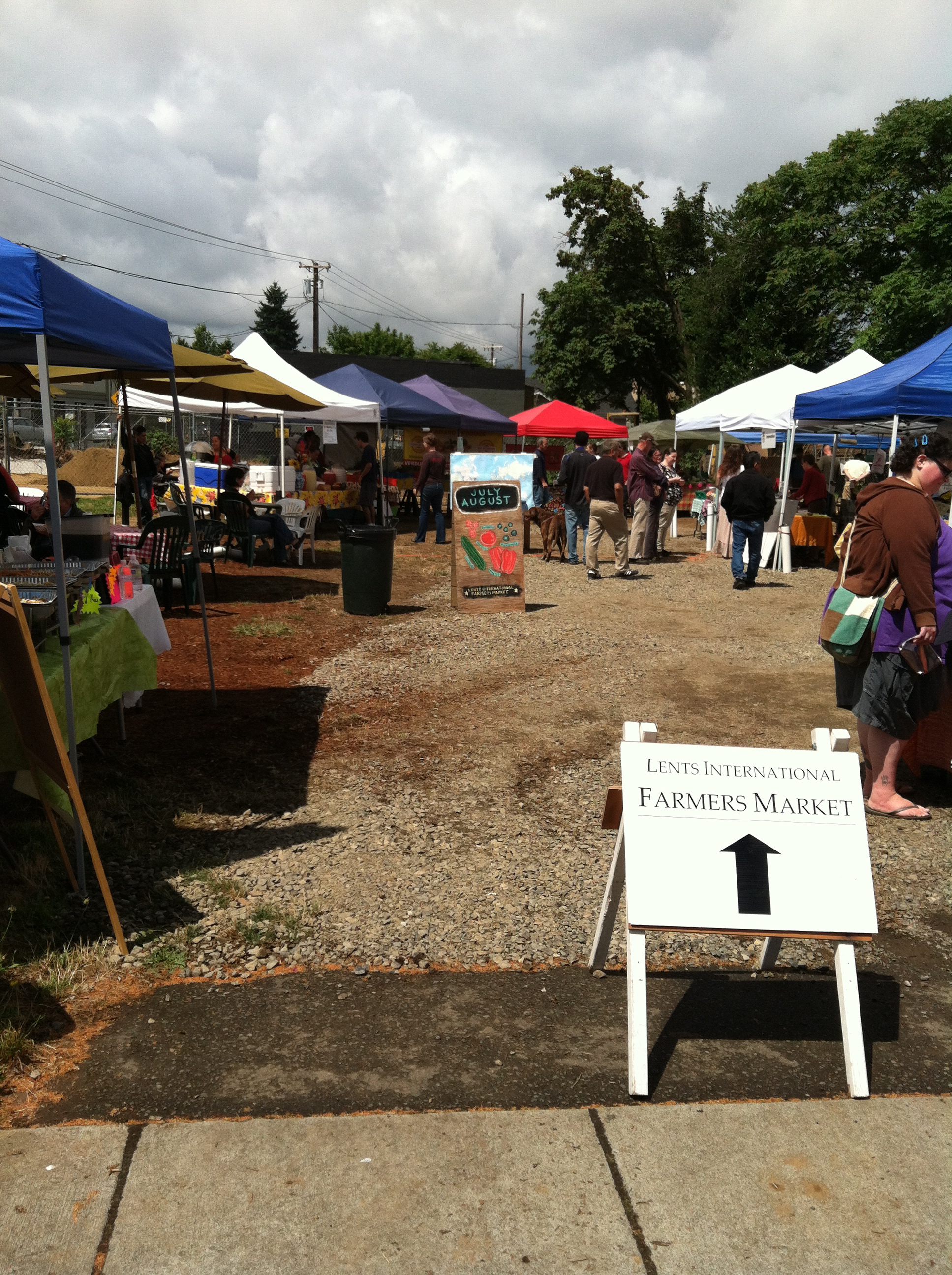
This past weekend our Portland Solutions group held our weekly meeting on Thursday to touch base and assess how we were doing in terms of staying on task and accomplishing our goals. On Saturday, we had three groups of two and went canvassing. On Sunday, we went to the farmers market from 10:30 to 4 p.m. to talk with members of the community.

Image

We plan to knock on a total of 1200 doors in the Lents area during the summer. Currently, we are planning a mega canvass that we will have in a few weeks. For the mega canvass we will be inviting a large group together to come walk around the neighborhood and talk with residents. We will also be contacting local reporters and other media sources to gain some media attention, which will help more people become aware of our program.

For me, canvassing is getting more and more comfortable. And the more comfortable I feel, the more I am able to enjoy it. The weather on our canvass day was excellent as well, which made it easier for us to walk around and be efficient while canvassing. It’s nice to see people walking around and enjoying the sun. Everyone seems to be in better mood on a nice day and the sunny weather is always a fun topic to talk about in Portland.

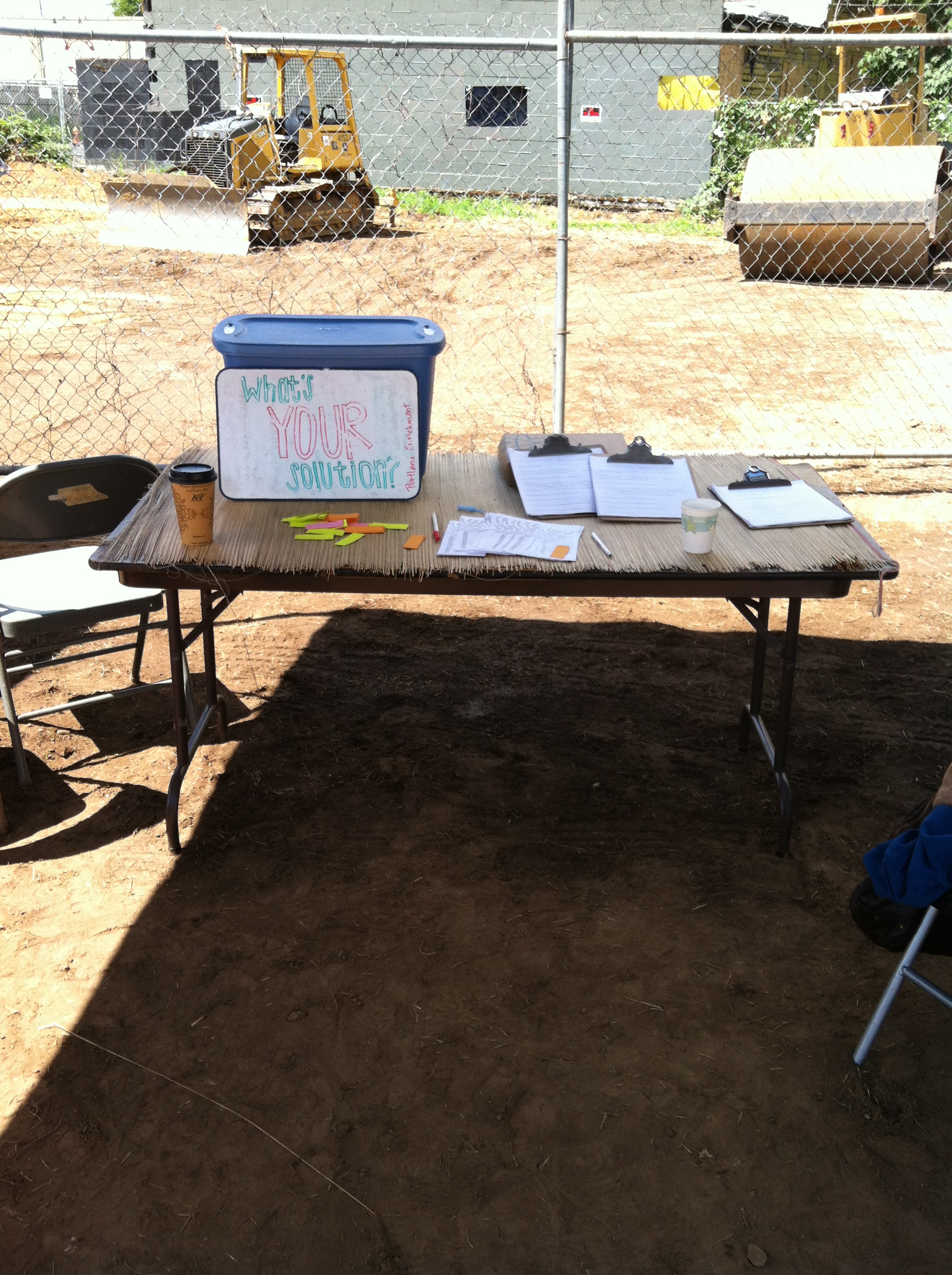
People in the area love going to their local restaurants, salons and stores. A question we asked folks at the market was “What is your favorite local business.” I heard many great descriptions of a number of places I will need to check out sometime. It always seems I find the best places to eat or to buy things at after talking to others. All of the favorite local businesses were posted on our map of Lents at our table.Image

Nearly everyone that came up to our table that Sunday commented on the empty lot behind us and they asked if we knew what the city was doing about that, or why they knocked the buildings down that were there in the first place. I had no answer for them unfortunately, but I found it interesting that so many people noticed and seemed to care about what was going on back there. It is now a goal of mine now to find out why the buildings in the lot were torn down. I learned Sunday that Lents has a history of demolishing buildings and not rebuilding; the residents don’t seem to like that too much.Image

A Peace & Justice Garden

Aside

For the past three weeks, squished on the couch in what might be the hippie-est living room in all of Minneapolis (maybe even the whole Midwest), my world has been rocked. I haven’t DONE anything too significant… pulled weeds here and there, trimmed some trees, harvested garlic… But little by little, I’ve started getting my head around something I’ve come to believe is the absolute most important thing we can do in order to close the gap between how the world is and how it should be. And that is, empowering communities to transition to a fundamentally different way of living. It’s a lifestyle in which environmental impacts, both negative and positive, are experienced rather than displaced. It’s a lifestyle you would diagram as circles, one cycle feeding into the next. It’s a lifestyle to which you would apply words like “enduring,” “self-sufficient,” and “conscientious.” It’s a lifestyle where social capital is what makes you rich, organizing neighbors is what gives you power, and love is the most potent drug around.

There’s an awful lot of talk out there about the evils of capitalism, inequalities plaguing our education and healthcare systems, epidemics of obesity, peak oil, and a whole slue of other injustices I can’t pretend to fully understand. But over in Phillips on 17th avenue and 24th street, my world has been rocked because Lynne Mayo, a fiery woman with a plan, is doing something about it.

Lynne has taken what has become a quite devoted posse of Summer of Solutions participants under her wing. She’s made it her business to get to know us, insisting we take mug shots next to our names so that she can work on memorizing them. She’s taken time to sit with us, offering up homemade raspberry pie and asking us questions trying to get at what makes each of us tick. She’s shown us documentaries exposing the dangers of genetically engineered foods. She’s brought in neighbors to teach us about herbs. She taught us methods of bio-intensive gardening and let us have a go at it as we began preparing plots for fall planting. She introduced us to permaculture, helping us to understand the importance of caring for the earth, caring for people, and sharing the wealth. She adds a new book to her recommended reading list every day: James Hansen’s Storms of My Grandchildren, Richard Heinberg’s Peak Everything, Atina Diffley’s Turn Here Sweet Corn, Howard Zinn’s A People’s History of the United States….If only I could read as quickly as Lynne can spew off titles.

What have I gotten out of my time with Lynne so far? Well, my “to read” list as multiplied 10 fold. My knowledge of weeds and plants has expanded. I can confidently tell you the difference between a pitchfork and a digging fork (don’t worry, Lynne, I wouldn’t dream of digging with a pitchfork). But the most important thing Lynne has given me in just our first few weeks is this feeling I can only possibly describe as exuberance. An exuberance that translates into insatiable energy because over on 17th Ave, things are moving… plants are growing, organics are composting, greenhouses are building, seeds are starting, and slowly but surely, peace and justice are coming.

-Hannah B. is a SOS Twin Cities 2012 participant

Old Friends and New Connections

This week at Growing Food and Sustainability was a blast!

The week started out with an enjoyable Downtown Middleton Farmers’ Market. There were more people than the previous week, due to the more moderate and pleasant weather. This was great because our stand had many new children and families stopping by to participate in our kids’ activity. This week the topic was waste disposal. They had to match up different types of household waste, like plastic baggies or apple cores, with composting, recycling, garbage, or hazardous waste. The kids really enjoyed it, and some of the parents learned something new too!

Farmers’ Market Kids’ Activity Table

The Farmers’ Market was also especially fun this week because there was a new produce stand! This new stand, called “The First Acre”, is run by a couple mutual friends of Growing Food and Sustainability, who are fresh out of college. It was great to see old friends at the market, as well as to see some fresh and young faces. Overall, it was my favorite Farmers’ Market of the year! Now our mission is to make more consumers aware of the market to help support these hard-working farmers.

The First Acre Farm Stand

The other part of the week that really stood out to me was an activity that we did with our middle and high school aged participants on Wednesday. We used chalk to trace out the energy system, starting with the sun. It was especially illustrative because the youth participants could literally see the closed loops with systems like composting, and the literal dead ends with the fossil fuel system. The discussion surrounding this activity was quite deep, though a bit heavy, and it seemed as though all the participants were engaged and learned something.

Energy mapping with chalk

This activity had an unexpected result for me. I really enjoy making flow diagrams like this (which I knew already), but I learned that they are an extremely good way to convey information to others, and they’re great discussion starters. I also learned that I enjoy teaching about systems very much. These are both things that I think I will find useful in my future, since I plan to become a high school teacher.

Overall this week was excellent, and I look forward to the upcoming weeks of Farmers’ Markets and lessons. I also enjoyed the unexpected benefit of learning something new about myself from the activity!

Thanks,
Colin