Growing by Doing

Kyle Gename

Throughout my time as a student at Macalester College, I have always thought of myself as an environmentalist. For my first year there, I practiced and explored my philosophy on the environment and resource use in a very personal way. I became and avid knitter, an Environmental Studies major, and to the dismay of my freshman roommate, a person who showered infrequently.

In my sophomore year, I wanted to get involved in a more collaborative way. I began to think, “I certainly cannot create real change without the support and action of my peers, why go at this alone?” I decided to get involved in my school’s student environmental group, the Macalester Conservation and Renewable Energy Society, or MacCARES. I also started working in the sustainability student worker network and went to Powershift, a national conference geared towards young adults interested in creating change through grassroots activism. Throughout my two years of exploring my environmentalism at Macalester, my ideas of what I wanted to do and be were changing.

After sophomore year, I decided that rather than go home and read through the Harry Potter series for the tenth time, I wanted to find more useful work. I kept my eyes and ears open to the opportunities available to me. Through MacCARES, the student group that I had joined, I met two of the program leaders for Summer of Solutions Twin Cities, as well as several of the programs’ past participants. Through their encouragement and rave reviews of the program, I decided to apply. It sounded like an amazing program, and one that would help me to develop further as an environmentalist.

When I decided to become a participant of Summer of Solutions, it was based on conversations that I had with people who were already involved in the program. They said that SoS had shaped them; it was a place for them to grow. When I asked what they liked about the program, they told me that participating was a formative experience in their lives as young leaders and that by stepping out of their comfort zones during their work, they were able to become more well-rounded. I am happy to say that these reviews have been on par with my own experience this summer.

Throughout my time in the program, I learned something that I had forgotten about myself: how I grow and develop as an individual. This summer I remembered that I reflect best on the work that I have done using few words and simply recollecting the new skills that I have learned. This is how I have stepped out of my comfort zone this summer, not by talking or explaining, but by doing something new. By doing, I have grown stronger as a young leader and an environmentalist.

Since we spend so much time as a collective group talking about how we are feeling and discussing what we are doing, I find it strange that the times that I most cherish when working for SoS are the times that I am not saying anything at all. My experience is defined by what I do physically and the personal reflection of what I am doing. I have grown much more as an individual this summer when I have thrown myself out of my comfort zone and done something that I normally would not. If you told me two months ago that I would be taking notes in small group meetings and be responsible for accurately reporting those notes, I would have told you that you were mistaken. I am God-awful at typing, and have just recently learned to type without looking at the keyboard. I have also never blogged before (Am I doing a good job?) and am terribly afraid of what other people think of my writing. Beyond participating in new ways during small group sessions, I have also stepped out of my spatial comfort zone. I have never had a sense of direction or the inclination to exercise very much, but this summer I decided that my bicycle would be my primary mode of transportation. I am pretty excited to say that I have never learned more about different streets or bike routes than I have this summer. The moral of the story is that SoS has been a formative experience for me in the way that it has challenged me to act in ways that, until very recently, I did not think that I could. It has also made me realize that I find physical labor and action more memorable and significant than just talking and listening.

Even though many of the hours that I work for SoS for the next two weeks will be spent discussing my feelings with the other participants, I am excited for the growth that I can realize this summer not by talking, but by doing. I am also glad that I have been able to reflect on these ideas for long enough to understand them. Here’s to spending the rest of my time as a SoS participant growing by doing.
A “Kiss and Make Up” Justice System

This week, the climate activist Tim DeChristopher was sentenced to two years in prison for standing up against oil companies and defending our future.  During this historic moment of great courage, I’m reminded how our justice system is inherently flawed, and imaginging new possible futures that include more kissing.

You would never hear a judge say, “I sentence you both to kiss and make up.” A little silly, yes. Almost as ridiculous as our current system of mass incarceration.

When a hero is behind bars, a murderer walks free, and our prisons hold more black men than slavery ever did, it’s time to ask what’s underlying the statistics, and imagine new possible futures.   The Smooch project (a winner of the Possible Futures film contest) is doing just that — gathering photos of people sharing affection, capturing some powerful stories, and imainging a future where a mother chooses to forgive her son’s killer.

When I think about a new possible justice system, I think about how much I love living a city with such a energetic spirit of social justice. A friend of mine, who owns a green business in Oakland, once compared Oakland to Paris.  Although we don’t have the Seine, we do have Lake Merritt and a lot of geese. I love how Oaklanders walk and bike everywhere, there’s a “take to the streets” energy, the climate is almost always 70 degrees, and people hang out at hipster cafes drinking coffee in the sunshine.

I was recently biking up 35th Ave, right near Fruitvale BART station where Oscar Grant was shot. As I headed to our Summer of Solutions Oakland planning meeting, I was in awe — beautiful, purple, hanging flowers had bloomed on all the trees lining the road.  In the midst of delicious smells coming from the Pupuserias, little dogs barking behind fences, and store windows that still display photos of Oscar Grant, I saw the beauty that is only Fruitvale.

Reading all the blog posts about Tim’s sentencing reminds me that our criminal justice system is immensely flawed, and we need to change it.  We need systems that address root causes of violence, not lock away black and brown children. We need to honor heroes who stand up for our future, not put them behind bars.  We need to acknowledge how imbedded issues of race, class, and power are in our current justice system, and work towards a system of Restorative Justice. (I can only imagine what Tim’s sentencing would have looked like if we were using systems of restorative justice, not a system owned by corporations.)

Finally, we need to imagine a new possible future for our justice system and our world. Hopefully, one that includes more kissing.


For information and insights on the state of our prison system, check out Michelle Alexander’s book, The New Jim Crow: Mass Incarceration in the Age of Colorblindness.

*Cross posted from: We Are Power Shift blog

Arable Land to Aquaponics: Urban Farming in the Twin Cities

By Kalpana Vallabhaneni

During World War II, 20 million Americans planted “victory gardens” and they grew 40% of this nation’s produce supply. Urban farming is something that has been around for decades and has already proven itself. It can support America, so why not prove it again to people who don’t believe us? Urban Farming is not only used to create an abundance of food for people in need by planting gardens on unused land and space in the city, but it is also used to cut down on crime, beautify neighborhoods, and increase health and wellness around specific community.

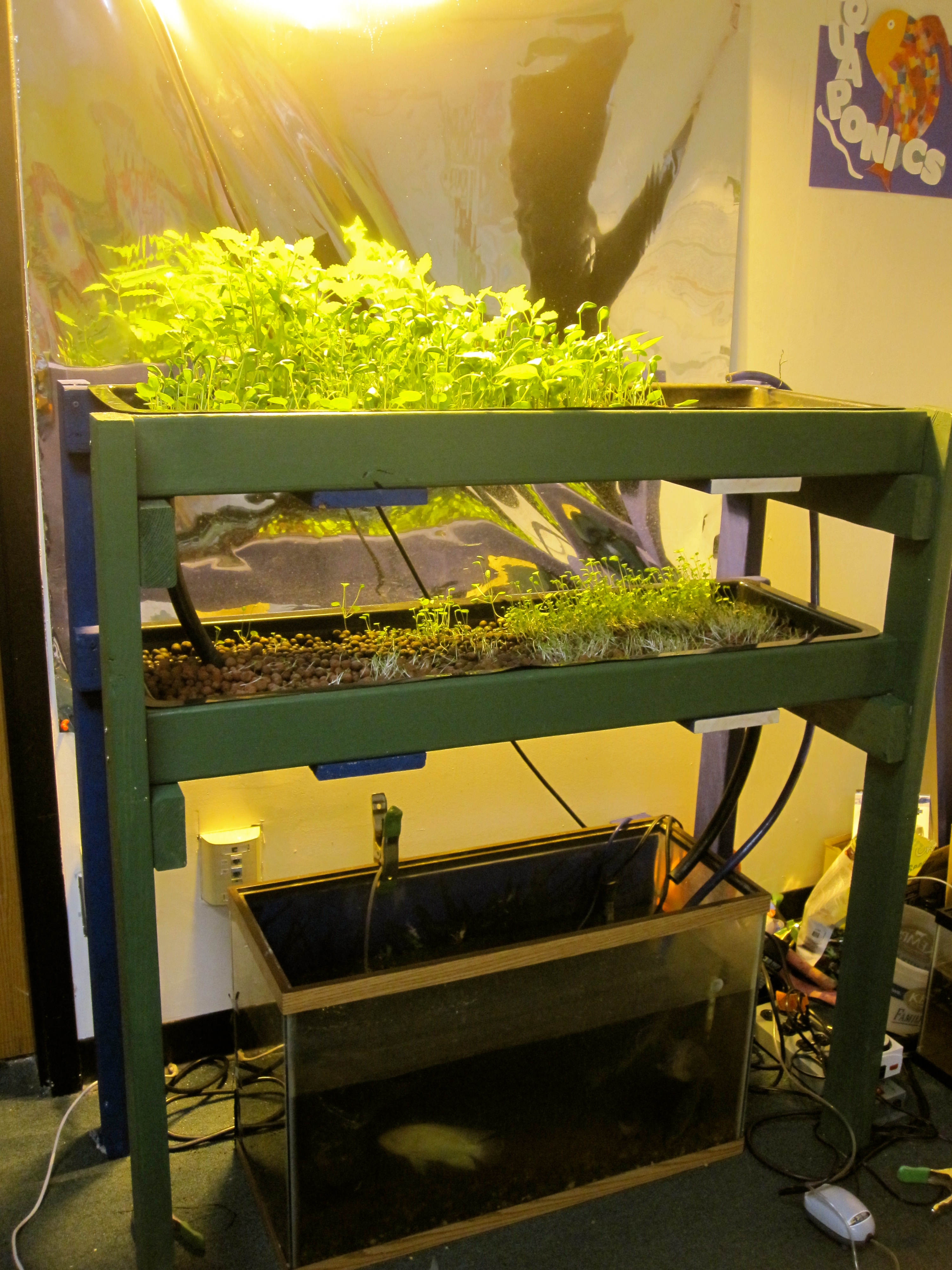
Participants in Summer of Solutions in the Twin Cities have been working long and hard on a variety of projects ranging from maintaining an aquaponics system to weeding gardens to researching the cities vacant lots to find arable land for new urban farms.  With over 20 participants focusing their energy and effort into specific projects there has been a lot of success all over the cities.

Many people assume that urban farming is planting vegetables, fruits, and herbs in open spaces in a city and it is, but urban farming can be so much more! A small group has been working on a urban chicken coop! They have been researching various locations, chickens, and a design so they can build the best coop in town. Thus far in the summer they have located a space in Minneapolis and are starting to build the coop this week. They are still trying to figure out which chickens are the best–in terms of the care they require and the number of eggs they lay. After talking to some locals who already have chicken coops and using their best tool, the internet, they will determine which chickens to put into this handmade chicken coop in Minneapolis.

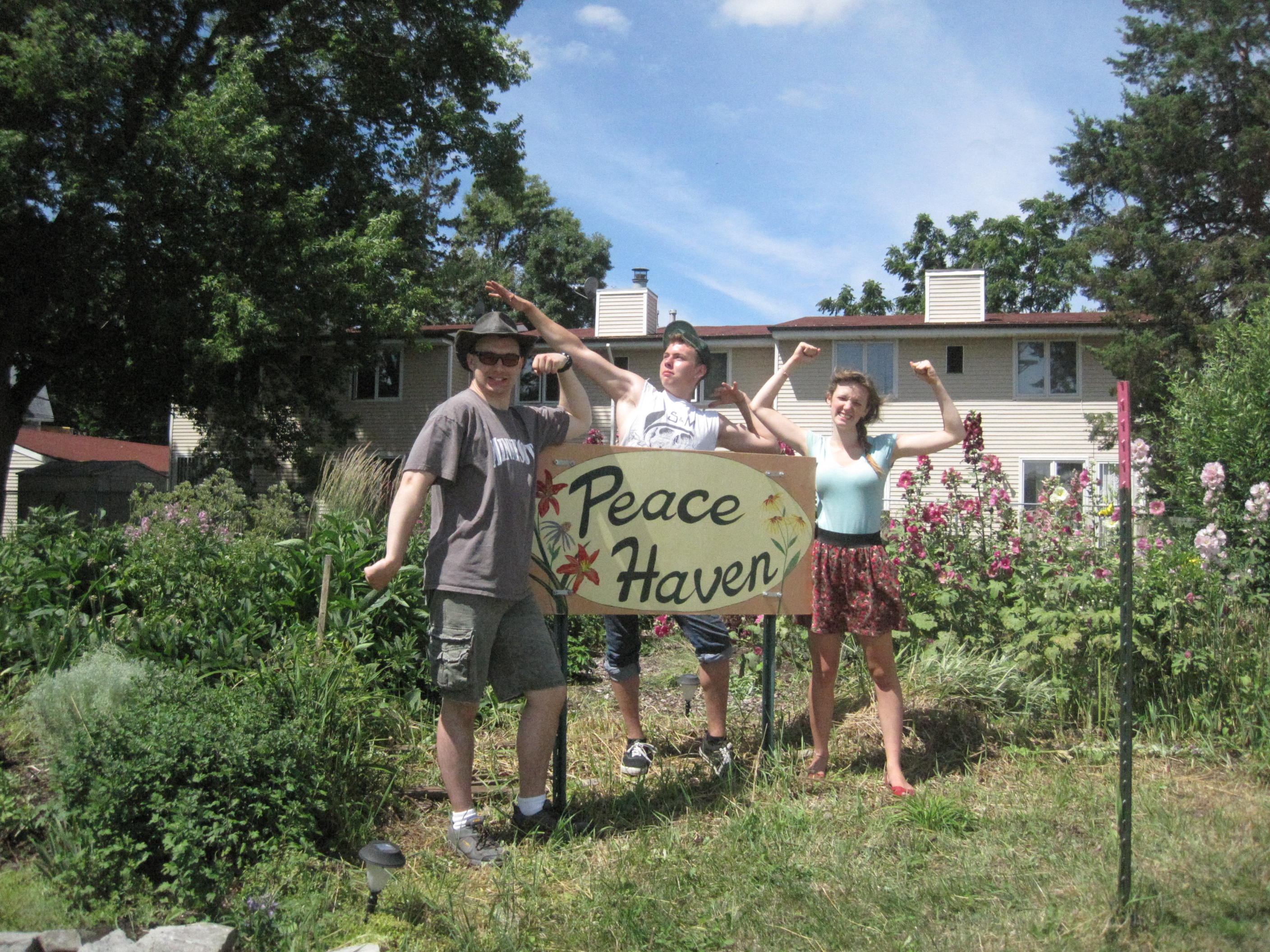
Another group of participants are focusing their energy into generating their value through crime prevention at the Harrison Neighborhood Association Peace Garden.

Look at all the muscle we bring the the garden!

This farm was started to help stop violence, prostitution, and drug trafficking. The simple tasks of weeding and beautifying this farm has helped keep this previous prostitution corner a safe, healthy, and beautiful street corner for community members to enjoy and cherish. With a small but powerful group, they are able to help keep the Harrison Neighborhood Association Peace Garden be a safer and happier place.

We not only generate value for the community through Urban Farming but many of us are gaining personal value through farmer trainings, beautification, and researching vacant arable lots around the cities. There is a group of participants who are interested in the physical processes of Urban Farming.

Look at that broken piano part that is now a beautiful sign for the garden!

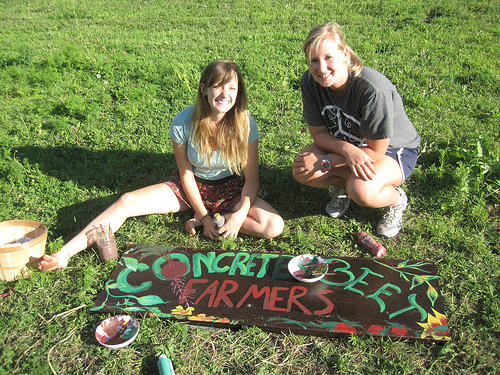
Concrete Beet has multiple young Urban Farmers who  started urban farms recently by taking a vacant lot. They worked out logistical details with the landowner and covered the entire lot with a garden. Now they are helping participants learn the ins and outs of CSA (Community Supported Agriculture) shares and the physical labor or harvesting, planting, and planning. A few participants are also researching the cities vacant lots to see if empty lots could be turned into new urban farms. They research the price, location, and soil quality, because farmers needs arable land for a garden to be successful. There is another group who is helping with the beautification of the farms. Most recently they have rescued a broken piano and hand painted beautiful signs on the old, damaged piano pieces. These signs are displayed around various parts of the garden.

The last Urban Agriculture project that participants from the Twin Cities are working on is with a 5O1C3 non-profit, YEA (Youth Enterprising Agents) Corps. There are about 15 YEA Corps participants who are working as interns at YEA Corps who are each focusing on different aspects of indoor urban farming. YEA Corps is working to empower youth with job skills and sustainable education. YEA Corps is not the typical urban farming project to many people but it still focuses on sustainable food production in an urban setting. Their current focus is on mushrooms, aquaponics, and vermacomposting. Each intern has a different aspect that he or she is focusing on ranging from being a mushroom specialist to learning how to treat the vermacompost. Some of the interns are working on research while others are filming videos for YEA Corps. There is a wide variety of job skills and indoor urban farming expertise that are being learned everyday at YEA Corps.

So far this summer we have accomplished a lot all over Minneapolis and we look forward to seeing how much more we can do! We are all gaining valuable skills and knowledge by helping the community around us!

Rise Up with the ARISE Coalition

By: Taleya Hamilton

A soccer mom suggesting more soccer fields for her children…

A young professional couple raising the concern of property value if a light rail system is installed next to their house…

These and many other local community concerns have been raised and addressed through the public meeting hosted by the ARISE/Summer of Solutions Team. ARISE (which stands for Alliance To Re-Industrialize For A Sustainable Economy) is a coalition of community residents, students, labor union and city leaders who have come together to create sustainable solutions to local redevelopment projects in their communities. Green manufacturing and multi-use development are the anchors to ARISE’s vision; however, clean energy, mass transit opportunities, and localization of basic services (i.e. waste management, food production, etc.) are significant players in formulating the sustainable solutions for job growth and a diverse tax base. One clear message ARISE wants to convey is that everyone from the soccer mom to the young professional couple can have a voice in the development of their community.

The Summer of Solutions team has been working diligently and progressively with ARISE throughout the summer to carry their message forward. Through the guidance of Lynn Hinkle (the ARISE visionary), participants have engaged in the various components of the vision, which include research for the universal template that is being created to promote ARISE in local communities, recruitment of land developers, and community outreach.
Currently, ARISE coalition and the Summer of Solutions team has centralized their efforts on a 135 acre site used by the Ford Motor Company in the Highland Park area of St. Paul, Minnesota. This site, established in 1924, has been an assembly plant producing the Ford Ranger. As the Ford Ranger sales significantly slumped in the past years, Ford Motor Company has decided to close the doors to its St. Paul location as soon as December 2011. This decision has sent St. Paul city planners and the Highland Park residents reeling for answers to mitigate the economic impact. Hundreds of workers will be laid off and a community that was built around the Ford Motor assembly plant will need to find a new local economic driver.

ARISE has recognized this concern of the area stakeholders as well as analyzed the valuable features of the land (i.e. the hydropower plant nearby and sand mine tunnels underneath the site) in order to develop renewable energy scenarios that will allow for the community to be self-sustaining in the next planning efforts devised. For example, ARISE is looking into converting the sand mine tunnels into ground source heating for the site as well as affordable housing options for the green manufacturing plant employees and their families.

ARISE coalition is an ongoing initiative that will continue after the summer months have passed. If you or anyone you know are interested in spreading the message of our work and providing additional expertise in the subject matters highlighted, please contact us 708-274-7344 or mn.arise@gmail.com. Also, visit our website at http://www.arisemn.org.

Bicycle Empowerment at Sibley Bike Depot

By Cecelia Watkins

As you may have experienced, the traditional bike shop model goes like this: you, the melancholy owner of a sticky geared, no shifting, wheel-missing, untrue, spoke popped, flat tire, screechy brake broken mess of metal (or who knows, maybe you just want a tune up), enter the shop and drop off your bicycle with the shop mechanics. You wait, maybe leave to take a stroll or run some errands. You come back and voila! Magically, your bike is fixed. You pay up for the services and walk out of the store. Your bike is fixed, yes, but beyond that all you’ve gained is a lighter wallet.

This is how it works at Sibley Bike Depot: You enter the building and roll your bike down a sweet-smelling hallway between a donut shop and a fabric store. Ten feet in you’ve passed these window front stores, and suddenly a colorful world of bikes opens before you. To your right is the sales floor, where Sibley sells used bikes and parts at affordable prices. To your left is the shop floor. You wheel your bike in, sign up on the list, and sit down for a short wait—Sibley is often throbbing with community members eager to work on their bikes—but luckily there are nice couches and stools made of tree stumps for you to wait on. While you wait you chat with the other people there, maybe about bikes, maybe about donuts, maybe about something totally unrelated. Eventually your name is called, and you bring your bike over to a stand. Here an experienced volunteer or staff person helps you figure out what’s wrong with your bike and walks you through the steps in fixing it. Unless you need a replacement part, this service is entirely free (and even the replacement parts are wonderfully cheap). When you leave the shop you’ve gained so much more than a working bike: you’ve gained new knowledge of bike repairs and along with it a sense of personal empowerment. And your wallet feels about the same as when you entered.

(more after the break…read on!)

Continue reading

Worried about Defecits and Unemployment?: Community Powered Energy

As the federal government eyes a shutdown and Minnesota cautiously creeps towards the end of its state-level closure, the underlying questions remain unanswered:

  • How do we balance budgets and live within our means by raising income and cutting waste without sacrificing the essentials, whether at the government level or for people already living on the edge?
  • How do we create lasting jobs and economic opportunity when the costs of living keep rising and people have less money to spend?
  • How do we bridge traditional divides (partisan, ideological, socioeconomic, and cultural) to work together creatively for public health, geopolitical stability, climate and energy solutions, community resiliency, and social justice?

For the neighborhoods around Midtown in South Minneapolis, where the recession has left unemployment edging towards 40%, foreclosure running rampant, violent crime rising, and neighborhoods and community organizations struggling with funding cuts, these questions are at the fore. Things have always been challenging here; absentee landlords control much of the housing, and a large portion of people’s income leaves the community to pay for goods and services elsewhere. Many local residents (the area is primarily low-income, people of color, and has many recent immigrants and non-English speakers) feel they have little agency in corporate and governmental decisions affecting the neighborhood.

In times of crisis, communities can turn against each other in a desperate attempt to protect what remains, or towards each other to work together to create new opportunities and long term solutions. In the Twin Cities Summer of Solutions, we’re helping the community use the opportunities that clean energy and energy efficiency provides to make the latter choice. Scaled up, we hope this work may serve as an example for a world facing challenging times.

The seven neighborhoods (over 13,000 households and over 500 businesses) we’re focusing on together spend over $63 million each year paying for electricity, heating, and gasoline – that number will only go up as prices rise. That money is creating few local jobs – the majority of it pays for coal mining, oil drilling, natural gas extraction, power plants, natural gas pipelines, and more. I don’t need to recite the list of problems these things create for both the local community already plagued with asthma and other respiratory illnesses and for our broader nation and planet. 30-80% of this $63 million/year  can be avoided through behavioral changes and available technologies that pay for themselves, reducing the negative impacts created. Collectively implementing these practices cuts the cost of implementing them (opening access to people and making it easier to finance) and dramatically increases demand for local green business and green jobs, putting people back to work (or into it for the first time). Eliminating those costs helps individuals and businesses balance their own budgets and create new jobs and income. This in turn reduces reliance on public subsidies and increases public income, making economic recovery and fiscal responsibility connected instead of opposed. In doing so, we help create a win-win-win scenario for residents and businesses and across cultural and socioeconomic groups; building community and helping people unite across difference for a common goal.

We believe energy efficiency and clean energy can be a driver for stronger communities and a renewed economy. And more than our belief; we’re making it happen.

So here’s the low down on what’s happening around energy in the Twin Cities …

Continue reading

From the Ground Up: Solidarity Economy in the Pioneer Valley

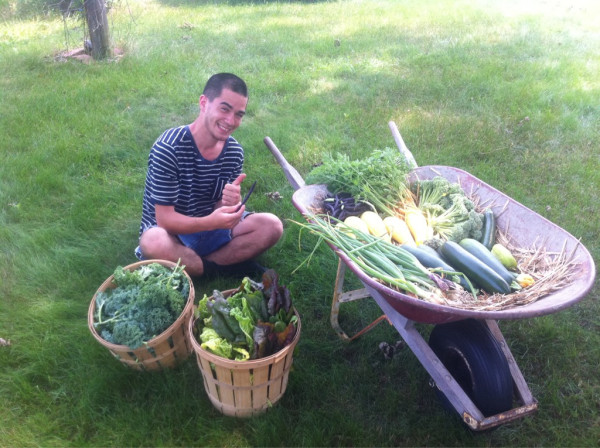
We’re working on a local farm this summer in exchange for space to grow our own produce, which these days we harvest in over-abundance.  The zucchini, kale, and chard all grow faster than we can eat, so we traded some friends a basket of greens for potato spuds just ready to plant.  At our Grow Your Own Food Class the next day we planted the potatoes with local kids, who will come back to tend them and harvest later in the year. Our small garden at the Brick House Community Resource Center will yield food to share around the neighborhood. This is just one instance of the generosity and interdependence we have experienced this summer.

Duncan with some of our latest produce.

This Saturday, I’ll be heading to Worcester, Mass. for the Green Solidarity conference.  As programs across the country engage in a Day of Action, I’ll be sitting in with innovators, activists and organizers from Massachusetts to learn, and contemplate further how people can transform our economy to work socially and ecologically.  How can the benefits of cooperation and solidarity I have enjoyed this summer extend to the larger community?

Coming from an environmental organizing background, and as a student of political economy, I believe that structural re-invention of our economic system is necessary to halt environmental destruction and environmental racism.  It won’t be possible to buy our way to sustainability. Change is needed beyond a “green” makeover of our current economic system.  To sustain ourselves and the earth, we need an economy that functions to meet peoples’ basic needs and aspirations.  When the demands of capital and profit drive an economy these needs aren’t met.  I refuse to believe we have no other options.

I see the change we need in the solidarity economy movement.  It originated with people’s movements in Latin and South America to self-organize economic activity to meet basic needs, when state government and structural adjustment programs failed them.  My definition of a solidarity economy is an economy people own and operate with the understanding that their self-interest is bound up in the interests of their neighbors- both down the street and around the world, both human and non-human.  A solidarity economy is made up of many parts- cooperatives, non-profits, mutual aid societies, land trusts, extended families.  What binds it together is the understanding that working in solidarity will yield far greater benefits than pursuing self-interest and profit.

The work we are doing as Pioneer Valley Summer of Solutions is helping build the solidarity economy in our community.  We are hosting free classes through the Summer Workshop Series, on practical and sustainable topics; we are learning to fix bikes and make them available as affordable local transportation; were using the Time Bank to share goods and services; we are supporting local farmers by helping grow their produce, and consuming it.  Working together, we as a community can meet our needs, and make sure our neighbors are able to do the same.  As we work to meet the needs of our local community, we in turn understand the importance of environmental stewardship.

I can’t wait, on this year’s Day of Action, to explore how we can bridge the work of the solidarity and green economy movements.  Sounds like a task worthy of Summer of Solutions Pioneer Valley!

Urban Ponics

By Bryne Hadnot

Cross-posted from letsgochicago.wordpress.com

When we’re not busy building compost bins, raising chicken coop frames, and removing vicious 6 foot weeds, we here at LETS GO Chicago like to kick back… by waking up at 6:45 am and taking an hour long train ride to Chinatown.

While we didn’t get any Chinese take-out, we got something that was even better than hand-made ramen: a FREE tour of one of Chicago’s urban farming centers, UrbanPonics, LLC.

Urban Ponics Trip

Lee talking with Erin and Bryne

UrbanPonics is the brainchild of Bral Spight and Lee Reid, two men from extraordinarily different backgrounds thrown together during a leadership conference. The result of a bit of collaboration was a hydroponics concept lab in the Riverfront Work Lofts, a thriving part of Chicago’s Creative Industry district right next to Chinatown. Now, Urbanponics employs several economically disadvantaged men and women and has successfully produced a high yield of lettuce, tomatoes, and herbs.

Urban Ponics Trip

Greens and herbs a'growing

UrbanPonics uses a technique called hydroponics to grow plants without soil. Instead, minerals are dissolved into purified water and streamed through the plant’s roots, providing everything a plant needs to grow without any soil borne diseases or pests; lights of varying wattage provide year-round ‘sunlight’ for the plants, while inorganic “growing mediums” like rock wool offer structure for the stems. These four components- minerals, water, light, and structure- are all the plants need to grow, and thrive, indoors.

Urban Ponics Trip

The LET'S GO team exploring the facilities.

But UrbanPonics is more than just a lab for indoor farming; it’s a lab for science skills and business knowledge, and for engineering techniques and artistic finesse. In short, it is as much a center for innovation as it is a center of contradictions; the work conducted at UrbanPonics is nothing short of a miracle, but it is so intuitive that we had to wonder: why isn’t every city doing this?

Urban Ponics Trip

Look at that basil!

For as much or as little as you care about agribusiness or monocrops, hydroponics is still pretty cool. Imagine getting fresh lettuce NOT from the other side of the country, or the world, but from a farm in your city. A farm you can visit easily- via public transportation perhaps?- that also has a wide variety of greens, tomatoes, cucumbers, and other crops.

Fortunately, our days of dreaming of a full scale urban farm may be at an end. Mr. Spight and Mr. Reid plan to expand their concept lab into a 4 acre facility in Chicago’s South Side, complete with 50 bee hives, rain water collection, and a co-generative energy system.

UrbanPonics made for an exciting, inspiring, super-fun, and informative field trip!! To visit yourself, go to 500 W. Cermak Road, Chicago, Il, a few blocks from the Red Line.

-Bryne

My Education

Today, I helped facilitate a session for the Twin Cities program to review our personal goals from training week. One of the questions we asked participants to reflect upon was “How would it feel to fall short of meeting your goals this summer?” I remember that when I was asked this question on my first day of Summer of Solutions as participant last summer, my response was something like “I would feel hopeless…like I couldn’t breathe.” This year, the first thing that came to my head was “If I fail to meet my goals this summer, I will sure learn a lot about how I can improve.”

This transition from responding to challenges with despair to responding to challenges with curiosity, perseverance, and optimism is one of the key things I have gained from working with Summer of Solutions. I think this switch comes from the value I now place on learning as an end in itself. I find that the way I approach my work as a solutionary is generally more effective when I stop focusing on what I want the results of my work to be, and rather be attentive to how whatever I am doing is preparing me to take on even greater things. Through the long hours I spent this year doing sometimes tedious work of writing grants, making color-coded spreadsheets, and wading through difficult conversations, my mantra was consistently “This is how I learn.”

I’ve realized this school year that Summer of Solutions is significantly more educational for me than any schooling that money can buy. I often feel that my university does not take education seriously enough to prepare me to be the person I need to be to make the changes I want to make. On the other hand, Summer of Solutions is a space that I feel encourages each of us to identify what it is we need to learn and take responsibility for making it happen.

One of my favorite things about our program this year is that it is an incredible learning community. Throughout each week, we have sessions scheduled for learning about the green economy, urban farming, and anti-oppression for collective liberation. For each of these sessions, the group identifies what we want to learn about the topic and then searches through the collective knowledge of the SoS participants to find someone who can teach us what we want to know. If no one in the group knows about it, the chances are pretty high that one of us knows someone else who does. Or, someone will step up to first research the topic and then become a teacher for the rest of the group. Summer of Solutions does not make the trainers and facilitators out to be the experts, but rather people who are stepping up to learning through the process of teaching and leading.  

I think one of the most distinctive features of the SoS Twin Cities program is the culture of “I act not because I know what I am doing, but because only through acting do I have any hope of learning what to do and only through acting do I have any hope at all.” The amazing thing about this focus on learning is that does not conflict with achieving tangible results. Rather, it means that I care about this work too much to get in my own way by imagining that I know it all already.

Our Wonderful Volunteers!

We have been very lucky this summer to have some wonderful help from community members! The camp would not be the same without them and we appreciate them so much! To show our appreciation we are going to give some of them a big shout out in this post!

First, we have Alice Ammerman who joined us on the last day of Strong Home Camp to help us learn and cook local foods.  Alice is a nutritionist and professor at the School of Public Health at UNC and well known advocate for local foods and the importance of a nutrient rich diet.  We explored the colors of the rainbow in the fascinating food “show-n-tell” that Alice brought, including purple sweet potatoes, stripped beets, and purple cabbage.  The girls learned how to make their very own pesto with fresh basil, olive oil, cheese, and the money saving ingredients – walnuts! Our pesto was eaten with pasta, diced baked potatoes, and a cabbage and local sausage dish.  The meal was finished with some local cantaloupe for dessert.  We were very grateful to have Alice join us and we hope to keep her as a close partner in the future!

We have also had some other wonderful and outstanding volunteers, many who have been with us for more than one day at the camp! Hopefully no one will be left of the list, but we would like to thank Joel, John, Emily, Amanda, Katie, Joe, Rebekah, Jane, Kaleb (and anyone else who has helped the camp run smoothly!).  These volunteers have helped us do activities with the girls including screen printing and upcycling (a wonderful activity where old possessions are dazzled up to make them look like cool, new, possessions that can be reused). We are truly grateful to all these people! THANK YOU! We hope to see many more new volunteer faces next week and at the Strong Neighbor Camp in August!