Where the Youth Climate Movement Needs to Grow

The youth climate movement has become very good at articulating what we don’t want. At Power Shift, we fully exercised our ability to condemn dirty energy. We demanded that Lisa Jackson put a ban on fracking. We marched on big polluters and their allies like the Chamber of Commerce and the Department of the Interior. We heard Tim DeChristopher put out a call for thousands of activists to collectively shut down coal plants.

Power Shift demonstrated the energy and passion the youth climate movement brings to stopping the polluters who are creating chaos on our earth. But we as a movement have a long way to go in promoting what we do want, and more importantly, knowing how we are going to get there.

 Its one thing to shut down a coal plant, but it’s only going to hurt the neighboring community if we don’t have an alternative energy system ready to take its place. Its one thing to know that Monsanto is “evil” but it’s a whole different level if you know how to produce sustainable agriculture. Its one thing to chant “Clean energy now!” but you’re going to be much more convincing if you understand how to make renewable energy economically viable.

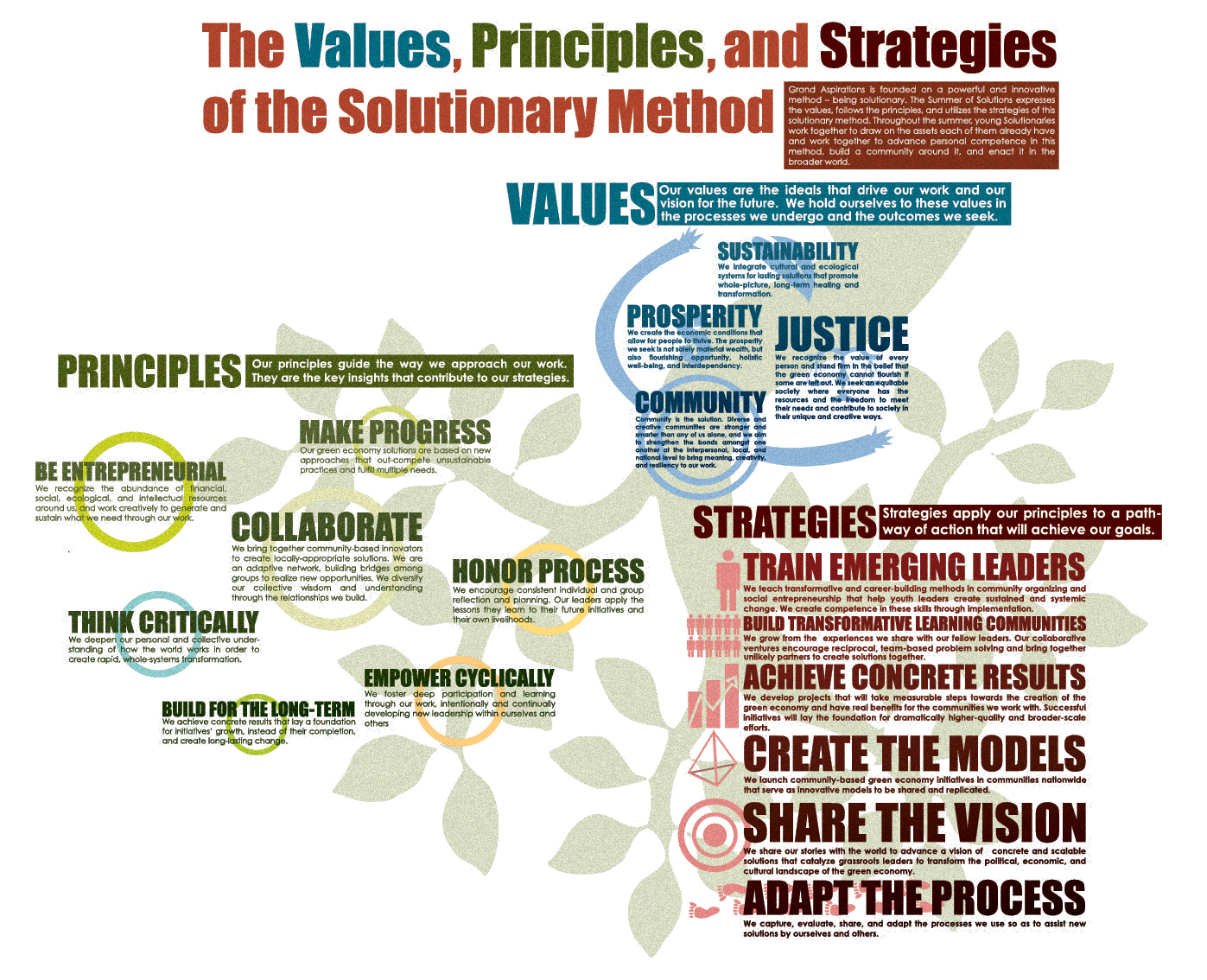
That’s where programs like Summer of Solutions come in. Summer of Solutions is a 2-month program that trains participants how to develop the green economy by creating hands-on, community-based solutions to climate change. Throughout the summer, participants learn not just what is wrong with the current system, but also how to make changes that integrate climate and energy solutions, economic security, and social justice.  

 At Power Shift, Summer of Solutions leaders and past participants, known as “Solutionaries”, ran around with jumbo sunglasses that we called the “Solutionary Lens”. We encouraged people to look through the Solutionary Lens to discover how it feels to use an actively participatory approach to create holistic solutions that confront a broad range of local and global problems through people power, rather than addressing individual issues. The Solutionary Lens views economic collapse, global development, local inequalities and global justice, environmental sustainability and personal fulfillment as not only linked, but sharing the same root causes and transformative solutions. 

This summer, there will be 15 programs across the country engaging in their own green economy development projects. We will pioneer urban agriculture ventures, retrofit homes and businesses, create distributed renewable energy opportunities, make biking more accessible, and work towards green manufacturing facilities. Each program engages in its own solutions, which you can learn more about at www.grandaspirations.org/programs.
The final deadline to apply as a full-time participant for Summer of Solutions is THIS SUNDAY, April 24 at midnight, PST. Part-time volunteer participants can apply up until the summer.  The application is available at www.grandaspirations.org/apply2sos. There are need-based stipends available for participation, and we will do our best to support you this summer. With just a few days until the deadline, don’t wait to apply for a transformative experience that will provide you with the tools you need to bring the youth climate movement to a new level of understanding not only what the problems are, but how we can create solutions. 

Youth Forge Solutions Nationwide – All Are Welcome

At a youth climate meeting in Minnesota in January 2008, a neat idea emerged from discussion:

‘We need to start training young people, not just FOR green jobs, but TO CREATE green jobs. We should start in the Twin Cities  this summer.’

Fast-forward three years, and over 250 young people have been trained over three years in Summer of Solutions programs around the country to create innovative and self-sustaining solutions around energy efficiency, green industry, renewable energy, sustainable agriculture, and smart transportation and design that advance job creation, social justice, and community empowerment. A network of over 70 youth leaders has coalesced to launch a national organization from nothing and develop 2011 Summer of Solutions programs that will support hundreds of youth in creating the clean energy economy in 15 cities nationwide.  These programs have expanded rapidly in number, quality, and sustainability over the years without grant support, and with a major influx of funding and leadership in late 2010, we’re just hitting our stride.

As you read on, I’d encourage you to think of any young people (individuals or groups) who might be interested in a summer program based on community-based innovation in the clean energy economy. If so, please invite them to apply to any of our 15 programs nationwide by April 24th at www.grandaspirations.org/apply2sos

Continue reading

charms and challenges in the pioneer valley

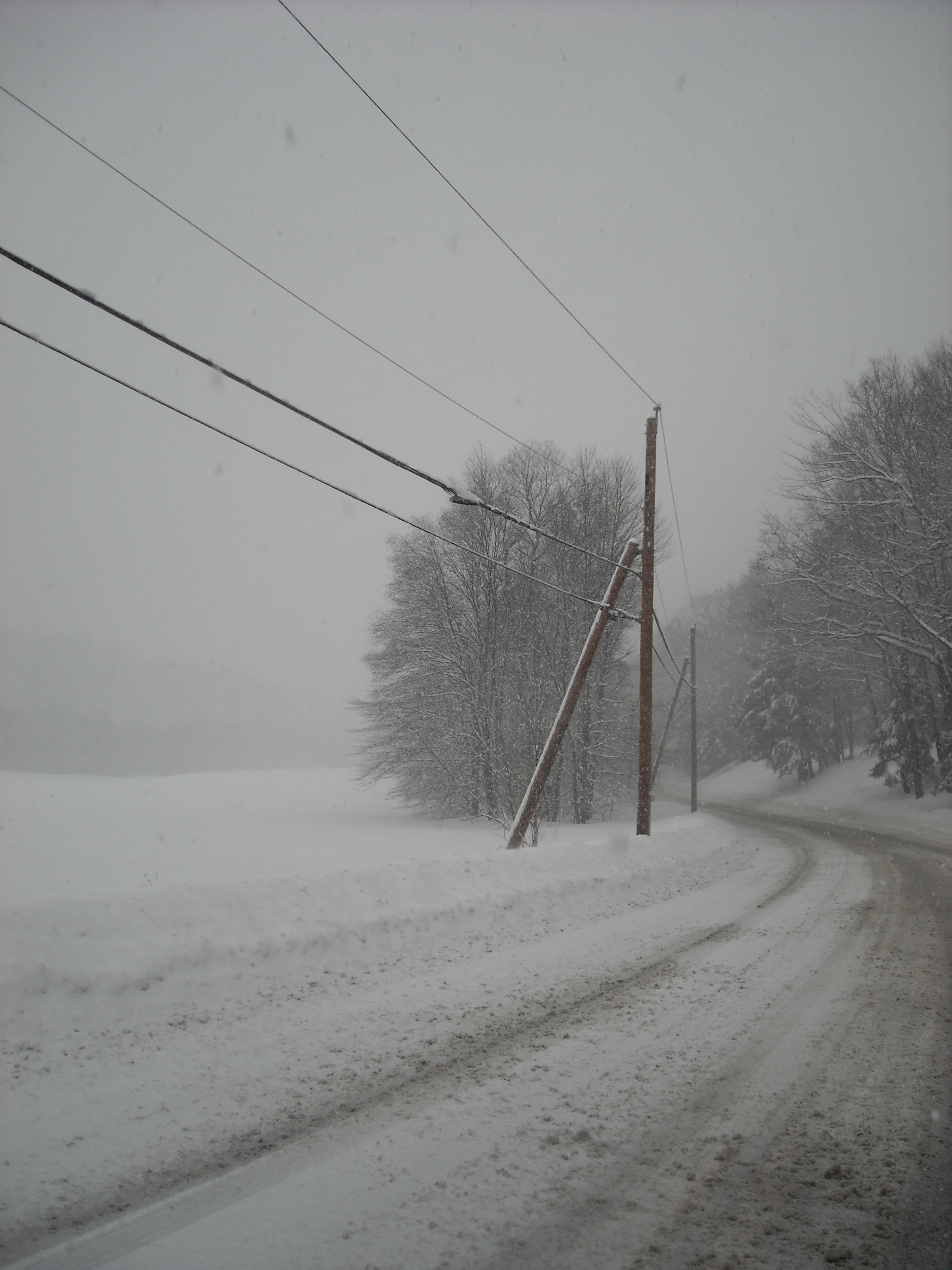
The substance coming out of the sky at this point was somewhere between sleet, hail and snow. My windshield wipers and headlights weren’t really enough to keep my vision clear, so I took the mountainous curves in the road slowly.  The kind voice on the other end of the phone line had told me, “If you reach the Vermont line, you’ve gone too far.  We’re a mile back.”  I passed out of Greenfield, into Bernardstown, out of Bernardstown, and on down the road.  I hadn’t hit Vermont but I was starting to wonder.  The radio announcer kept reminding me to, “drive carefully out there,” until the radio faded into static.  Finally I came upon number 682, pulled onto the shoulder, narrow with huge snow drifts, and popped the grant proposal into the mailbox.  This is only one of many moments when my expectations for planning a Summer of Solutions have been turned on their head by working in the Pioneer Valley.

En route to dropping off a grant north of Greenfield.

The Pioneer Valley spans from Springfield, Mass. in the south, north through the college towns of Amherst and Northampton, up to Greenfield and Turners Falls.  The Connecticut River snakes through this fertile and mountainous region of Western Massachusetts, which was the site of some of the earliest mills in the United States.   Greenfield and Turners Falls will be the focus of our program.  It’s the smallest location of Summer of Solutions, population-wise; Greenfield and Turners Falls combined are home to around 40,000 people.

All these factors make organizing our program an interesting and surprising experience each step of the way.

The first day Erika and I visited the Brick House Community Resource Center in Turners Falls, which was to become one of our main partners, their program coordinator walked us around town.  “I’ll have to introduce you to everybody,” she said.

However the challenges of the community are just as present as the charms.  Transportation limits many youth and adults from finding employment opportunities.  For most, having a car is a prerequisite for holding a job or pursuing higher education.  Entering Turners Falls is notoriously difficult and depends upon crossing the one bridge into town.

The employment base has been depleted over time, though new industries are emerging.   Co-op Power, a cutting-edge energy efficiency business, is based here and works around New England.  A new solar farm is being erected near-by.  The music and art scene locally is blossoming.

At a potluck for the local Time Bank (a method of skill sharing without money) at the Brick House I learned an inspiring activity that speaks to my optimism and excitement for the summer.  The dozen of us stood in a circle. One person, holding a ball of yarn, said something they needed, physically, or emotionally.  Anyone who could offer it shouted that out and they got the ball of yarn.

For example, Martin needed someone to walk his dogs while he was at work.  Turned out Ashley was in his neighborhood and could lend a hand.  Then Ashley said something he needed and so forth.  Before long we were all tied up in a web of reciprocity, having learned things about each other that would have never come up otherwise.

The lesson is that for all the needs in our communities, someone is out there with the solution, and willing to help.   If you work to build relationships, try new things and keep an open mind, whats you’ve been looking for starts to materialize.  In the Pioneer Valley we’re looking forward to sharing and receiving every step of the way.

APPLICATIONS OPEN FOR SUMMER OF SOLUTIONS

In just three years, the Summer of Solutions program has expanded from a single site in Saint Paul, MN, and a partner program in Portland, OR, to fifteen programs across the country. As an emerging leader in youth empowerment and green economic development, we are excited to open the opportunity to work with Summer of Solutions to creative, dedicated young people who believe in improving their communities, advancing social justice, and improving the environment. We believe that together, people hold the ideas and inspiration for change. By tapping the vision and skills of individuals, Summer of Solutions programs work in collaboration with community partners to create self-sustaining green economy projects that will continue to have a direct positive impact.

We welcome all participants ages 14-30 regardless of race, culture, class, gender, sexual orientation, and religion. Positions as volunteer participants (up to 20 hours a week) and full-time participants (40+ hours a week) are open. The program is free, and full-time participants are eligible to receive need-based financial support, the application for which is here. We are currently working to generate funding to support participants with all levels of need.

To learn more about Summer of Solutions and find a program, visit Grand Aspirations, the host organization of Summer of Solutions, at http://www.grandaspirations.org/programs. The page for applications can be found at http://www.grandaspirations.org/apply2sos. The priority deadline for full-time applicants is Sunday, March 13th at midnight PST, and the final deadline for full-time applicants is Sunday April 24th at midnight PST. Volunteer applications are accepted on a rolling basis.
We look forward to receiving your application, and working together, hands-on, to create stronger, self-sustaining communities across the country.

APPLY NOW!

Reflections at January Gathering

Our car pulled up across the street from the church and we parked, grabbing only essentials on our way out. We were let in the church and bounded up two flights of stairs to a beautiful, spacious auditorium. About twenty people were seated in a circle and I beamed, taking in each face. We tried to make a quiet entrance, but everyone burst out in greeting and a round of hugs broke the concentration of the circle.

Joe and I had started in Northern Virginia at noon the previous day and wound south to Charlottesville to pick up Mary, then through West Virginia to our sleeping spot near Lexington, KY, at Marcie’s home. A stop for tofu tacos in Charleston, WV (I kid you not, the Tricky Fish, check it out) broke the twisting, rising and falling drive. Bluegrass music and socio-environmental-historic commentary on the area from Joe filled the dark January night. Occasional plumes of exhaust and waste poured from power plants alongside the highway, casting billowing white clouds into the all-consuming night sky. Their networks of lights, yellow and glaring, pierced the scenery like Christmas lights with a grudge.

We caught some winks outside Lexington, KY, and woke before the sun had risen. I drove us west in morning light that turned the hills and valleys blue and rosy. With barely a pause we headed on to Chicago, discussing youth at the Cancun climate talks, direct action against mountain top removal, favorite bands and good reads.

If you had stopped by the Roger’s Park United Methodist Church of Chicago in the past week you would have found about twenty young folks working and playing twelve hours a day and upward. The January Gathering of Grand Aspirations brought together national leaders and leaders of ten Summer of Solutions programs across the country. Represented at this Gathering (a second followed in Portland) were:

• St Louis
• Raleigh
• West Virginia
• Pioneer Valley
• Twin Cities
• Detroit
• Chicago
• Oakland
• Fayetteville
• Hartford

The Gathering focused on building national community and purpose, and embarking on the different aspects of program planning.

It was exciting to put faces to names of people I had talked to on the phone or emailed countless times and reconnect with people I had not seen since an intensive two months in the Twin Cities. I’m the national support person for the Fayetteville team, and though we had talked numerous times, this was my first time meeting Andrea, Amanda, Ryan and Sylvia. I also had never formally met Ashley, who I talk to at least an hour every week. The binds we had already started to develop by telephone lines and emails really blossomed during the week.

I can only offer an anecdotal account of the week. Each day started at eight for breakfast and didn’t wrap up until nine p.m. or later. After the last session of the night I was often preparing trainings for the next day. In my dual roles as trainer and representative of the Pioneer Valley team I often felt overwhelmed and ill-prepared. That precarity opened me up for deep learning and reflection.

To speak from the I as we would say, I took away from the Gathering a renewed commitment to the work Grand Aspirations is doing, its necessity, and the power of solidarity across the country. Even at an intentionally progressive and individualized college like Hampshire, I find during the semester my thoughts and intentions can stray and become caught up in work that does not fulfill me. We discussed in a Personal Transformation session the Buddhist concept of “Monkey Mind”- that voice that tells you you can’t achieve you’re dreams and it’s not worth it to try. Monkey Mind can get pretty strong at school, and this Gathering was exacting what I needed to remember that voice is normal and within my power to ignore.

Summer of Solutions is very local, each program shaped by the place it’s in and specific needs and assets of the community. However coming together as a national group is an amazing experience of support and inspiration. The admiration I feel for fellow organizers in places such as West Virginia cannot be fully articulated. The connections between these geographically separated locales cannot be forgotten- Massachusetts power plants still burn West Virginia coal and natural gas.

I can also say coming out of the Gathering that young folks in our country right now really have what we need to redefine what our future holds. Planning a Summer of Solutions is a huge undertaking, but its potential impacts and ripple effects are innumerable. I admire everyone I was working with this past week so much for taking on that challenge with open hearts. We’re building the road as we walk it. That can either be terrifying or create a deep sense of agency. Surrounded by people who are committed to this same undertaking reminds me why I’m doing it in the first place and the power of the collective. Our programs will each be different but collectively they will show that local solutions to environmental and economic problems exist and can work in beautiful synergy.

It’s Our Power

I believe in Energy Democracy.

Energy is 10% of the entire economy, powers and makes possible everything we do in the other 90%, and is the most centralized and tightly controlled of all economic sectors – just a handful of giant oil companies and electrical and natural gas utilities control the vast majority of the wealth. Every year, the average American household puts 5% of their income into the hands of these energy companies, and reaps a return in asthma, traffic congestion, war, destruction of communities in places where energy is extracted, reduced economic security in the face of volatile energy prices, and dramatic and unpredictable changes in our climate as well as the ability to heat, light, and power their homes, schools, and workplaces, and drive between them. For families below the poverty line, this portion of their income is more like 15%, and these proportions get still higher if you count the energy costs embodied in the prices of our food and other products. Every day, our communities are pouring these dollars outside, to massive, centralized energy producers. Every day, we’re pouring these dollars towards the problems that are fracturing our communities, attacking our health, threatening or security, and devastating our climate and ultimately our economy.

What if we reversed this flow? What if we poured this vast channel of wealth – over $1 trillion across the United States alone  – back into our communities and towards energy solutions that reconnect us with ecology, create bonds between neighbors, and revitalize our economy my cutting our costs and creating jobs building and servicing smart energy systems in our communities. What would this change do for our society? First, it would send a huge pulse of resources and capital back into our communities to improve the efficiency of our homes, upgrade our infrastructure to local smart grids, and help capitalize a massive wave of localized community-owned energy. Second, it would put these resources into local job creation serving local needs, and require people getting together with their friends and neighbors to learn how to make the transition and work together to do it. Finally, it would eviscerate the dirty energy industry by removing its greatest cash flow (which, let’s remember, is not investors or the government, but us, energy users).  We could do all this if only we (collectively, individual consumer choice makes little difference)  redirected the money we spend on dirty energy and invested in a better energy.

In 2007, I began a journey to figure out how to turn this big concept into a reality. Read on to learn the what, the how, and the why.

Continue reading

a big thanks

It feels entirely fitting that I’m blogging for Grand Aspirations around Thanksgiving.  Since my involvement with Grand Aspirations and Summer of Solutions began in May, I’ve experienced an amazing transformation in how I think about the world and the opportunities around me that I’m extremely thankful for.  Nope, I haven’t tuned out the facts that we’re already experiencing the effects of climate change, mountains are still being blown up in Appalachia and we’re in the throes of the worst depression since the 1930s.  It’s all in how I’ve started to look at those facts and the systems that create them.

I recently read in an article by two excellent researchers, Julie Graham and Stephen Healy, that captured how I used to think:

“[the economy is] understood as a force outside community and environment that effectively determines their fates.”

“If the practice of conventional economic development is about accommodating the demands of the (global) economy, environmentalism in its various incarnations is about resisting, or compromising with this same external force… …We can either say ‘no’ to economic development entirely or we can accept an unsatisfying compromise between development and environment. “

Building Community Economies: A Post Capitalist Project of Sustainable Development pages 4 and 8

This is a pretty intractable situation.  Economists portray environmentalists as anti-development and elitist, while environmentalists portray economists as, well, the source of all evil.  Enter Martha Pskowski, an environmentalist intent on studying economics.

The past year has taught me that people all around the world are forging ahead regardless of globalization, economic crisis and political stalemate.  And these groups aren’t just addressing the climate and ecological crises we’re facing, they’re redefining their community economies.  Young farmers starting CSAs and subsidizing low-income shares, community bike shops making bike commuting an affordable reality, cooperative housing keeping rent low and foreclosure at bay.  The list goes on.

Students at Hampshire College run an all-volunteer natural food co-op and keep prices cheap!

This is really what Graham and Healy wrote their article to ask:

“What if we could produce a different representation of economy that no longer functions as a force outside community that issues demands?  If a different understanding of economy were to free us from obsessively trying to satisfy (or resist) an external master, what new conceptions of ‘sustainable development’ might emerge?” Page 10-11

These are the same questions Grand Aspirations inspires participants to ask.  The options I see for myself in the economy expand and multiply every day.  And the ways our ecology can be nurtured and celebrated seem more and more accessible.  Not to say I could quit school and walk into my new job tomorrow.  But that’s the point.  We’re building the jobs of the future.   And I couldn’t be more thankful.

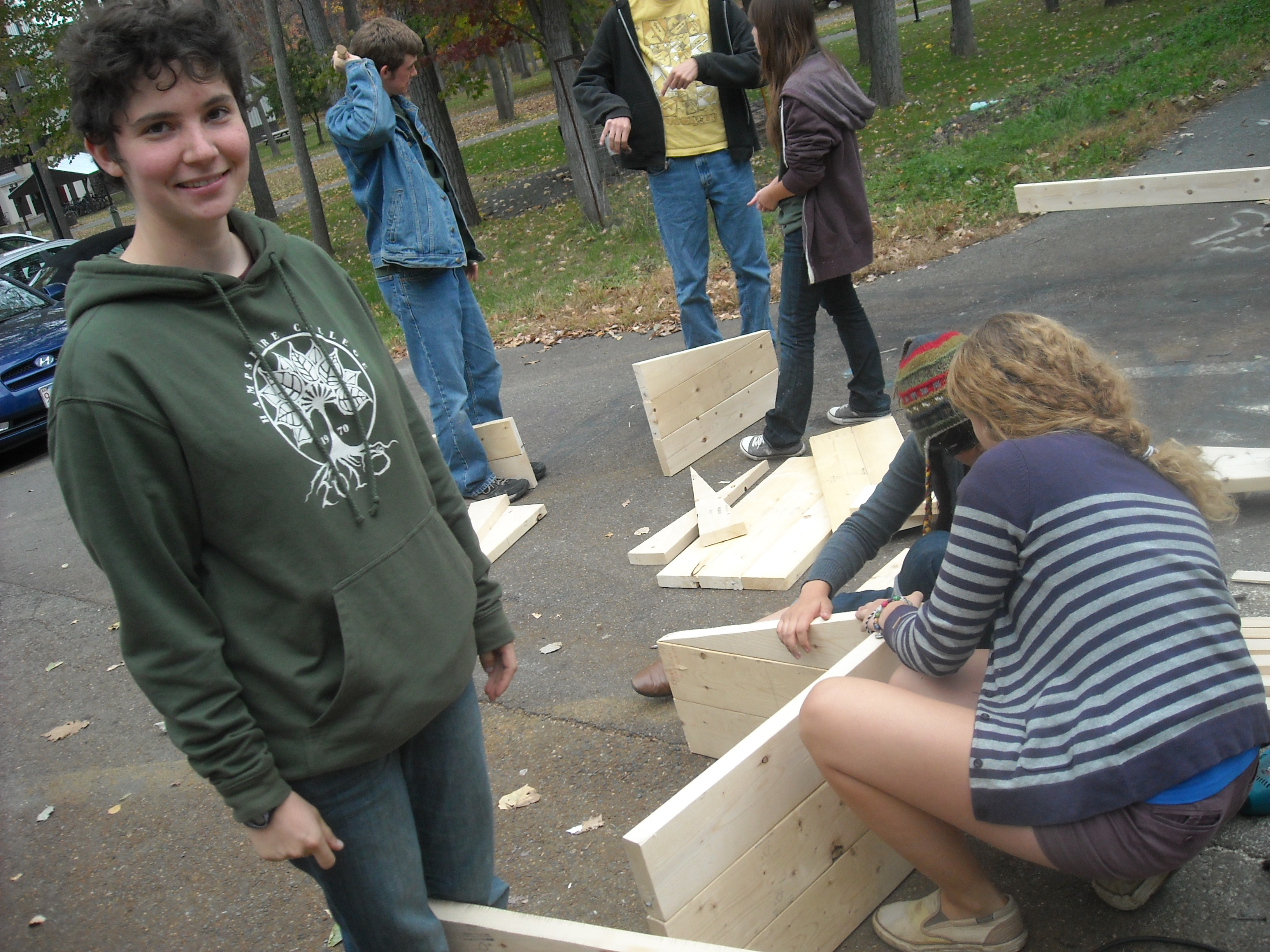
Students build cold frames to extend the growing season in a community garden.


Money, Money, Money

Growing up, my family and I were very involved in our community theatre, which was probably my first close encounter with the term “non-profit.” As a kid, I wondered why selling tickets was so important if they weren’t looking for a profit. Of course, I soon learned that non-profit is far from meaning non-revenue-generating. Even if the prerogative of your organization isn’t to make a profit, you need money to operate and to further your vision. This fall, I’ve been thinking about this a lot as I’ve been working on the national resources team for Grand Aspirations. Specifically, I’ve been thinking about the sources from which we get (or seek to get) funding.

Throughout November, we’re involved in an online voting competition to get a $50K grant from the Pepsi Refresh Project. While the organization has determined this is funding that is well worth seeking and I agree, it provides an opportunity to think about how non-profits are funded, and how wealth is created. In an environmental geography class this semester, there was a discussion on sustainable development and the notion (partly propagated by the environmental Kuznetz curve ) that wealth is necessary for environmental preservation. I found this problematic as it’s so frequently discussed in terms of wealth created through (the very unsustainable variety of) industrialization and consumption. So we’ll pollute and deplete and then we’ll have the cash to plant some trees?

Obviously, that’s a pretty brief and incomplete version of an extensive and complex issue, but that’s basically the conundrum I’ve been contemplating. Pepsi is an obvious example, since that funding is pretty directly branded. However, I’m sure that many foundations that would give grants to organizations like GA are at least partially funded by corporations with maybe less than desirable labor or environmental practices. I mean, I admittedly haven’t don’t research on this, but I think it’s a distinct possibility.

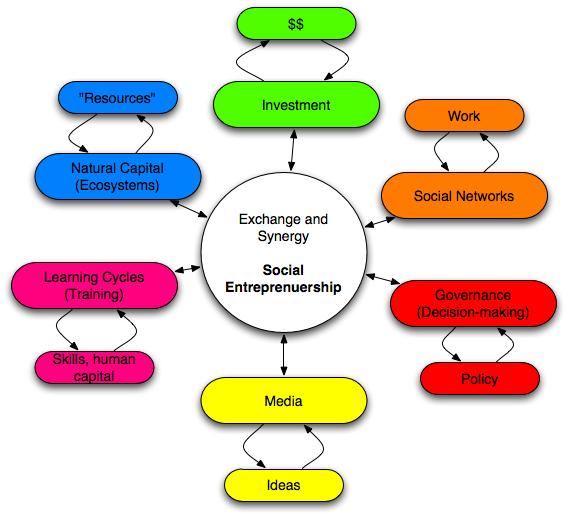
In the national teams there has been concern raised about getting stuck in grant cycles, and besides the fundamental problem of dependence, I would consider the factors discussed above another concern. It doesn’t bring me down though, it makes me really excited about opportunities we have for social entrepreneurship methods of revenue generating. Social entrepreneurship changes the story about how wealth is created, and can provide a good funding source for non-profits as well. If we’re trying to encourage such changes in our economy and society, shouldn’t we be getting the money to operate from activities that constitute acting out this vision?

That said, I really hope we do win the grant from Pepsi Refresh, so we can jump start a lot of this, and I encourage you to start voting daily if you haven’t already.

[Note:I did totally jack the title from this:] 

Bioneers Inspires

By Jennice Rodriguez
Reno, NV
Posted by Casey Wojtalewicz

A few weeks back I was given the chance to attend environmental/peace conference, Bioneers, for the second time in Marin County California.  The event, if you haven’t experienced it already, is something beyond the power of words could describe.  A festival organized for enriching the mind and activating the activist deep inside the soul each attendee.  It’s a place where some of the most powerful people are united in the same place to talk about their work, the work of others, and the work that we as a society need to start engaging in.

It’s a place where lifelong learners come to be taught and experience all the different ways our mother is trying to get us to listen.  It’s a place where the hungry come to be fed the fruit of exposed dirty treason of the powerful forces in our country, but with as much information that is being shared, it is more enlightening than depressing, more electric than any festival I have ever experienced (besides Burning Man…which could totally be compared to this event, in another blog maybe).

Though it may sound quite terrifying–and it is!–Bioneers is a place where possibilities meet the golden ticket to Willy Wonka’s Chocolate Factory.  Bioneers has been the root of so many ideas I have to make this world, to save this world, our world, a place I want to live in.

I walked away this year with so many contacts, I don’t even know what to do with them all. I made friends that I already know better than people I’ve known for years. One idea that hasn’t stopped flickering in the glass window of my memory shop: I was told to find something I am passionate about, and start from there.

But what am I passionate about?  I love my fruits and veggies, and I want everyone to be able to access only the purest food, sure.  I think green energy is something that our government needs to get in check with and make it happen already, sure.  I think marijuana should be legalized and the production of hemp products will save the land that has become ever so exhausted, sure.  But what am I really passionate about?

I have been overwhelmed with the numbers in which one person can dedicate their power to, and I want to do it all, but I can’t do it alone.  Until I find out what it is that I’m passionate about, I need your help, and she needs ours.