Developing Leadership

A tomato plant viewed from below with the sun in the backround.

Photography by Martha Pskowski.

Since September, I’ve been working on the national Leadership Development Team, planning for training weeks at Summer of Solutions programs around the country. We’ve done a lot since we got started, reviewing and editing old trainings as well as developing new ones. I have been excited to discover that the members of our team are all really motivated to make Grand Aspirations an organization that works against oppression. This past weekend, I turned the anti-oppression workshop that we did during the Twin Cities program in 2010 into a replicable template that other programs can use. As I was reading over the notes my co-facilitator Hannah had sent me, it really brought me back to the experience. I was reminded how powerful of an activity this was. By talking about our own identities and the way that we experienced those identities, we were able to begin a practice of speaking honestly from our own experiences. For me, there was the added value of learning how to facilitate a conversation about deeply felt identities that builds towards trust and openness rather than closing people off from each other.

As I was discussing with Hannah the best way to attribute the work that had gone into creating this workshop, I realized all the different perspectives and experiences that had gone into making this template the way it is now. While we will do our best to capture the people who contributed directly in the sources listed at the top of all Grand Aspirations templates, it got me thinking about all the people who it would be impossible to cite who contributed. Conversations that I have had and articles and blog posts that I’ve read shaped the way I wrote the template, and I’m sure that there is a web of connection and learning back from every person in every organization who worked on this training. As different facilitators give this training in the future, they will bring their own personal experience to the way that they facilitate it.

To me, this diversity of experience and opinion is one of the most important reasons to work towards an anti-oppressive organization. People with homogeneous identities are different people — I am different from my sister, for example, despite our identical class background, race, ethnicity, geographic location, religious upbringing, gender, and parents — but we can’t create solutions for a heterogeneous world based on only our experience. I am excited to work with Leadership Development Team to see how we can recognize and expand diverse leadership in the organization and our programs.

Think-tanking about Solutions

Cross posted with revisions from Minnesota 2020’s Hindsight Blog

I spent my time in the Twin Cities this summer with Summer of Solutions. Since that summer, I’ve been thinking about intersections between the abstract concepts of “the economy” and “the environment” and the communities where these ideas become realities. During my fall semester at Macalester, I’ve been spending time at an internship for Minnesota 2020, a progressive non-partisan public policy think-tank in the Twin Cities, and I have the opportunity to write about moving Minnesota’s economic policy forward.

of  ago, Will Allen from Growing Power Inc (Milwaukee, WI) spoke at Macalester’s campus at a fundraiser dinner for the Women’s Environmental Institute. It was awesome. In the audience I recognized the faces of Cities organizers, activists and entrepreneurs that I had met through Summer of Solutions. Allen’s speech and got me thinking about how permaculture could go statewide and mainstream, so I got to write about it for MN2020:

The turn toward blustery and freezing weather this week signals the end of harvest season here in Minnesota and the beginning of even more Californian, Mexican and South American imports. Meaning that multi-national agriculture corporation owners will benefit from more of our food dollars.

The world’s warmer regions certainly have an advantage when it comes to year-round food production. Large-scale agricultural methods could not support any crop through a Minnesotan winter.  But thanks to innovative and sustainable growing techniques, fresh salad greens grown in Milwaukee and fresh tomatoes grown in southern Minnesota are becoming an affordable option for consumers.

At most grocery stores in Mankato, Rochester and the Twin Cities you can find Bushel Boy tomatoes, grown in Owatonna, Minnesota, on the shelves all winter long. Bushel Boy grows its tomatoes in greenhouses without pesticides or herbicides. Bees pollinate the tomatoes and predator insects eat any pests that appear. Because Bushel Boy’s produce doesn’t travel thousands of miles to get to a grocery store, these local, vine-ripened vegetables have better nutritional value than their artificially ripened counter-parts.

Over in Milwaukee, Growing Power Inc, a non-profit urban farming organization, takes sustainable, job-creating food production a few steps further. Growing Power’s intensive urban farm design combines raising fish, livestock, poultry, and fresh produce with solar panels, compost, and an anerobic digestor that generate enough heat and electricity to power green houses through the winter. At their Milwaukee location, a two acre urban farm employs 35 full-time staff; generates revenue by selling compost, meat and produce; and offers classes and workshops for folks in the neighborhood. Growing Power unites sustainable food production, economic development and social justice.

Bushel Boy and Growing Power set examples of what year-round farming in Minnesota could look like. Both use efficient, common-sense methods that support the local economy and produce healthy and more cost-competitive food year round. There is still a long way to go before we can make these  systems a widespread reality. The first step is to recognize that economic development takes many forms, including through local, innovative and sustainable agriculture.”

I will continue to think about ways to communicate what I learned and experienced during SOS this semester…Check out MN2020’s blog or website!

Truly Becoming a Solutionary

Last summer I had the privilege of participating in an amazing Twin Cities Summer of Solutions Program. While I knew this was really a special experience it wasn’t until recently that I’v realized just how well SoS has prepared me to work as a solutionary.

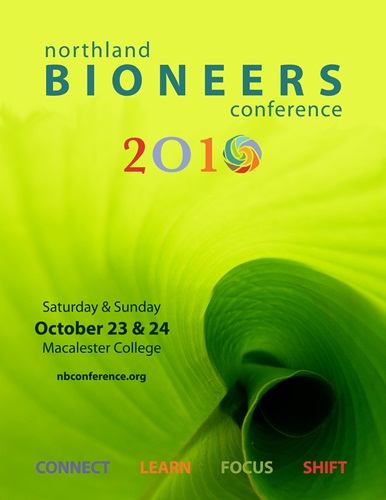
Last weekend I had a chance to give a presentation about one of our Summer of Solutions (SoS) projects at the Northland Bioneers Conference along with several other SoS participants. This conference takes place all over the country and includes thousands of participants. Revolutionary thinkers from around the country talked about pioneering ideas to make our earth more sustainable.

My presentation was about Cooperative Energy Futures, an energy efficiency co-op that works to create community powered energyefficiency as a first step on a pathway towards a Green economy. Throughout the summer I realized that we were doing groundbreaking work, but it really wasn’t until the Bioneers conference that I realized that this work is truly on par with what some of the greatest leaders of our day and age. We are not a just a group of youth, innovators who are contributing to the cutting edge of the global systems thinking we need to pull us out of crisis.

While I have always been confident in my ability to do good work I have considered myself inferior to the “grown up” world.  SoS taught me that I don’t need to wait to make an impact until I’m done with school and that my input and work is just as significant and needed as anyone else’s. I am no longer afraid to take on commitments because I don’t think I can do it, instead I try my best and ask for help when I need it, and in doing so I’ve surpassed what I thought I was capable of.

I am starting to realize while this personal growth is great what will be more important is passing on this confidence to my peers.  By helping others start doing work to improve our world in a way they feel passionate about I hope I can become part of a global solution, one that grows and blossoms over the years to come. In a world facing massive economic, social and environmental challenges we need strong leadership from the youth that will inhabit this plant after our current leaders have passed – SoS is one incredible program that is helping create that leadership.

Solutionaries Worldwide!

This fall, solutionaries around the world are getting interested in Summer of Solutions. As we grow together across the country and make more and more connections nationally and internationally, new opportunities are emerging.

Like this one: e-GLO

e-GLO (Global Learning Opportunity) is a project inspired by the Earth Charter, an international document written to encourage “respect and care for the community of life,” “ecological integrity,” “social & economic justice,” and “democracy, non-violence & peace.” People all around the world are developing Earth Charter projects to make their communities more sustainable.

Summer of Solutions – Fayetteville, through OMNI Center’s youth program, Teen Leadership Corps, won a $300 scholarship to represent the United States in e-GLO.  I also want to see solutionary representation from other cities, not just Fayetteville, so that everyone can benefit from the materials and network. It’s truly inspirational!

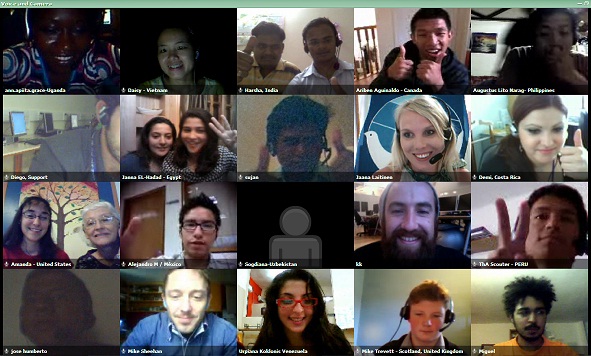
In e-GLO, 30 youth from around the world get together online via a type of Skype platform.  We share our projects and inspirations, answer polls like the one above, listen to guest speakers, view video and powerpoint presentations, discuss important questions like “How do we spur the capacity for innovation among youth leaders?” There is also a very human component to the course: each time we connect, we can chat with each other, wave across oceans, and share a little about what’s going on locally. Want to participate? e-GLO #3 lasts until December 7th, 2010. Follow the course material on the e-GLO schedule. You can access the training materials, too! Or join the Facebook group and find out what people are doing around the world, via project templates, videos, and photo slideshows.

Watch e-GLO’s video here. (It’s not possible to embed the video from this website)

The course has already begun to affect the way we do Summer of Solutions here in Fayetteville.  Someone can’t attend a meeting or lacks transportation? No problem, let’s Skype them in. We don’t have access to a business trainer? Ask Hadijah, a  professional who teaches business skills in Uganda and is interested in Summer of Solutions for Ugandan youth.  Not sure about which materials to use for social entrepreneur trainings? We can now use the professionally designed powerpoints and PDFs from e-GLO to help each other learn and achieve more for the community and the planet. The biggest learning curve for me has been the access to new technology.  e-GLO really stresses the importance of social media tools, and their tutorials are engaging and encouraging.  I’m beginning to notice that technology is becoming more exciting, and a bit less threatening.

But the best part about e-GLO is the people! Our facilitators in Canada and Costa Rica, and our tech specialists around the world, are funny, helpful, and inspiring people.  The youth who participate in the program stand out as innovators guided by their passion for a more sustainable world.  Meet the e-GLO solutionaries!

This is a pic from one of our recent e-GLO sessions! Each square is a different participant from around the world.

Launch the Summer of Solutions: Change the Story

Cross-posted from It’sGettingHotinHere.org

This is a call.

On the basic level, it’s very simple; it’s a call for youth leaders all across the country who are ready to dig down into the grassroots and work with people in their communities to create solutions. We’re looking for leaders who want to plan a summer program next summer that will start, grow, and expand green ventures at the community level that meet the needs of our neighbors (food, housing, transit, energy, jobs), show the world what is possible, and start to out-compete the dirty energy systems that run our world.

You’re in? Just find a friend who agrees and APPLY HERE. Priority deadline midnight 10/24 – just give us a heads up if it will take a bit longer.

Need more background? Check out this video by my co-worker Matt Kazinka, read the background info in the application, or check us out at www.summerofsolutions.org

But really, this is about a lot more than running a cool program next summer. This is a call about changing the game for our economy, our communities, and our climate.

Continue reading

Getting To Work

This past weekend, the largest day of climate action in history, united tens of thousands of people all across the planet in “getting to work”.

People came together in communities across the world to make neighborhoods more efficient, grow food, install renewable energy, plant trees, create bike transit teams, and so much more. In the face of political inaction, a global economy that seems hesitant to go green or to recover, and a climate clock whose ticking is ever more audible in Pakistan’s floods and Russian fires, these people from all across the planet are getting to work and telling the world to do the same.

It’s a start.

Building a green economy is the work of a lifetime. We will not reinvent the electrical grid, rebuild our cities and their transit infrastructure, or renew our food system overnight. Rather than removing urgency, this long time horizon should heighten it while making our movement more thoughtful and strategic. The best time to plant a tree was 20 years ago. Now is the absolute latest that we can get started, but it will be a long haul.

How will our generation survive this marathon race to a society that can sustain itself? The job market is slowly slipping, and our generation is the most unemployed, particularly for young people from low-income and minority backgrounds. The economic foundations on which young people have long relied to pay the bills, or drifted back to after the bright-eyed aspirations of youth fade from us are themselves fading. As a generation, we are increasingly finding ourselves with our backs to a wall in an uncertain world.

Its time to get to work.

We need to start growing the green economy so that it can sustain us and others around us. We need to demonstrate through our work that this whole big dream of sustainable communities and green jobs is more than a bunch of talk. We need to rally our communities around a vision that they can see and feel and touch – that is visibly a win-win-win for the planet and the economy and the person down the street or across the world. It’s time to start competing with the dirty energy companies and the highway networks and the food giants to provide better alternatives to meet the basic needs of people from all backgrounds while rebuilding community, revitalizing local economies, and creating a future for ourselves. It’s time to forge new alliances that dream a better future AND create it, transforming the balance of power politically, economically, culturally, and technologically. With that, I have an invitation to one great way to get to work doing those world-changing in conjunction with other cool people doing the same:

Over the past few years, I’ve had the honor of being a part of building an emerging community of leaders who are getting to work by growing the green economy. Since 2008, Grand Aspirations has grown rapidly, supporting youth leaders and partner organizations in running Summer of Solutions programs across the country and sustaining and replicating the innovative strategies they develop throughout the year. These young people are helping communities employ people to farm in urban food deserts, launched community-energy projects, started green industry centers, helped whole neighborhoods work together to find positive ways to cut carbon emissions, and opened access to green jobs and sustainable transit. Several of us met in August to share lessons learned figure out next steps. We know that there is a lot more great work going on out there – we keep hearing about new solutionary ventures across the country and around the world. We’d love to get to work together, because it will take all of us.

So now, we’re inviting youth leaders (14-30) from all walks of life, backgrounds, and organizational affiliations to create and lead a Summer of Solutions program in 2011. These programs focus on making transformative change in close partnership with local communities while creating the sustainable community development models that create jobs and a future for youth leaders and their communities.

Telling us that you want to be a part of it is simple. Find at least one partner-in-solutions and fill out the application! Priority deadline is October 24th at midnight.

APPLY HERE

To get a better understanding of what the Summer of Solutions means and what great work we are trying to achieve together, you can check out the guidelines for a program here. While we’ll provide plenty of support, outside these guidelines the shape and format is pretty much up to you! We’re bottom-up, and while we have some cool insights and resources to help you create the green economy solutions most relevant for your context, we need the genius, passion, and dedication from all the solutionaries out there to create the green economy.

However you decide to do it: get to work.

Uncovering Transformation

*authored by GELTer Ayoola White*

Caulk gun? Check.

Window kits? Check.

Toolbox? Sink aerators? Clipboard? Check, check, check.

Every morning, for the week and a half that the GELT team performed weatherizations, we hustled to prepare for the day. We gathered our supplies, called Highland Park residents, and hurried off to our destinations. People generally tend to regard all neglected communities as if they were identical, but we quickly recognized that no two houses were alike, neither in their weatherization needs nor in their family dynamics.

At every household, we were offered a little peek into the stories of those who lived there. Many of the narratives were nonverbal, implied in sighs, creaky stairs, and the giggles of children running around. Karina, an outspoken woman who has resided in the area for a long time, actually took the time to verbalize her story to my partner and me.

What surprised me so much about Karina was how freely she spoke about events in her personal life, especially to two young strangers. She had no qualms whatsoever about conveying her feelings about her ex-husbands, her ailing mother, her battle with drug addiction, or her complaints about certain neighbors. Her narrative was more than a little shocking, but, in the end, she gave a simple, yet moving account of how she took a step toward ridding herself of her pain.

Until recently, Karina never felt comfortable in her own home. To her, the walls held memories of toxic relationships and bitter shouting matches. In her studies as a student of natural healing, she eventually realized that she had to change her surroundings if she was to take control of her life. So she painted her walls a whimsical shade of pink.

Karina’s fundamental lesson for us was the importance of honoring oneself. People without self-respect and self-love are like black holes that swallow everything, even light. They make destructive decisions and can never truly move forward.

Listening to Karina’s story has made me realize that we cannot forget that there are individuals in the environmental movement. Coalition building and community organizing are vital, of course, but we cannot simply regard ourselves as identical cogs in a machine. We must learn our strengths, hone them, and adapt them.

First day of the national gathering!

I just got here to Fayetteville last night for the Grand Aspirations national gathering. So far, I have been extremely impressed with the level of real engagement with the community that I have seen here. I have been on the working group planning the event along with Amanda, Ryan, and Sarah here in Fayetteville and Matt from the Twin Cities. Our Fayetteville working group members kept telling us about all the donations that were coming in from the community, that people who they’d never met were calling them asking to bring produce from their farms. I’m really impressed with the way that the Fayetteville program is made up of people who are a part of this community and have been for years and working in a very integrated way with community partners. Continue reading

You have everything you need, if you just believe. – “Believe” by Josh Groban

[Cross-posted from Summer of Solutions: Fayetteville’s blog]
Empowerment seems to be a unicorn; quite fanciful, out of reach, and potentially a hoax.

This summer, I realized what empowerment means: wanting something you deserve but can’t have, and to be shown how to get it for yourself.
This could be civil rights.
This could be education.
Or it could be a green job.
 
Do we want green jobs, really? Have we fully, deeply, and comprehensively come to understand the deprivation we experience daily: our immediate need for money, being forced to acquire money in unsustainable ways, use it to buy food that’s almost poisonous, take jobs with no concern for us, other people or the planet…it goes on and on.
My swirl of confusion in SoS Fayetteville may be caused by one simple oversight on my part: we don’t really want green jobs, because we don’t realize how much we need them.
We have television sets and cookies, how could American youth ever be deprived? For one thing, when presented with the tools of empowerment, they ignore them.

As I post this, a lady in the computer lab next to me mistook my smile as an invitation to rant about bad news: “Did you hear, 12 people drowned in Louisianna and a Conneticut gunman…” All I could think was, “And today in Arkansas a youth decided not to create a green job so that more people will drown and be shot in wars over climate change…”
When a youth becomes an entreprenuer, it’s “extraordinary”. When a youth succeeds in a career in acting, music, art, science, literature, you name it – this is considered a special case, a child prodigy, a gift from God just for him/her, or at best an ability that all other youth lack.
This is a lie.
There’s a good book called TALENT IS OVERRATED by Geoff Colvin proving that this cultural misconception needs to stop. It’s obviously disempowered too many of us.
Deprivation may be the foundation for empowerment…. but the key to empowerment is to want it.

Green Freedom

authored by GELTer Ayoola White

Over the course of our time in Highland Park, we GELT-ers have had a variety of learning experiences: permaculture lessons, visits to nearby farms, a lecture about the danger of nuclear power, and tutorials on home weatherizations. In addition to those classes, we’ve been taking a seminar entitled “the Freedom Movement”. In this seminar, we have discussed the history of slavery, the Montgomery Bus Boycott, and the Poor People’s campaign.

To the untrained eye, this seminar would stick out like a sore thumb when compared with everything else. After all, our overarching goal is to create a model green economy in Highland Park. What do the civil rights battles of the past have to do with the environmental struggles of today?

In actuality, social and environmental concerns have salient intersections. After all, the most disadvantaged people in the world—women, people of color, citizens of the Global South, and disabled people—will be affected first and most severely by climate change, pollution, rising ocean levels, and the like. These groups have struggled and continue to endeavor to gain political efficacy, just as blacks, women, Chicanos, and indigenous peoples did in the ‘50s and ‘60s in the United States. Attempts to solve environmental problems must take into account human communities in order to succeed. Sadly, not everyone realizes this necessity. As one workshop facilitator at the United States Social Forum noted, news regarding environmentalism covers two topics almost exclusively: politics and polar bears. People? Not so much. How can the human population as a whole deal with environmental crises if a substantial portion is so encumbered by pernicious, institutionalized forms of negligence and discrimination? The lessons from the Freedom Movement offer tools to ameliorate the situation.

In our Freedom Movement class, we’ve sharpened the valuable skill of defending our ideas. One exercise we’ve practiced is to create a short thesis—25 words or fewer. Then, we must defend that thesis for ten minutes against probing and difficult questions from our peers. With this exercise, we have to keep cool and think on our feet, much like the countless civil rights activists who made arguments for equality to people who vehemently—and sometimes violently—resisted the encroachment on their unearned privileges. Certainly, the stakes aren’t the same, but I personally appreciated this opportunity, since persuading irreconcilables to recognize the reality and urgency of climate crisis is such a burdensome yet necessary task.

Nonviolence is another key concept we’ve explored. Although environmental activism is not typically considered to be as aggressive as other forms of activism (hey, we’re treehuggers, not tree mercenaries, right?) it is vital to remember that, as Martin Luther King, Jr. observed, “Hate multiplies
 hate, violence multiplies violence, and toughness multiplies toughness in a descending spiral of destruction.” We, as environmentalists, must be proactive, not reactive. Moreover, we must make connections to other movements, not simply notice parallels between them.