A Peace & Justice Garden

Aside

For the past three weeks, squished on the couch in what might be the hippie-est living room in all of Minneapolis (maybe even the whole Midwest), my world has been rocked. I haven’t DONE anything too significant… pulled weeds here and there, trimmed some trees, harvested garlic… But little by little, I’ve started getting my head around something I’ve come to believe is the absolute most important thing we can do in order to close the gap between how the world is and how it should be. And that is, empowering communities to transition to a fundamentally different way of living. It’s a lifestyle in which environmental impacts, both negative and positive, are experienced rather than displaced. It’s a lifestyle you would diagram as circles, one cycle feeding into the next. It’s a lifestyle to which you would apply words like “enduring,” “self-sufficient,” and “conscientious.” It’s a lifestyle where social capital is what makes you rich, organizing neighbors is what gives you power, and love is the most potent drug around.

There’s an awful lot of talk out there about the evils of capitalism, inequalities plaguing our education and healthcare systems, epidemics of obesity, peak oil, and a whole slue of other injustices I can’t pretend to fully understand. But over in Phillips on 17th avenue and 24th street, my world has been rocked because Lynne Mayo, a fiery woman with a plan, is doing something about it.

Lynne has taken what has become a quite devoted posse of Summer of Solutions participants under her wing. She’s made it her business to get to know us, insisting we take mug shots next to our names so that she can work on memorizing them. She’s taken time to sit with us, offering up homemade raspberry pie and asking us questions trying to get at what makes each of us tick. She’s shown us documentaries exposing the dangers of genetically engineered foods. She’s brought in neighbors to teach us about herbs. She taught us methods of bio-intensive gardening and let us have a go at it as we began preparing plots for fall planting. She introduced us to permaculture, helping us to understand the importance of caring for the earth, caring for people, and sharing the wealth. She adds a new book to her recommended reading list every day: James Hansen’s Storms of My Grandchildren, Richard Heinberg’s Peak Everything, Atina Diffley’s Turn Here Sweet Corn, Howard Zinn’s A People’s History of the United States….If only I could read as quickly as Lynne can spew off titles.

What have I gotten out of my time with Lynne so far? Well, my “to read” list as multiplied 10 fold. My knowledge of weeds and plants has expanded. I can confidently tell you the difference between a pitchfork and a digging fork (don’t worry, Lynne, I wouldn’t dream of digging with a pitchfork). But the most important thing Lynne has given me in just our first few weeks is this feeling I can only possibly describe as exuberance. An exuberance that translates into insatiable energy because over on 17th Ave, things are moving… plants are growing, organics are composting, greenhouses are building, seeds are starting, and slowly but surely, peace and justice are coming.

-Hannah B. is a SOS Twin Cities 2012 participant
Transition Garden Twin Cities

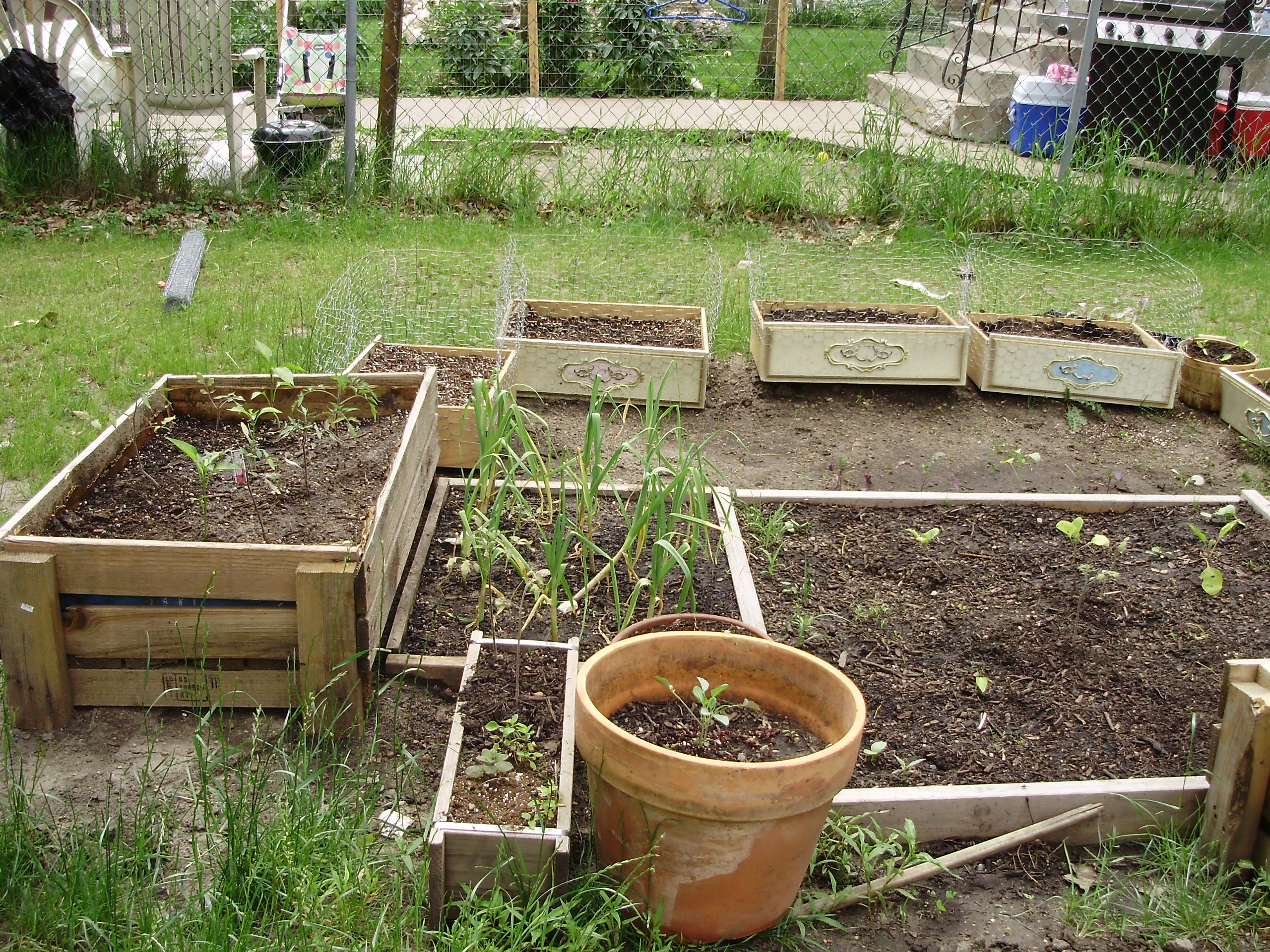
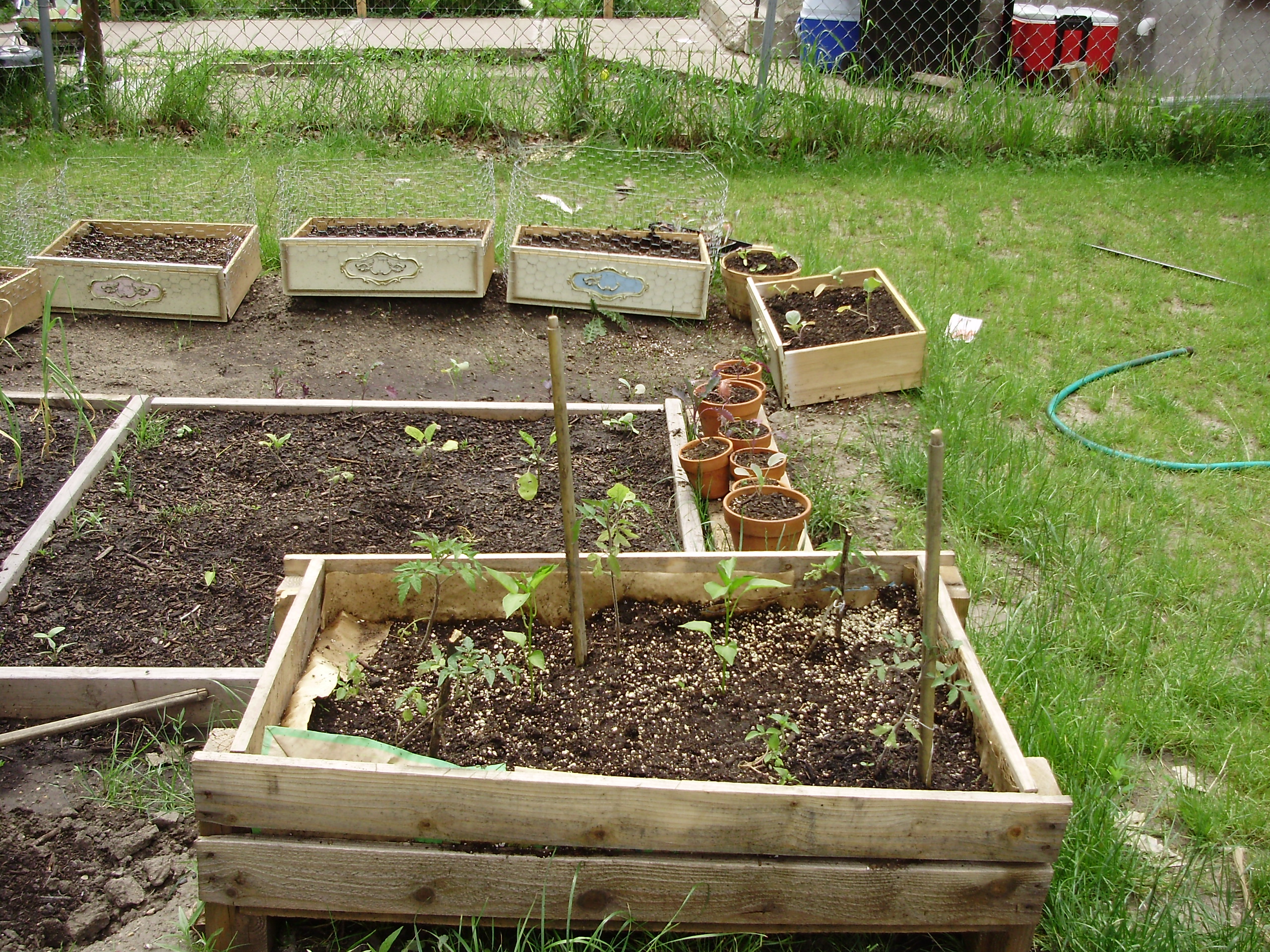
Here in Minneapolis we are making a movable container garden in my yard (since we are renters!)  Early this spring we joined Gardening Matters Hubs program, which provided us with plenty of seeds, and already started seedlings.  We have used found Kiwi shipping containers as movable raised beds, that our peppers and tomatoes are happily sprouting in.  Image  

We have also planted beets, onions, cucumbers, and broccoli in found dresser drawers (untreated and unpainted).  But rabbits and squirrels started eating the seeds so we stapled chicken wire around the sides that that seemed to help keep them out.  Image 

Image

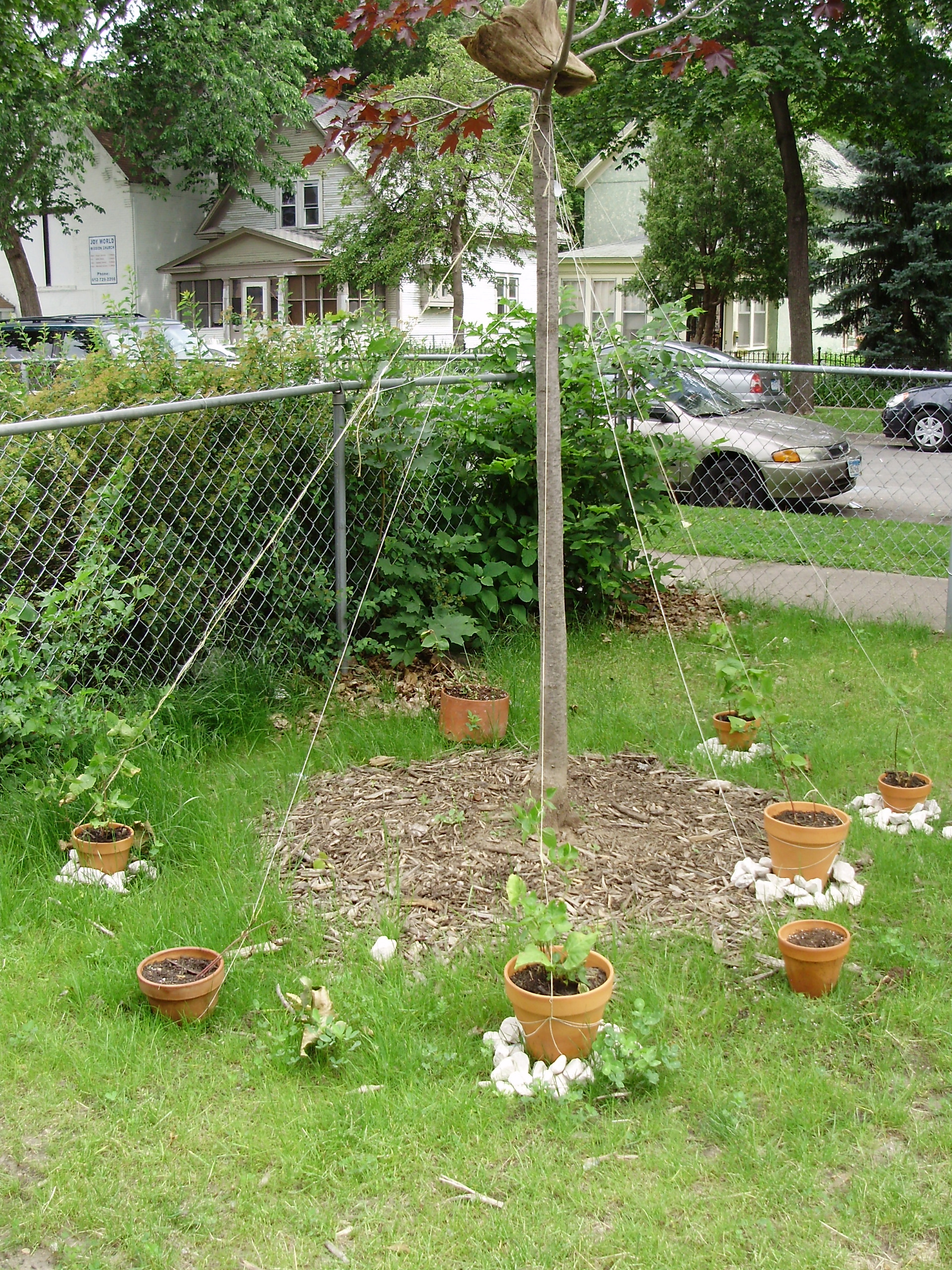
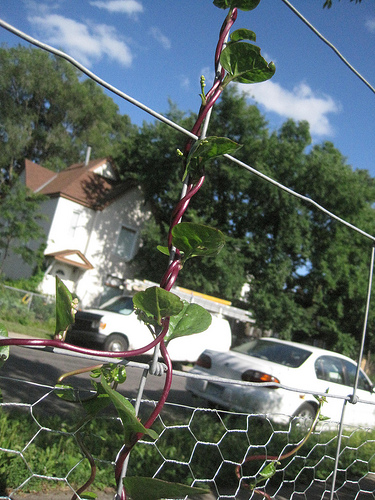
Across the yard is a Scarlet Runner Heirloom Bean Pole!!  They seem to be doing pretty well and are starting to climb the string up to the top of the pole/sapling.  Nestled at the top of the sapling is something called a river tooth, which according to David James Duncan, are remains of old-growth trees that fall into Northwestern rivers and are sculpted by time and water; you can check out his book called “River Teeth: Stories and Writings” if you want to read more! 

Libby

SOS | Seattle Gaining Momentum

Program Co-coordinators, Barbara and Dan

The sun has begun to shine and cherry blossoms are in full bloom all across Seattle, serving as an apt metaphor for the exploding momentum of our summer program! Last week marked the launch of our participant outreach campaign, including a new Facebook page and website (www.sosseattle.org) which are now up and running. Just two weeks ago we secured our first major donation: $10,000! These initial funds, from a family foundation, have provided a great jumping off point for our larger fundraising efforts. Local non-profit, Sustainable Seattle, is serving as our fiscal sponsor this summer, providing shared use of their 501c3 status, accounting support, and many great connections throughout the community.

Seattle Center

As we launch the first ever Summer of Solutions program in Seattle, we could not be happier about our home base: we will be operating from the heart of Seattle Center, home of the Space Needle and Monorail. We’re partnering with The Next Fifty (www.thenextfifty.org), a six-month, citywide celebration of the 50th anniversary of the 1962 world’s fair, which brought those iconic structures to Seattle. This partnership gives our program unprecedented access to some of the most innovative and exciting workshops, performances, and exhibits ever to grace the Emerald City. Our presence at The Next Fifty offers us a unique opportunity to amplify and extend the stories of our local program onto the global stage, where we will harness the power of new media to interact with others doing similar projects worldwide.

One of the most exciting elements of our program is our DIY guidebook. Throughout the program, participants will document their experiences via journalism, photography, videography, and mixed media to create and share powerful stories of their work online with the world. We will combine these multimedia stories with step-by-step instructions for replicating the projects we’ve engaged in to create a digital DIY Guide to Solutionary Living, which will be made available to the public at a closing celebration event in early August. This guidebook will serve as a powerful, accessible, and incredibly practical tool for community engagement and action.

Summer of Solutions | Seattle is now accepting applications for program leaders, participants, and volunteers to join us for a deeply creative, connected, and energizing summer experience! Apply Now: www.sosseattle.org. We look forward to seeing you in Seattle!

Much love from the SOS | Seattle crew,

~Dan, Barbara, Mia

Look Who’s In The House!

We, at The Art Affect, know that many of the solutions to the environmental and social challenges we face are already out there. Our 2012 Summer of Solutions program participants will train in journalism & communications, community organizing, and radical leadership, then set out across Seattle to engage in and document the top local solutions that are currently being implemented. At the end of the program we will harvest each of the projects and together create a step-by-step DIY guide to share with the world.

Potential Projects Include:

1. Urban Gardening and Food Sovereignty
2. Storytelling, Art and Alternative Media
3. Community Organizing and Leadership Development
4. Our DIY Guide to Grass-roots Community Action
5. Energy Efficiency and Retrofitting
6. Water and Habitat Restoration


Our Purpose:

Like so many others, we dream of a world that is equitable, thriving, and sustainable; where people shine with true happiness from the inside out. We are committed to ‘walking our talk’ by manifesting this dream in our own lives and engaging our peers, community and world in local solutions to our global problems. We are committed to providing tools, space and inspiration for people to come into alignment with their own gifts and purpose in the world and transform that inspiration into measurable actions in their communities.

About the Program Leaders:

Barbara and Dan are community leaders, activists and facilitators who are currently co-coordinating The Art Affect, a non-profit that creates powerful artistic spaces for young people to explore their purpose, develop their identity, and take part in building a socially just, environmentally sustainable, and personally fulfilling world. We enjoy making music, laughing at ourselves, creating new words that should never have existed, and sipping tea in perpetuiTEA. We put the “silly” back into Authentisilly. Just sayin.

Contact Us:

Barbara Jefferson barbara@theartaffect.org
Dan Mahle dan@theartaffect.org

Live Streaming from the Summer of Solutions Midwest Gathering in Chicago

Session: GA History, Vision and Case Studies


Tonight at 7:30-9:30 p.m. CST we will be live streaming from our session at this site:

http://www.ustream.tv/user/SOSMidwestGathering/shows

Click on the channel that SOS Sessions.  There will be advertising, but after a brief commercial you will be able to view and hear the session.  If you are unable to view it live, there will be an opportunity later to view the archived footage from the live session.  

Hello everyone!

Hello again from the Twin Cities!
Even though the winter’s just beginning, all of us here are getting very excited about next summer. Us program leaders (Ruby Levine, Daria Kieffer, Libby London and Courtney Dowell) have been having a great time meeting with new and  old community partners, hanging out on conference calls and sometimes even in person. Right now, we’re in the process of hiring a fourth program leader. More about us later, but first, our projects. We’re building off of a lot or the things we’ve been involved in for the past couple of years, and also starting up some new things.
Here they are!:
ARISE: The Ford plant in Saint Paul closed in June of 2011, and we’ve been working with the Alliance to Reindustrialize for a Sustainable Economy (ARISE) for a couple of years now to turn the plant into a mixed use green manufacturing site. Last year, a team of SOSers did a lot of outreach in the Highland community, which is where the Ford plant is located, in order to help the neighborhood get more involved. In addition, we worked on expanding a coalition of stakeholders, comprised on both individuals and organizations. A team of developer researchers also did extensive research on different possibilities for the plant, including anaerobic digestors. This next summer, we’ll be continuing a lot of this work and and are hoping to expand the coalition even further.
Urban Agriculture:In the past, we’ve worked with a variety of community partners, including the Harrison Neighborhood Association, the Concrete Beet Farmers, and YEACorps, just to mention a few. This next summer, we’ll continue to work with these organizations as well as hold weekly urban agriculture seminars, go on field trips throughout the Twin Cities, and start our own garden.

Bike Access: We have been partnering with the Sibley Bike Depot in order to expand bike access across the Twin Cities. In the past, this involved supporting their outreach efforts by attending fairs and bike rides, as well as revamping their website and improving volunteer relations. This next summer, we’ll also be launching a program to help children in South Minneapolis access summer programming by biking together to the park. This program is in partnership with the Southside Youth Workers Engagement Groupand will bring in a variety of organizations.
Energy Efficiency: Through the Our Power campaign, which is part of Grand Aspirations,  we’ve been organizing neighbors in South Minneapolis to take control of their energy future by lowering their own energy use and mobilizing for community owned clean energy. We also train participants so that they can offer energy efficiency workshops and connect them with interested residents through Cooperative Energy Futures.

About the program leaders:
Ruby Levine is a recent graduate of Macalester College in Saint Paul and has been a program leader since 2008 (she doesn’t really like vegetables). Courtney Dowell will graduate from the University of Minnesota this spring and has extensive experience organizing to get coal off the University of Minnesota’s campus (she is very fond of fried sweet potatoes). Libby London will graduate from the University of Minnesota this spring and has a background in community based art, biking and sustainability (she lives in the Powderhorn neighborhood). Daria Kieffer (me) is a junior at Carleton College who works with youth empowerment initiatives in Northfield, Minnesota and has been involved in SOS for the past two years (I’m trying to learn how to play the harmonica).

-Daria Kieffer, Program Leader

Social Media!

Social Media
Grand Aspirations has a variety of social media accounts that comprise our online presence and help us relate to other non-profits and similarly driven individuals. We highly recommend you visit and subscribe to these pages!

LinkedIn
http://www.linkedin.com/company/2384483?trk=tyah

Google+
https://plus.google.com/u/0/b/100670483184187069676/

Facebook
https://www.facebook.com/pages/Grand-Aspirations/346189577410

We also have a Twitter page that is forthcoming. Join our movement by liking our page!

Apply to Start a Summer of Solutions Program in Your Community!

The Summer of Solutions is a program for young people who want to build just, sustainable economies in their communities.

We want to invite YOU to be one of those young people building those solutions. Apply here by October 22 to start a program in your community or to join an existing program leader team.

Running a program gives you the opportunity to create and support green economy projects that build power for people who currently don’t have as much access AND to empower young people from your community and beyond with the skills and strategies they need to do the same thing wherever they go next.

Past Summer of Solutions programs have:

  • Built community gardens and farms on vacant lots
  • Taught neighbors how to use bikes as an effective form of transit
  • Run summer camps for children to help them learn about healthy eating and growing their own food
  • Founded and partnered with energy businesses to create a community-based clean energy system
  • Created community spaces, from mini-golf courses in the coal fields of West Virginia to a playground in Detroit, MI
  • Designed and organized for green manufacturing at a closing car factory in Saint Paul, MN Continue reading

Hands in the Soil

Aside

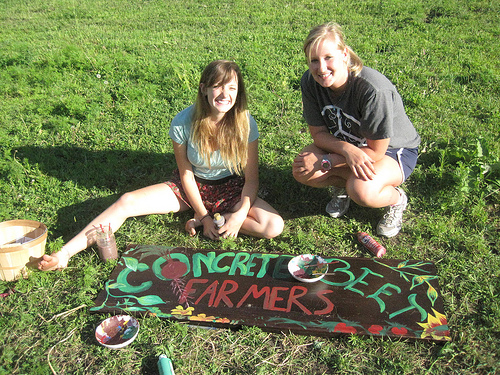
Daria and Paige with the Concrete Beet sign made from a salvaged piano.

This morning I tumbled out of bed and made my way to the Concrete Beet farm, where I have been learning hands-on urban farming. On Thursdays and Sundays, the Concrete Beet harvests vegetables for ten CSA shares. When I got there today, Emily and Emily were strategizing the order in which the produce would be picked, cut, dug, etc.

*Linda in front of some potato towers

Tall Emily got out her steel snips and started the process of un-furling the wire-fencing around a potato tower* while I picked the kale from the top of said tower. I was not expecting much from this particular potato patch, because of previous weeks’ harvesting of underwhelming spuds. This week was different. As soon as the tower was unbundled, we started pulling out huge round red taters.

When Anna, another S.O.S. participant, showed up, we were left to dig through the mound of soil and plants. I noticed how dark and rich the soil was as I ran my fingers through it, disturbing the tiny creatures that lived in it. They scattered as Anna and I chatted and pulled clumps of earth apart.

My hands and fingers are the same as my father’s mother’s. She died in 2008, and I wear her rings, which fit my fingers perfectly. As I was reaching my fingers into the earth, I thought about her, and about the hands of all of my ancestors who put their hands in the earth and brought food from their efforts. Some were German, some English, some Irish, but most were farmers.

I said something to Anna about my Irish ancestors, since we were digging potatoes. I associate potatoes with my being in this country; since my primary education about immigrant history is that the majority of Irish influx to the United States was due to “potato famine.”

Lost in my reverie, I thought about the recurring themes that have lead people to leave their homelands and seek out a new beginning thousands of miles away.

The Irish Potato Famine was exacerbated by (English) absentee landlords who charged a premium to poor tenants for small pieces of land on which only potatoes could be grown in enough abundance to be a staple food throughout the year. When the potatoes failed, everything toppled for the Irish. Millions starved as landlord’s evicted people from their land—their only source of living—and destroyed their homes.

For many people, this neighborhood, the Phillips neighborhood, is a haven. People have fled conditions ranging from simple suburban wage-slavery, to limited opportunities, to war, to certain death for themselves and their families. This haven, however, is not without its faults. Absentee landlords take advantage of those with little social clout, loan companies and banks have had their way with people who want a stable home (which has resulted in rampant foreclosures), and much of the land is an EPA superfund site (don’t let your kids eat the dirt without testing it first).

In the face of these challenges, Phillips is often defiant. Phillips plants gardens full of flowers and food. It holds Pow-wows, follows Ramadan, goes to Mass on Saturday night, has halal options, dollar tacos, Native foods.

It bikes, walks, buses, skateboards, and shares a car. It reads the neighborhood rag.

It speaks Spanish, English, Somali, Anishinaabeg, Dakota, Arabic, Hebrew, and many other languages.

It breaks down and sobs in despair with the loss of each and every one of its youth to violence and darkness.

It celebrates the coming of spring and light together, every year. It rises and grows.

When I think of myself as part of this community, I envision lines on a globe that concentrate here, but span out like a root system to the places people and their ancestors have come from. These roots draw nutrients from many sources, and like a plant, grow stronger because of the diversity and breadth of heritage that they are tapping into. We create the Tree of Life in our own image.

At the Concrete Beet, with my hands in the soil, I felt connected to this idea, this image of a connected community of corporal and spiritual entities of shifting and changing relations.

Anna, Small Emily, and I washed and weighed the CSA shares and put them into storage for pickup later that day. I started weeding the walkways and felt the sun beating hot on my arms and back. By the time I was done, my hands were green and my nail beds were black with dirt. My body ached with the slight contortions of kneeling and weeding. Physical work produces a satisfying effect on my body. To be happy and connected, I work the soil.