Check out this great video about our participants’ experiences in the Twin Cities Summer of Solutions 2011 made by Brynn Haugen and Kalpana Vallabhaneni!
Twin Cities Summer of Solutions 2011
1

Check out this great video about our participants’ experiences in the Twin Cities Summer of Solutions 2011 made by Brynn Haugen and Kalpana Vallabhaneni!
On Saturday, we had our Foster Community Action Day. It was the culmination of weeks of hard work and organizing. At times, the pace became frantic as we made last minute adjustment and preparations. Nonetheless, everything got done, and spectacularly so.
The day started separately for all of us. We split up into two groups. Naomi, Anastasia, and I (Leo) went to New Seasons Marketplace to buy refreshments and snacks for the volunteers. New Seasons was nice enough to donate a $50 giftcard to help fund our food purchases. Earlier that day, Naomi also picked up several cakes from Baker and Spice Bakery, again donated.
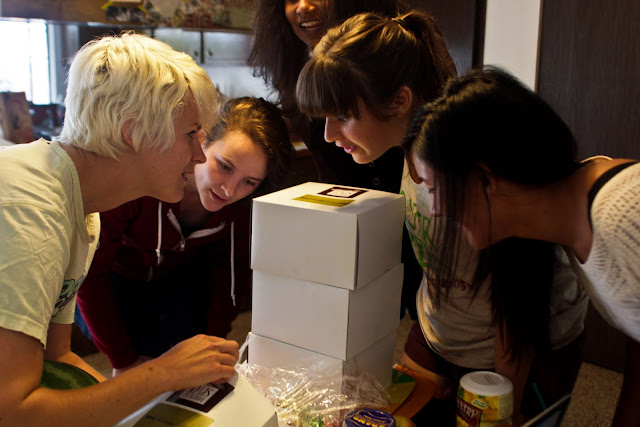
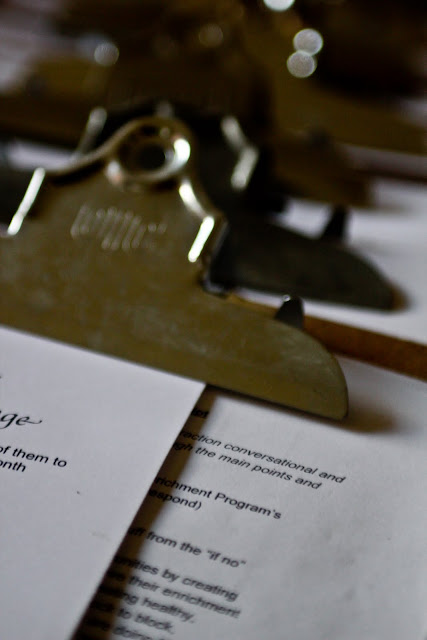
The others, including Shabina, Nathan, Huntley, Barbara, Kari, and Allison were busy at our secret headquarters (aka the Shrub House) assembling clipboards and other materials for the volunteers. They soon received word that more volunteers than they anticipated would be arriving: several people from the Corvallis Summer of Solutions program would be joining us!
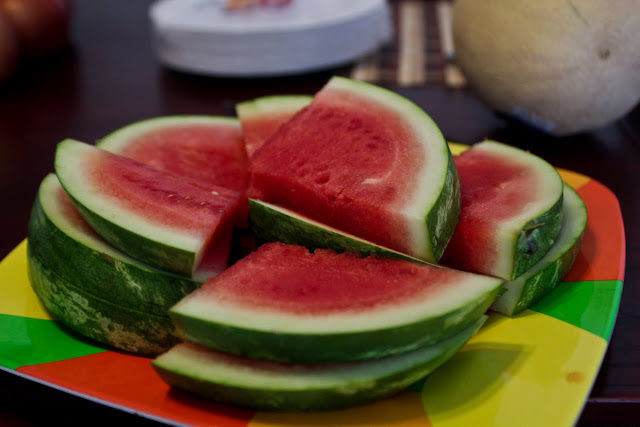
The food group reconvened at the Shrub House to quickly prepare some food for the volunteers. We purchased chips, dips, and a variety of fruits and vegetables for the volunteers to eat in between canvass areas and rest stops.
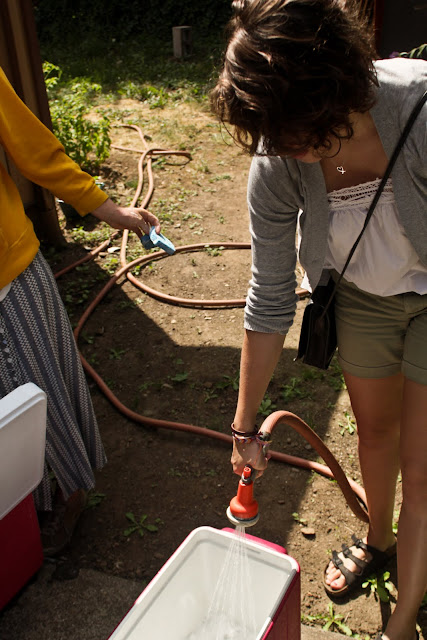
Once the volunteers from Corvallis arrived and introductions were had all around, we packed all our materials and food and moved to the park next to Kelly Elementary, where our training would be held. Shortly thereafter, about 25 volunteers from Second Stories, as well as their older interns arrived at the park.
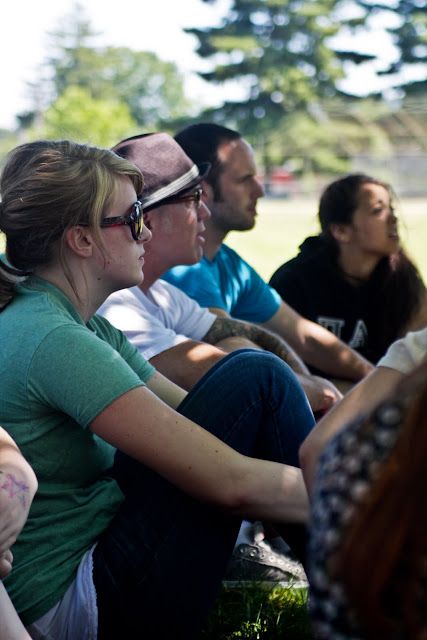
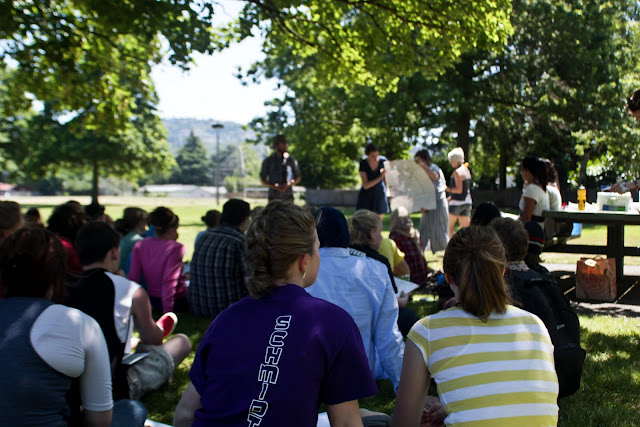
Nathan and Allison did a thorough canvassing training for them. Many had never canvassed before and were quite nervous about the experience. We explained to them the basics of what we were doing, as well some logistics, such as our coding system and how to read the turf maps. Finally, we split into groups to practice the canvassing script and giving surveys and challenges.
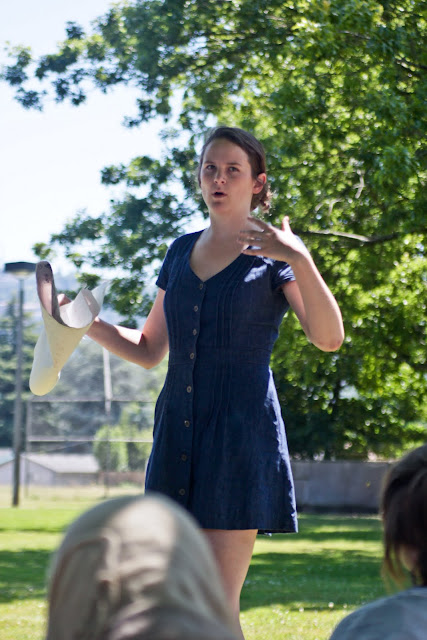
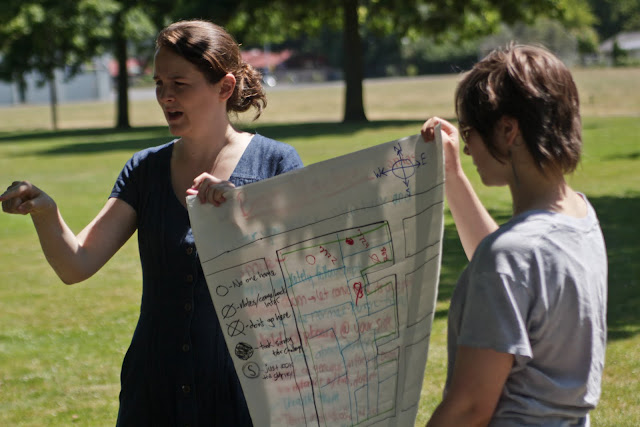
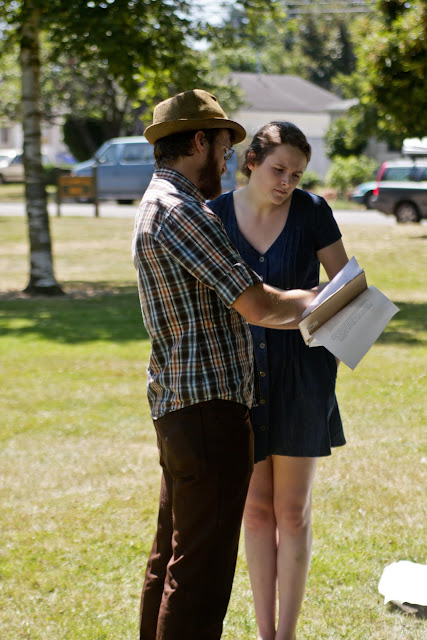
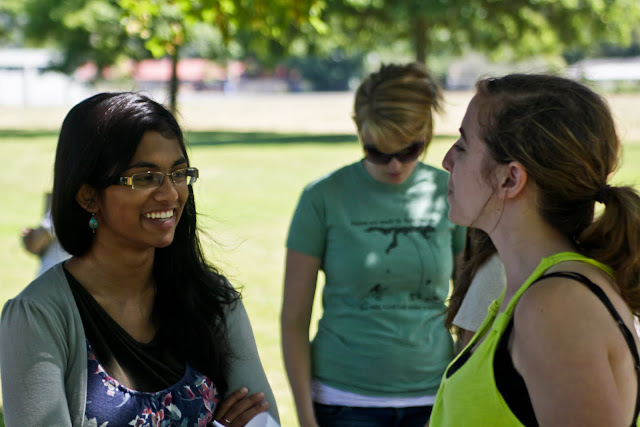
Heading out with volunteers in tow, we each were assigned a block or two of houses in the Kelly Elementary area. Some volunteers were nervous, others were eager, and the whole experience went very quickly.
We ended up covering nearly all the turf that we had set out to cover, basically finishing all the turf in the Kelly School area. Many of the groups had multiple challenges and surveys. The numbers aren’t quite in yet, but we’ll keep readers updated as they roll in!
A question I am often asked while running into friends, family, or meeting new people.
I used to have a really difficult time answering this question, due to the vast possibilities and powerful emotions I have associated with Summer of Solutions. I’m working with the Twin Cities team, and up until a couple weeks ago I tended to throw out phrases such as “youth leadership,” “sustainability,” “green economy,” and “it’s super cool, I promise,” with hopes of creating a semi-coherent explanation of what I am up to this summer. Depending on the audience, some people just nodded their heads in approval, having heard key words indicating it is a meaningful program. Many friends could sense my vibes of excitement and continued to ask for more information about what, specifically, I am working on.
During one of our weekly community reflection sessions a while back, I realized what I came into this program intending to work on has completely changed. I wanted to do urban agriculture work, and spend some time outside getting my hands dirty. But when the projects were announced, the one I felt I could make the most impact in completely overtook my attention, and I have been dedicating hours to this project since. I’m working on outreach in the Highland Park area, with hopes to re-invigorate the closing Ford manufacturing plant. It’s a great project that really speaks to me, having spent a significant portion of my high school years messing around in the Highland village.
Now that I’ve secured my interests for this summer, the big question for me is, “what will I be doing this fall?” I still have some of time to figure this one out, but it will definitely involve implementing many of the tactics I have learned this summer. I hope I will be able to educate my peers at school and pass on the passion I feel towards this work. I’m really grateful for going with my gut instincts in this program & following where my passion leads me. I have spent much of my SoS work with a smile on my face, which is a great thing to look back on as I reflect on my summer.
Kyle Gename
Throughout my time as a student at Macalester College, I have always thought of myself as an environmentalist. For my first year there, I practiced and explored my philosophy on the environment and resource use in a very personal way. I became and avid knitter, an Environmental Studies major, and to the dismay of my freshman roommate, a person who showered infrequently.
In my sophomore year, I wanted to get involved in a more collaborative way. I began to think, “I certainly cannot create real change without the support and action of my peers, why go at this alone?” I decided to get involved in my school’s student environmental group, the Macalester Conservation and Renewable Energy Society, or MacCARES. I also started working in the sustainability student worker network and went to Powershift, a national conference geared towards young adults interested in creating change through grassroots activism. Throughout my two years of exploring my environmentalism at Macalester, my ideas of what I wanted to do and be were changing.
After sophomore year, I decided that rather than go home and read through the Harry Potter series for the tenth time, I wanted to find more useful work. I kept my eyes and ears open to the opportunities available to me. Through MacCARES, the student group that I had joined, I met two of the program leaders for Summer of Solutions Twin Cities, as well as several of the programs’ past participants. Through their encouragement and rave reviews of the program, I decided to apply. It sounded like an amazing program, and one that would help me to develop further as an environmentalist.
When I decided to become a participant of Summer of Solutions, it was based on conversations that I had with people who were already involved in the program. They said that SoS had shaped them; it was a place for them to grow. When I asked what they liked about the program, they told me that participating was a formative experience in their lives as young leaders and that by stepping out of their comfort zones during their work, they were able to become more well-rounded. I am happy to say that these reviews have been on par with my own experience this summer.
Throughout my time in the program, I learned something that I had forgotten about myself: how I grow and develop as an individual. This summer I remembered that I reflect best on the work that I have done using few words and simply recollecting the new skills that I have learned. This is how I have stepped out of my comfort zone this summer, not by talking or explaining, but by doing something new. By doing, I have grown stronger as a young leader and an environmentalist.
Since we spend so much time as a collective group talking about how we are feeling and discussing what we are doing, I find it strange that the times that I most cherish when working for SoS are the times that I am not saying anything at all. My experience is defined by what I do physically and the personal reflection of what I am doing. I have grown much more as an individual this summer when I have thrown myself out of my comfort zone and done something that I normally would not. If you told me two months ago that I would be taking notes in small group meetings and be responsible for accurately reporting those notes, I would have told you that you were mistaken. I am God-awful at typing, and have just recently learned to type without looking at the keyboard. I have also never blogged before (Am I doing a good job?) and am terribly afraid of what other people think of my writing. Beyond participating in new ways during small group sessions, I have also stepped out of my spatial comfort zone. I have never had a sense of direction or the inclination to exercise very much, but this summer I decided that my bicycle would be my primary mode of transportation. I am pretty excited to say that I have never learned more about different streets or bike routes than I have this summer. The moral of the story is that SoS has been a formative experience for me in the way that it has challenged me to act in ways that, until very recently, I did not think that I could. It has also made me realize that I find physical labor and action more memorable and significant than just talking and listening.
Even though many of the hours that I work for SoS for the next two weeks will be spent discussing my feelings with the other participants, I am excited for the growth that I can realize this summer not by talking, but by doing. I am also glad that I have been able to reflect on these ideas for long enough to understand them. Here’s to spending the rest of my time as a SoS participant growing by doing.
By Kalpana Vallabhaneni
During World War II, 20 million Americans planted “victory gardens” and they grew 40% of this nation’s produce supply. Urban farming is something that has been around for decades and has already proven itself. It can support America, so why not prove it again to people who don’t believe us? Urban Farming is not only used to create an abundance of food for people in need by planting gardens on unused land and space in the city, but it is also used to cut down on crime, beautify neighborhoods, and increase health and wellness around specific community.
Participants in Summer of Solutions in the Twin Cities have been working long and hard on a variety of projects ranging from maintaining an aquaponics system to weeding gardens to researching the cities vacant lots to find arable land for new urban farms. With over 20 participants focusing their energy and effort into specific projects there has been a lot of success all over the cities.
Many people assume that urban farming is planting vegetables, fruits, and herbs in open spaces in a city and it is, but urban farming can be so much more! A small group has been working on a urban chicken coop! They have been researching various locations, chickens, and a design so they can build the best coop in town. Thus far in the summer they have located a space in Minneapolis and are starting to build the coop this week. They are still trying to figure out which chickens are the best–in terms of the care they require and the number of eggs they lay. After talking to some locals who already have chicken coops and using their best tool, the internet, they will determine which chickens to put into this handmade chicken coop in Minneapolis.
Another group of participants are focusing their energy into generating their value through crime prevention at the Harrison Neighborhood Association Peace Garden.
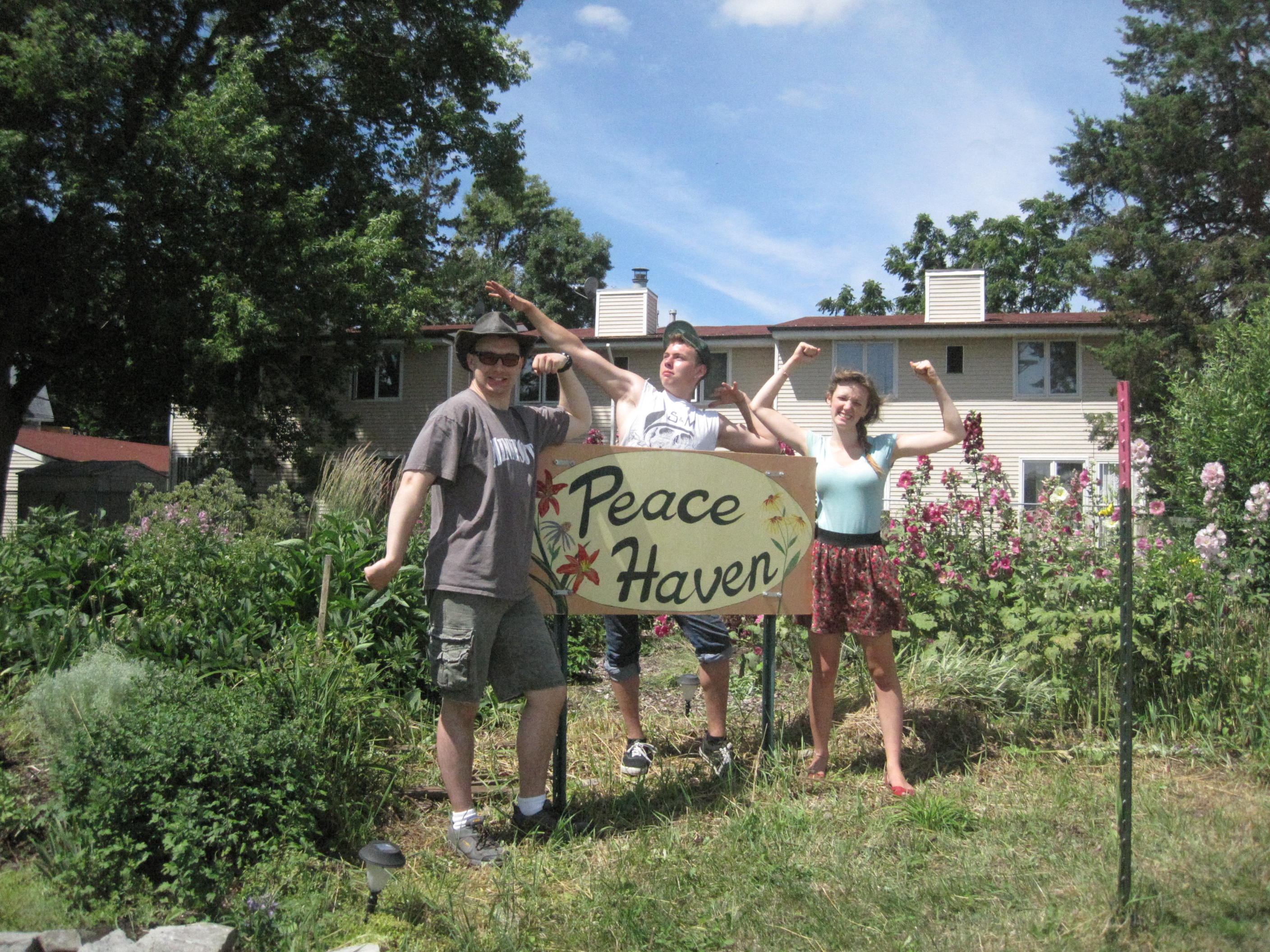
Look at all the muscle we bring the the garden!
This farm was started to help stop violence, prostitution, and drug trafficking. The simple tasks of weeding and beautifying this farm has helped keep this previous prostitution corner a safe, healthy, and beautiful street corner for community members to enjoy and cherish. With a small but powerful group, they are able to help keep the Harrison Neighborhood Association Peace Garden be a safer and happier place.
We not only generate value for the community through Urban Farming but many of us are gaining personal value through farmer trainings, beautification, and researching vacant arable lots around the cities. There is a group of participants who are interested in the physical processes of Urban Farming.
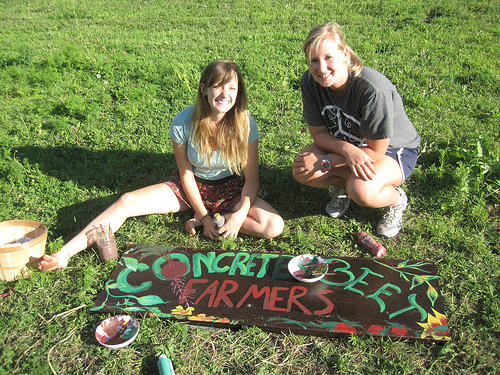
Look at that broken piano part that is now a beautiful sign for the garden!
Concrete Beet has multiple young Urban Farmers who started urban farms recently by taking a vacant lot. They worked out logistical details with the landowner and covered the entire lot with a garden. Now they are helping participants learn the ins and outs of CSA (Community Supported Agriculture) shares and the physical labor or harvesting, planting, and planning. A few participants are also researching the cities vacant lots to see if empty lots could be turned into new urban farms. They research the price, location, and soil quality, because farmers needs arable land for a garden to be successful. There is another group who is helping with the beautification of the farms. Most recently they have rescued a broken piano and hand painted beautiful signs on the old, damaged piano pieces. These signs are displayed around various parts of the garden.
The last Urban Agriculture project that participants from the Twin Cities are working on is with a 5O1C3 non-profit, YEA (Youth Enterprising Agents) Corps. There are about 15 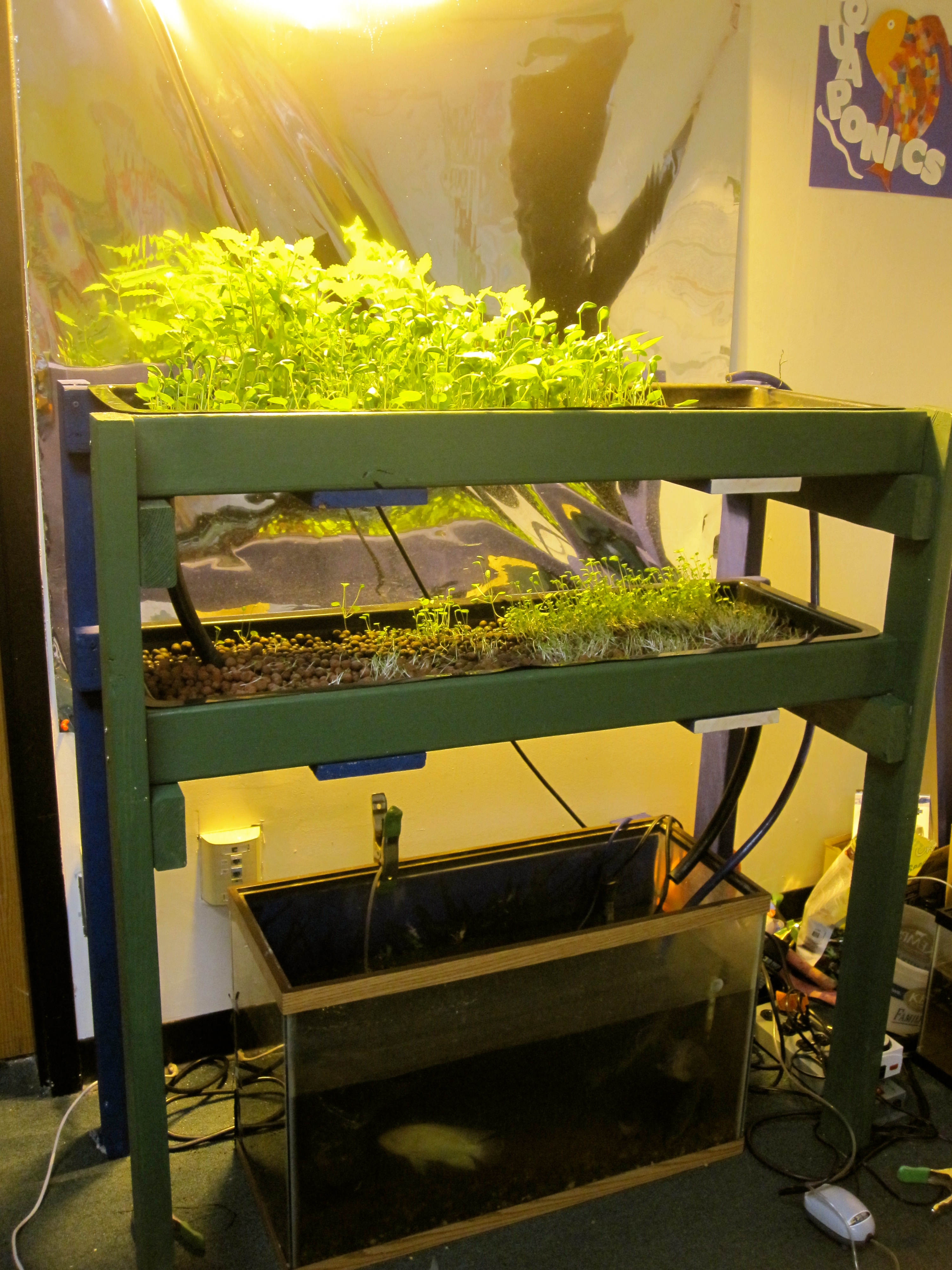 participants who are working as interns at YEA Corps who are each focusing on different aspects of indoor urban farming. YEA Corps is working to empower youth with job skills and sustainable education. YEA Corps is not the typical urban farming project to many people but it still focuses on sustainable food production in an urban setting. Their current focus is on mushrooms, aquaponics, and vermacomposting. Each intern has a different aspect that he or she is focusing on ranging from being a mushroom specialist to learning how to treat the vermacompost. Some of the interns are working on research while others are filming videos for YEA Corps. There is a wide variety of job skills and indoor urban farming expertise that are being learned everyday at YEA Corps.
So far this summer we have accomplished a lot all over Minneapolis and we look forward to seeing how much more we can do! We are all gaining valuable skills and knowledge by helping the community around us!
By Cecelia Watkins
As you may have experienced, the traditional bike shop model goes like this: you, the melancholy owner of a sticky geared, no shifting, wheel-missing, untrue, spoke popped, flat tire, screechy brake broken mess of metal (or who knows, maybe you just want a tune up), enter the shop and drop off your bicycle with the shop mechanics. You wait, maybe leave to take a stroll or run some errands. You come back and voila! Magically, your bike is fixed. You pay up for the services and walk out of the store. Your bike is fixed, yes, but beyond that all you’ve gained is a lighter wallet.
This is how it works at Sibley Bike Depot: You enter the building and roll your bike down a  sweet-smelling hallway between a donut shop and a fabric store. Ten feet in you’ve passed these window front stores, and suddenly a colorful world of bikes opens before you. To your right is the sales floor, where Sibley sells used bikes and parts at affordable prices. To your left is the shop floor. You wheel your bike in, sign up on the list, and sit down for a short wait—Sibley is often throbbing with community members eager to work on their bikes—but luckily there are nice couches and stools made of tree stumps for you to wait on. While you wait you chat with the other people there, maybe about bikes, maybe about donuts, maybe about something totally unrelated. Eventually your name is called, and you bring your bike over to a stand. Here an experienced volunteer or staff person helps you figure out what’s wrong with your bike and walks you through the steps in fixing it. Unless you need a replacement part, this service is entirely free (and even the replacement parts are wonderfully cheap). When you leave the shop you’ve gained so much more than a working bike: you’ve gained new knowledge of bike repairs and along with it a sense of personal empowerment. And your wallet feels about the same as when you entered.
(more after the break…read on!)
By Bryne Hadnot
Cross-posted from letsgochicago.wordpress.com
When we’re not busy building compost bins, raising chicken coop frames, and removing vicious 6 foot weeds, we here at LETS GO Chicago like to kick back… by waking up at 6:45 am and taking an hour long train ride to Chinatown.
While we didn’t get any Chinese take-out, we got something that was even better than hand-made ramen: a FREE tour of one of Chicago’s urban farming centers, UrbanPonics, LLC.

Lee talking with Erin and Bryne
UrbanPonics is the brainchild of Bral Spight and Lee Reid, two men from extraordinarily different backgrounds thrown together during a leadership conference. The result of a bit of collaboration was a hydroponics concept lab in the Riverfront Work Lofts, a thriving part of Chicago’s Creative Industry district right next to Chinatown. Now, Urbanponics employs several economically disadvantaged men and women and has successfully produced a high yield of lettuce, tomatoes, and herbs.

Greens and herbs a'growing
UrbanPonics uses a technique called hydroponics to grow plants without soil. Instead, minerals are dissolved into purified water and streamed through the plant’s roots, providing everything a plant needs to grow without any soil borne diseases or pests; lights of varying wattage provide year-round ‘sunlight’ for the plants, while inorganic “growing mediums” like rock wool offer structure for the stems. These four components- minerals, water, light, and structure- are all the plants need to grow, and thrive, indoors.

The LET'S GO team exploring the facilities.
But UrbanPonics is more than just a lab for indoor farming; it’s a lab for science skills and business knowledge, and for engineering techniques and artistic finesse. In short, it is as much a center for innovation as it is a center of contradictions; the work conducted at UrbanPonics is nothing short of a miracle, but it is so intuitive that we had to wonder: why isn’t every city doing this?

Look at that basil!
For as much or as little as you care about agribusiness or monocrops, hydroponics is still pretty cool. Imagine getting fresh lettuce NOT from the other side of the country, or the world, but from a farm in your city. A farm you can visit easily- via public transportation perhaps?- that also has a wide variety of greens, tomatoes, cucumbers, and other crops.
Fortunately, our days of dreaming of a full scale urban farm may be at an end. Mr. Spight and Mr. Reid plan to expand their concept lab into a 4 acre facility in Chicago’s South Side, complete with 50 bee hives, rain water collection, and a co-generative energy system.
UrbanPonics made for an exciting, inspiring, super-fun, and informative field trip!! To visit yourself, go to 500 W. Cermak Road, Chicago, Il, a few blocks from the Red Line.
-Bryne
We have been very lucky this summer to have some wonderful help from community members! The camp would not be the same without them and we appreciate them so much! To show our appreciation we are going to give some of them a big shout out in this post!
First, we have Alice Ammerman who joined us on the last day of Strong Home Camp to help us learn and cook local foods. Alice is a nutritionist and professor at the School of Public Health at UNC and well known advocate for local foods and the importance of a nutrient rich diet. We explored the colors of the rainbow in the fascinating food “show-n-tell” that Alice brought, including purple sweet potatoes, stripped beets, and purple cabbage. The girls learned how to make their very own pesto with fresh basil, olive oil, cheese, and the money saving ingredients – walnuts! Our pesto was eaten with pasta, diced baked potatoes, and a cabbage and local sausage dish. The meal was finished with some local cantaloupe for dessert. We were very grateful to have Alice join us and we hope to keep her as a close partner in the future!
We have also had some other wonderful and outstanding volunteers, many who have been with us for more than one day at the camp! Hopefully no one will be left of the list, but we would like to thank Joel, John, Emily, Amanda, Katie, Joe, Rebekah, Jane, Kaleb (and anyone else who has helped the camp run smoothly!). These volunteers have helped us do activities with the girls including screen printing and upcycling (a wonderful activity where old possessions are dazzled up to make them look like cool, new, possessions that can be reused). We are truly grateful to all these people! THANK YOU! We hope to see many more new volunteer faces next week and at the Strong Neighbor Camp in August!
During High School I volunteered at a local food shelf and
was discouraged to see the same people for almost the entire year. It made me realize that much of my efforts were merely a small, cheerfully-printed band-aid on a pervasive wound that wasn’t just skin deep. If anything it masked the true nature of poverty, which requires larger shifts in political and social norms.
Though band-aids can suffice in some instances, other problems need an alternative, more direct type of treatment. What I’ve been learning this summer about community organizing for environmental justice can best be explained by Paul Hawken’s analogy about antibodies in his book Blessed Unrest.” Hawken relates environmental and social justice groups, like Summer of Solutions, to antibodies which are essential for our immune system.
 They arise as a response to foreign invaders and systematically undermine threats to our bodies, like viruses and certain types of bacteria. Antibodies will collaborate with B cells to create a “blueprint” after they combat toxins, so that more antibodies can be created quickly if the same type of toxin returns. Also important to note is that “the immune system depends on diversity to maintain resiliency, with which it can maintain homeostasis, respond to surprises, learn from pathogens, and adapt to sudden changes.”
Summer of Solution’s is an antibody. It’s anti-oppression sessions and focus on social entreprenuership has challenged me to identify and address the root causes of social and environmental injustice in my community while being watchful of a “savior mentality.”
One of my projects this summer has been to work with Cooperative Energy Futures. CEF seeks to make insulation and weatherization more affordable and to educate people about other ways to improve energy efficiency. Their focus is to empower people to improve their home energy efficiency and generate savings.
I’m still figuring out what effective community organizing looks like, but like the immune system, it is diverse. It needs to draw on the resources available and be able to adapt quickly – and ultimately find a way to create homeostasis.
-Kirsten Theden
It’s so hard to believe that it is already July! This time last year, I was feeling disappointed wih the present and anxious about the future. Like a lot of young people, I had graduated from college and discovered that the recession I had been reading about in the newspapers wasn’t just notional. Jobs were scarce and the ones that I could find barely paid the bills and in no way satisfied my desire to help build a sustainable, restorative economy, which I believe is our generation’s calling. I still volunteered a good deal of my time as a climate justice advocate, but I was stir-crazy for a change in strategy. I was expending a lot of effort trying to convince people with “more power” than me to change their historically selfish and stunningly short-sighted policies and attitudes so that I could have a secure future along with generations to come. This approach didn’t seem to be bearing change at the speed and the scale that we needed it to.
One afternoon, on an especially gloomy day, I decided to outline the most meaningful, world-transforming vocation I could imagine for myself, the sweet spot between ‘What the world needs,’ ‘What I am good at,’ ‘What I enjoy,’ and ‘What provides for my life.’ I described a vocation in which I would work with girls to advance gender justice, economic justice, and environmental justice. The injustices perpetrated against girls and women, money-poor people, and the earth itself have proven themselves exceptionally persistent and are fundamentally connected; they cannot be addressed in isolation of eachother. However, their connection also represents enormous potential – by advancing genuine economic justice, we advance genuine gender justice and environmental justice (and vice versa all the way around).
My vocation would be a combination of some of the ventures I most admire – the Harlem Children’s Zone, a poverty-eradication with a long-term (birth through college), community-powered approach; the Green Belt Movement, a venture started by Wangari Maathai that addresses deforestation in Kenya by empowering women economically; and the Grameen Bank, which has transformed rural Bangladesh through its world-renowned microlending program. ‘Full Circles Foundation’ would matriculate girls as kindergartners – specifically girls who have high potential but face big obstacles. These girls would be paced thorough a long-term series of best practice programs including:
– summer camps and afterschool programming focused on the connections between personal, community, and environmental health;
– a community organizing training program through which they identify an improvement they would like to see in their community and build a campaign around it;
– apprenticeships with local artisans and small businesses;
– and a microventure program that would give the girls social entrepreneurial experience as well as generate resources for summer camps and after-school programming.
This was all just an outline in my journal until I started hearing murmurings about the idea of social entrepreneurship – a strategy of sustainable change that works to leverage the wealth that surrounds everyday people to build the new, restorative economy. I was so different from the charity and advocacy models I had been working through! I first heard about this idea from Grand Aspirations (www.grandaspirations.org), an organization working to build social entrepreneurial capacity among young people and to connect them, their experiences, and their models. I submitted my still-vague outline to Grand Aspirations in hopes Raleigh would be selected as one of their national “Summer of Solutions” sites – cities around the country where young people gather from June to August to get elbow-deep in the birthing of the new, restorative economy.
Looking back, it was a somewhat spur-of-the-moment decision to submit that application – Full Circles Foundation was a crazy dream and it was difficult for me to suspend my skepticism at my own idea enough to even imagine that such a thing would be possible.
But thankfully, I was able to do so long enough to finish and send in our application, and on Friday, July 1, the Full Circles Foundation’s 10-person pilot team wrapped up Strong Home Camp, the first installment of the Strong Camps, a series of free, holistic summer day camps focused on illuminating the connections between personal, community, and environmental health! We have been working with approximately 20 girls whose ages range from 4 to 15. Strong Home Camp was focused on fostering environmental literacy through place-based education. It was an adventure! Most of our girls had never been on a hike, been on or in a natural body of water, or asked a tree a question – things they were asked to do for the first time during Strong Home Camp. Among many other great workshops, campers rolled up their sleeves in food labs with whole, local food, learned about the mathematical mysteries found in nature, and made all-natural body lotion. This camp will be followed by Strong Self Camp (creative communication and personal health & wellness) and Strong Neighbor Camp (community health & engagement).
One of the most exciting features of Strong Home Camp was getting to make Flower Bombs. Flower Bombs are concentrated balls of compost, clay, water, and wildflower seeds, that when dehydrated become virtual “bombs” of perennial flower power! You can throw them in your backyard, in vacant lots, or on the shoulder of roads, as a way to enliven our communities with color and aroma. Flower Bombs (and “bombs” of edible plants) became popular through the ‘Geurilla Gardening’ movement – a effort spanning the globe to reclaim public spaces and transform them into beautiful (and tasty!) spots for folks to rediscover community. FCF campers made over 450 flower bombs – a delightfully messy endeavor! This project was led by Jenn Hales, an amazing artist and entrepreneur in Raleigh who runs the Patina Collaborative (www.patinacollaborative.com).
After making the Flower Bombs, the campers packaged them in cloth sachets which they adorned with hand-made construction paper tags. On Friday, our campers and instructors packed themselves and their wares onto the Raleigh city bus and headed downtown for First Friday, a monthly event at which the Raleigh community comes out to celebrate our city center, local businesses, and local music. This was the first opportunity for our campers to raise resources to support their own summer camp.
It was amazing to watch. The girls were absolutely fearless. Even our four and five year-olds were explaining the compelling logic of Flower Bombs to potential buyers in between hopscotch rounds! The environment was so much fun – there were hula-hoopers, fire-dancers, drummers, and community members of all stripes. It was amazing to watch our campers absorb the experience. They had had the opportunity to create something that generated social, environmental, and financial rewards – an opportunity that I didn’t get until I was 24! Moreover, through that experience, they became allies. These aren’t girls whom we are “serving”; these are girls (and families) with whom we are partnering to create an unforgettable summer experience that they want! At some point during the evening, the thought occuring to me, “This is what health looks like. This is the type of world I am wanting to build.”
Implicit in the exercise of social entrepreneurship is the question, “What does the world I’m trying to create look like?” The beauty and the weight of social entrepreneurship is that WE have to answer that question. We can’t just identify a problem and shout at someone “smarter” or “richer” or “more powerful” than us to find a solution. With social entrepreneurship, individuals and communities can’t ‘outsource’ the question of what our world should look like – we have to decide, we have to explore our potential to realize our decision, and we have to take responsibility for whatever the outcome of our decision may be. But, this is what it means to self-govern; this is what it means to be human.
by Marcie Hawkins Smith, mhsmith@fullcirclesfoundation.org
 Solutionaries