Building a Cooperative Energy Business, One Neighbor At a Time

As we wrap up the Twin Cities Summer of Solutions program, I’ve been reflecting on how far the team this summer has taken the dream of community-powered energy.
Back in 2008, members of the Summer of Solutions helped launch Cooperative Energy Futures (CEF), which I have been working to grow since then. Over the years, they have gone on to help create such wonderful peer ventures as Worcester Energy Barnraisers, Appalachian Alliance for Renewable Energy, and the Community Power Network. Here in the Twin Cities, the models we have used for multi-lingual home energy savings trainings, bulk-buying of home energy products, and group insulation have been greatly aided by the waves of support Summer of Solutions has provided. This year has been no different.
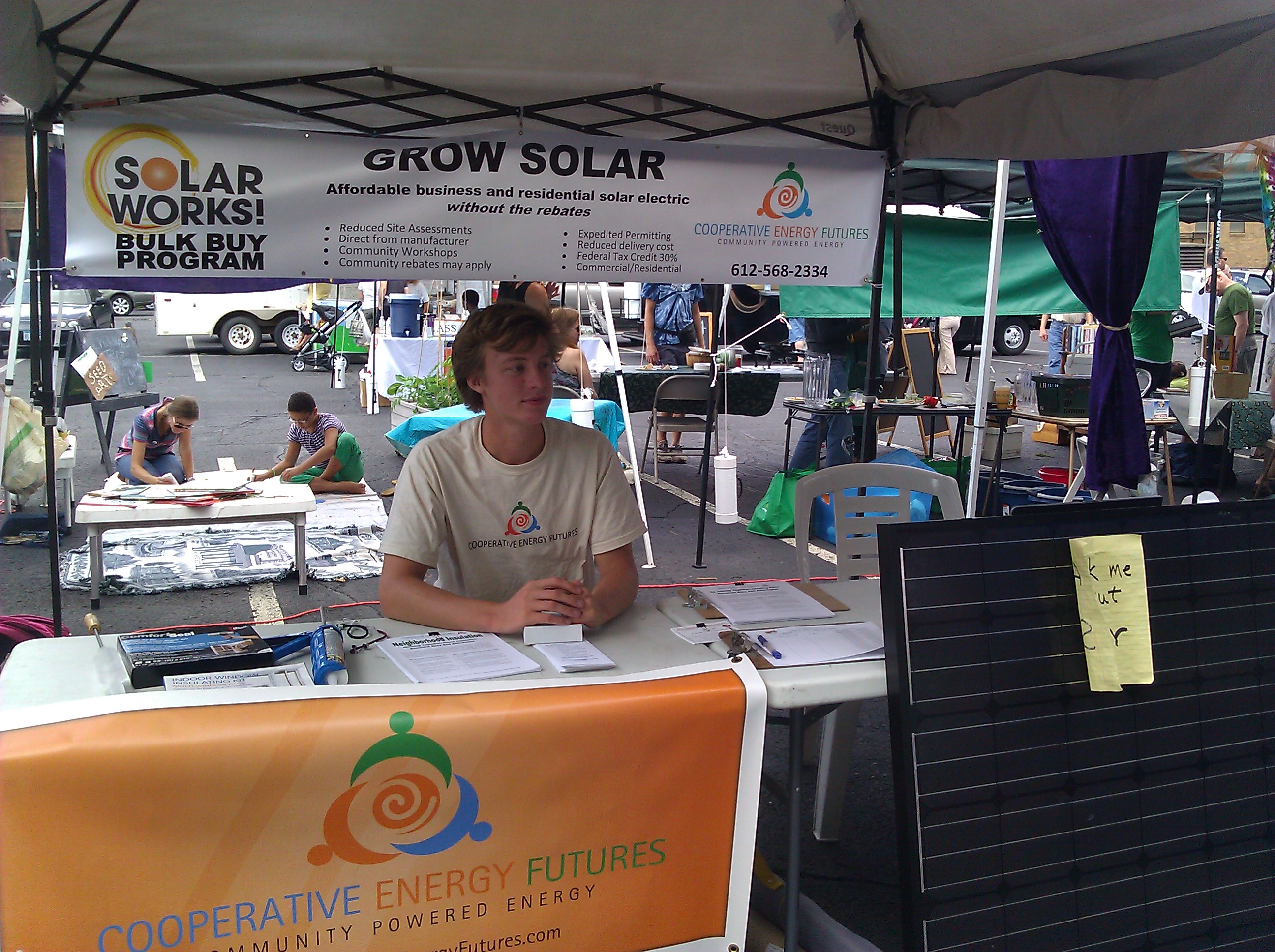
Last winter, CEF ran a bulk purchase program for home insulation in Minneapolis, helping a team of neighbors hire qualified installers of home insulation at a lower cost.  Working together and buying in bulk makes the process easier, cheaper, and fun. This summer, CEF has formed a partnership with Applied Energy Innovations to create a parallel program called Grow Solar Minneapolis for buying solar electric panels ’s. You can learn about all the bulk-buying opportunities at http://cooperativeenergyfutures.com/bulk-buying

SoS Participant Christian Bangert tabling at a farmer market

Launching an integrated program that offers bulk buying of many services makes it easier to promote them and attracts a broader audience. Many people get excited by the very tangible example solar provides, but either can’t afford it or end up needing more investments in energy efficiency first. We’re promoting the following neighborhood energy bulk buying together:

CEF Board member Brianna Besch and Fred, an enthusiastic Corcoran neighborhood resident at a National Night Out block party.

Beyond creating the outreach materials and lining up the contract, it’s been all about outreach. We’ve hit the farmers markets (22 scheduled by mid October), attended community events, got in City Council and neighborhood newsletters, and gone door to door to meet and talk with folks in our neighborhood. We even had 14 of us going around to over 30 National Night Out events (an August 7th block party day that has several thousand local block parties in Minneapolis) letting people know about ways to get involved. As these neighbors are going about shopping for local produce, meeting, and having fun, some have stopped for information, others have gotten excited to tell their friends, and some have been simply overjoyed to learn what we’re doing.

The most exciting thing for me about this is the process of linking people-to-people community outreach with the process of growing a thriving business. As we line up the contracts, I can see the seeds of long-term employment positions for neighborhood residents in the revenue flows we are building even as we help folks save money. At the same time, the inspiration and excitement I hear from more and more neighbors as we present what we’re doing is infectious. I’ve been dedicated to making this dream a reality for over four years now, and at times it has been slow going, but I’m starting to see a wave of community support that is building CEF into a success.

As we leave the summer and head towards Fall, I look forward to seeing the cooperative growing, one neighbor at a time.

Mid Program Analysis Article

Portland Enrichment is a group of volunteers whose mission is to create thriving and sustainable communities in the area of Lents. The Portland Enrichment program is currently conducting a listening project and community challenge to gain feedback from residents in the Lents area. With the feedback they receive, Portland Enrichment is able to assess what changes and actions need to be taken in the neighborhood. If residents in the area are looking to take action and help out their community, Portland Enrichment will connect them with the particular organization to get them started.

Portland Enrichment works with a variety of organizations that specialize in food security, energy efficiency, community engagement and other sustainable community solutions. The group of volunteers canvass in the Mt Scott Arleta and Lents neighborhoods in SE Portland and table at the Lents Farmers Market.

This summer is the second go around for Portland Enrichment and the group hopes to build off of last year. Portland Enrichments goals are to knock on 1200 doors and receive as much feedback as possible.

Portland enrichment is broken down in to teams to handle certain aspects of the program. The data management team, led by Leo Qin, recently released the programs mid program report. The analysis gives background about the program and describes the methodology that was used. The survey questions were designed so Portland Enrichment could see how people felt about their neighborhood, what they liked, along with what complaints they had.

So far the volunteers have knocked on 500 doors, collected 100 surveys and 66 people have decided to participate in community challenge actions. After taking the community survey, 2/3 of the people agreed to also take the community challenge. Twenty one percent of people chose to partake in Food Security actions. Portland Enrichment plans to table at community events and hold two mega canvass days to reach this summer’s goals.

Leo was able to analyze the survey questions that the group asked the Lents residents by using graphs and word clouds. The first survey question was “What is your favorite thing about your neighborhood.” As Leo outlines in his word cloud, the words: “community,” diversity,” “parks,” “farmers market” and “neighbors” were many peoples favorite things.

Data shows that on average the residents of Lents rate their neighborhood a “4” on ne a 1 to 5 scale (1 being low and 5 being high). This numbers describes how people generally feel about the community.

Those surveyed also expressed their thoughts on barriers to living in an ideal community, what their ideal community would look like, and their concerns for development. There are three more weeks until the end of the program and the Portland Enrichment team will come out with a final program analysis after its completion. Portland Enrichment’s survey can be taken online at pdxenrichment.com.Image

You can’t beet this! (A beet-filled week at GFS)

Cross-posted from Growing Food and Sustainability

We had a new crop of young ones in our program last week and it was a blast! We painted signs in preparation for our Harvest Festival and harvested 24 pounds of beets!

4-year-old Finn, with a beet as big as his head!

Along with the excitement of new program students, we also had to say goodbye to the triplets: Ancha, Rama, and Modu. We are lucky to have had this family as a part of our program for our first summer. Their high energy and enthusiasm never wavered, whether they were harvesting and eating raw kale leaves, painting signs to decorate the garden, or engrossed in a Magic School Bus book.

Their mom, Viki, told us that she feels that they will apply all that they’ve learned through the program in school, at home, and in life. It is a wonderful feeling for all of us to have formed such a strong relationship with a family that will continue to be involved and support us in coming years.

With all the beautiful, ruby-colored beets laying around, I was inspired to paint portraits of the triplets using beet juice as a natural dye.

Ancha enjoying her kale. The beet juice is still wet and bright pink.

Rama taking in the garden. The beet paint is half dry.

Modu showing off his cherry tomato. The paint is dry and golden brown.

We sure will miss the laughter, shouts, and energy they brought to the program, and we’re already looking forward to seeing them again next summer.

Of course, I can’t end this blog post without a reminder for our Harvest Festival, this Saturday the 11th in Fireman’s Park from 4-7pm. I looked at the forecast and it is supposed to be sunny all day with a high temperature of 82 degrees. Should be fantastic! Come and join us for carnival games, live music, and purchase fresh produce, kale pesto, and baked goods at our market stand.

Hope to see you then!

Natalie

Experimental Learning

Part of the reason why I love Summer of Solutions is that I’m learning an incredible amount by doing hands-on work that includes gardening, speaking at community meetings, and building and painting at Spokes bike center. As much as I am empowered by these learning experiences the value of classroom learning cannot be discredited. In fact, one of the most remarkable aspects of the Summer of Solutions Twin Cities program is our EXCO class, Climate Solutions, Economic Renewal, and the Energy Transition.

EXCO, Experimental Community Education of the Twin Cities, offers free classes that anyone can teach or take in order to build a community around social change. Summer of Solutions’ own Timothy DenHerder-Thomas teaches Climate Solutions, Economic Renewal, and the Energy Transition. My favorite part about this class is that I never know what exactly to expect, but I am sure to leave feeling awakened by the conversations that are shared.

For example, our first class was spent sharing our experiences with community and the environment and I left with a feeling of camaraderie with my fellow Summer of Solutions Twin Cities participants. One class was spent labeling all the climate changes we’ve ever heard about on a giant world map… I have to admit this particular lesson left me slightly depressed, but I was glad to learn all that I did about strange weather phenomena, fossil fuel dependency, and more. During my favorite lesson (so far at least!) we shared our ideas of what would convince the world that a sustainable, green economy can work. The brainstorming, collaborative thinking, and creativity I experienced during that class left me feeling so invigorated and excited to be a part of the environmental movement.

Overall I’m thrilled to indulge in so many different avenues of learning through Summer of Solutions Twin Cities!

Zelalem A.

Twin Cities SOS 2012

Fixing Up the Turners Falls Skatepark

Post by SoS Pioneer Valley Program Leader Evan Scheltema 

This post I’ll be talking about patching up the Turners Falls Skatepark, with much help via tools and supplies from Bryan Dolan, Turners Falls resident and skateboarding guru.

The patching up of the park I did with a friend and part time participant of Summer of Solutions, Mason Poulin, came about as a result of the cancellation of a skateboarding workshop, set to take place as a part of the Summer Workshop Series, of The Brick House Community Resource Center. The park was dubbed unsafe to skate because of obtrusive objects and metal bits sticking out from the ramps, and recently a youth had been injured at the park. Unbeknownst to me, due to this the park was closed, and this was found out only days before the workshop, leading to its cancellation. In turn, I felt it should be fixed to allow kids to skate in an environment that promotes, not rejects, skateboarding.

Mason and Evan (l to r) work on the Turners Falls Skatepark.

It really is a shame that the park is in such a state a disrepair. When talking with Bryan (who, along with his girlfriend, is on the skatepark committee in Turners Falls), he told me that the park’s life may be limited to the rest of this summer/winter and maybe some of next year. Since it was in such a state of disrepair and maintaining was a job that required much too much time in the busy life of Bryan. This made me really sad considering I learned to skate at that very park back when it was over by Unity Park. Recently too, Greenfield lost its park leaving quite a few angsty youth with nowhere to skate. If the Turners Falls park were to close, there would be no more skate parks in all of Franklin County. Considering how many displaced youth I know personally and gauging from the interest level based on our outreach project, I would say that is pretty ridiculous. Especially when the skaters now get a lot of flak from the town officials and the paper about skating in other, non-sanctioned areas. It just doesn’t make sense to me. How can you take someone’s space, then get mad at them when they move to another?

So I guess the point I am getting at, is that skateboarding is necessary, and by removing a skatepark you will not get rid of the skaters. It is exercise, a sport, a lifestyle, an art form, and in my eyes, it is the adaptation of urban/sub-urban youth as a product of their environment. Skateboarding is limitless and stretches not only your physical limitations but also stretches your imagination to come up with never before done tricks and stunts unique to you. There is no coach yelling at you to get up and do it again, it is personal motivation and perseverance that lend themselves to skateboarding. Seeing the world through your eyes while on a skateboard will literally transform it into a massive obstacle course, and allows you to step out of your day to day mind into an entirely new perspective. So now I ask, why is this activity shunned? It escapes and baffles me. So lets all stand together and support skateboarding!

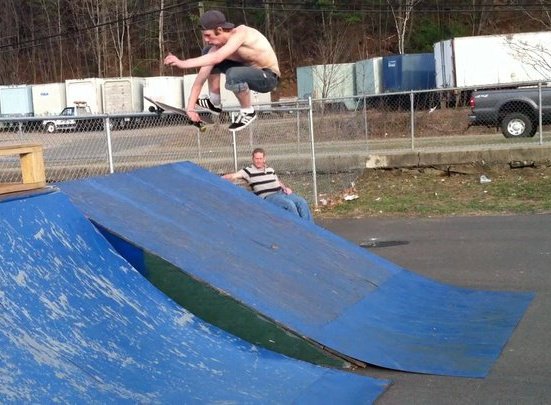
A skater in action at the T.F. Skate Park.

Shout-out for Oakland

Hello, my name is Lucy. I’m 15 and I enjoy working with my community, helping others, and focusing on goods and bads in the community. Working with SOS I learned how to interact with others in the same house, how to approach a need and how to communicate with ideas. I really like waking up in the morning knowing I’m going to change my community. Living in Oakland has been my home for 15 years. The community I live in, Fruitvale is my family. SOS has helped me do things I never thought I would do, I’ve been helping with the summer camp at Peralta Hacienda and it’s made me feel like a kid again. The summer camp has welcomed me to a new view of what these kids see in their community. Summer of Solutions Oakland has been a good program for me, here’s where all the teens should come and help out. This program out of all the programs I’ve bee too is one of the bests. I could be at home watching TV and not do anything, but I decided this year it was going to be different for me. I love working in a community where everybody has a lot of ideas for the community. I also like seeing the people in my community helping out. This is all thanks to Summer of Solutions Oakland.

Thank you.

Moving Forward and Analyzing Our Data

Sunday, the Portland Enrichment team went to the Lents Farmer’s Market. Across the street, the Ramona Street Fair was also going on. Some of our partner organizations were on display on Ramona and numerous people were visiting the different tables on the corner of 92nd and Foster.

At our meeting on Thursday, our group had discussed our approach and strategy for getting people to listen who we are and what we are trying to accomplish in the community. Our group’s idea for the farmers market was to play a quick and simple trivia game with the people that came by our table. We called it “Foster Trivia” (Foster is one of the major streets that runs though Lents.)

Examples of questions we asked people were: How many people live in Lents? Who was Lents named after? How many grocery stores are in Lents, and what year was Lents founded? Some of these questions are hard to get exactly right, but a surprising amount of people knew the answers to our questions spot on. Weather people knew the answers to the questions or not, they were happy to take a free lollipop off of our table… everyone likes lollipops.

Nearly everyone at the Market lives right in the Lents area, and most people that talked with us wanted to take our survey after learning a new fact about the town they lived in. I was able to learn a lot of facts about Lents on Sunday and heard some exciting stories as well.

Leo Qin, and the data management team, presented the mid-season report on the feedback Portland Enrichment has accumulated thus far. His report first describes our program and what we do and then he described our team’s methodology for collecting our neighborhood feedback. The three methods we collected data through were in person canvassing, tabling at the Lents International Farmers Market, and through online submission.

The data management team analyzed what people said in the community survey questions. Questions we asked were broken down into eight categories: favorite things, overall experience, relative importance of livability, highest visions, areas for growth, concerns about development, and barriers to health. For each category, a word cloud was created which showed the most commonly used words from people for that particular question. For the “favorite things” category some most commonly said words were: community, diversity, affordable, proximity, parks, Farmers Market and quiet.

There are also graphs to show what community actions people chose to take so far. All of the community actions were well represented and fairly popular. The eight community action categories were: Local Community Energy, Food Security, Resource Sharing, Watershed and Habitat, Community Engagement, Community Investments, Community Spaces, and Diversity and Healthcare. The Food Security action was the most popular action chosen by residents, accumulating for 21 percent. To view our mid season report visit pdxenrichment.org.

Weekend Warriors

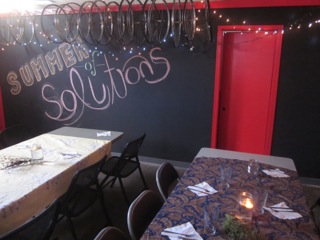
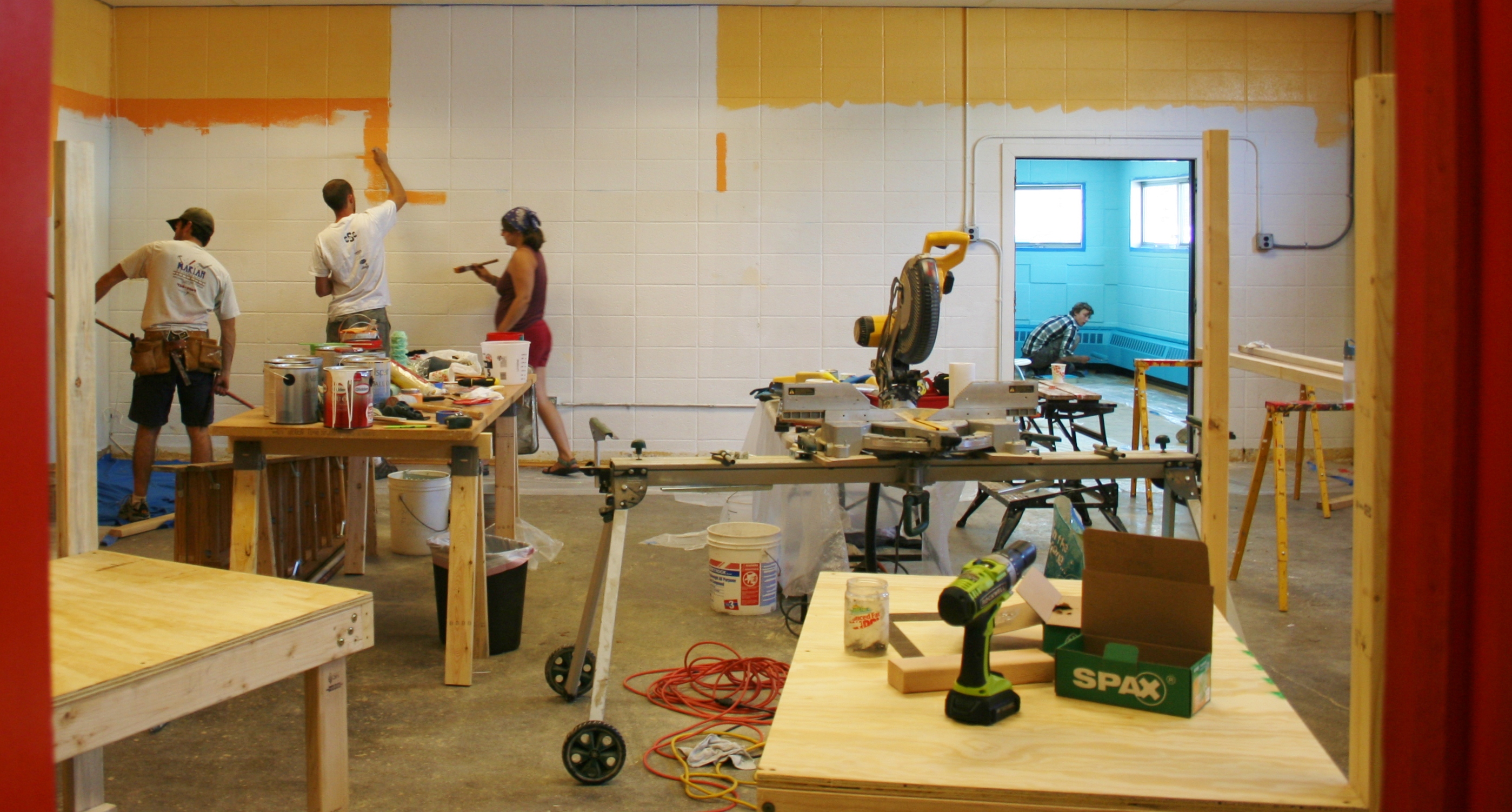
Last weekend in the Twin Cities, SoS participants and community members came out to donate their time and talent to building the SPOKES Bike Walk Connect Center. Everyone who walked through the door was greeted with a smile, a tour and a paintbrush. In one weekend SPOKES went from white drabby walls to a vibrant place for the community built with love and a steady hand from many supporting community members.

Image

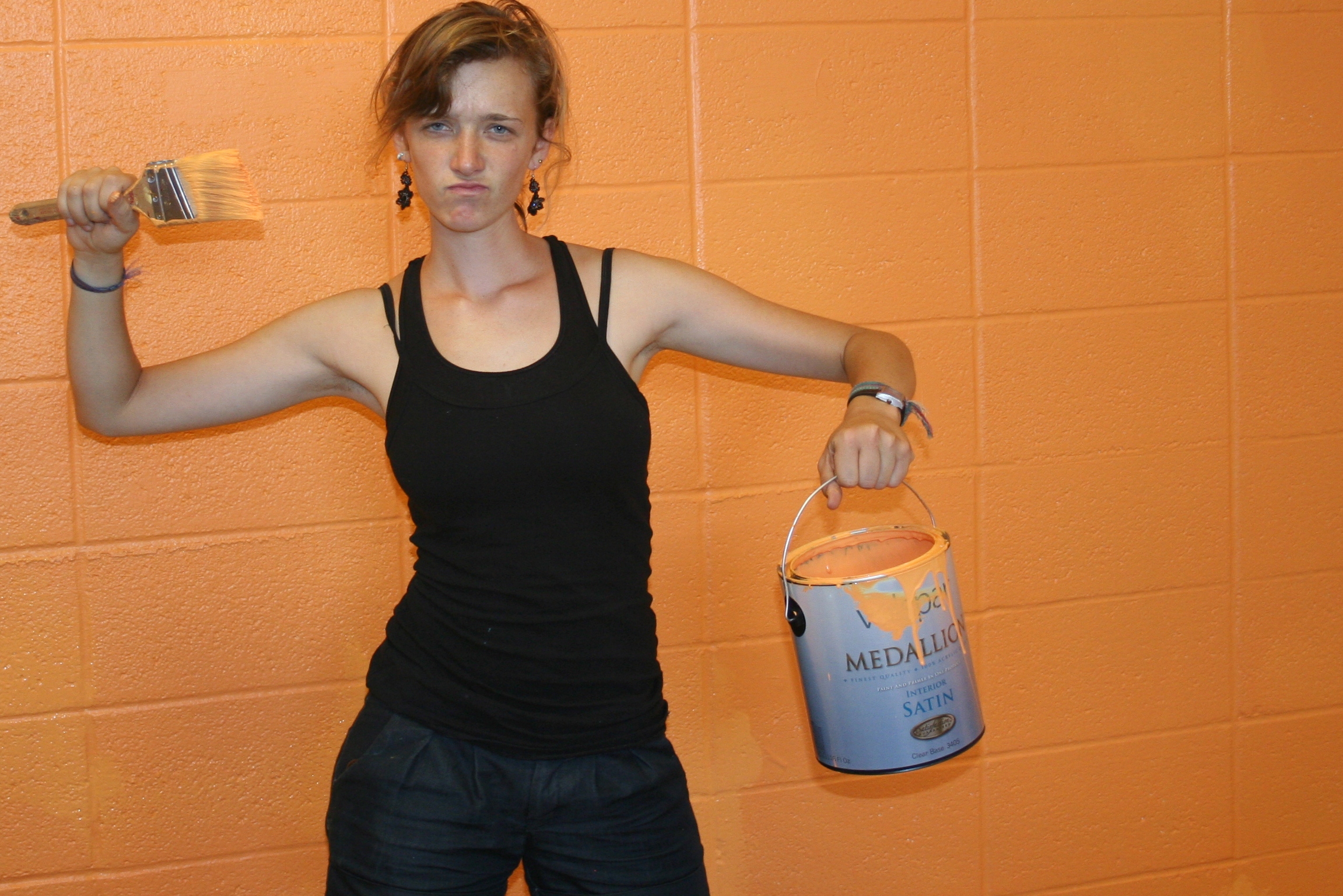
Daria, Twin Cities Program Leader and epitome of a SPOKES Weekend Warrior.

Image

Fun on the Job. Painting the main room of the center.

ImageEveryone hard at work and painting away.

ImageBuilding work benches for the bike mechanic stands.

ImageHard work deserves a hearty lunch break. We love our Pizza Luce in MN!

ImageDonated bikes for parts and repair.

Image

Now, a bright and happy space!

Courtney Dowell

Summer of Solutions Twin Cities

Seedlings

Been waiting to start growing your own food?

Start today! Track down some healthy soil, exchange some change for seeds at your grocery store, and find some old newspaper. Tony will show you were to take it from there.