You Never Miss the Water Till the Well Runs Dry

The unbelievably dry conditions in Wisconsin the past couple of months have been rough on everyone, and Growing Food and Sustainability was no exception. Everyone working in our gardens has put so much effort into quenching our plants’ constant thirst. Even so, our poor crops looked persistently parched. This past week, however, we’ve been thrilled and grateful to receive SO MUCH RAIN!

Our older youth program participants were with us when we felt the first drops one afternoon. It was only five or ten minutes worth, and hardly heavy, but it seemed to lift everyone’s spirits. Our participants and program kids danced in the rain and couldn’t stop smiling.


It made us realize that, rain (or simply natural balance) has a real influence on every person, agriculturally linked or not. Since then, Middleton has had two deep rains (and some awesome thunderstorms to boot). It seems to have revived both our plants and our participants.

The garden looking nice and refreshed post-rain

It is hard to believe that the program is already halfway over, but we have done so many great things and have SO many still to look forward to:

• We have been planning for our end of summer Harvest Festival on
Saturday, August 11th. It will be really fun for everyone and an amazing way to share what we’ve been doing this summer with the community.

• We have a training next week on how to grow mushrooms and hopefully we can learn to grow some on the coffee grounds we pick up from Bloom Bake Shop each week! The training THIS week is on how to can vegetables so that we can sell them at the Harvest Festival to save up for….

THE GRAND ASPIRATIONS NATIONAL GATHERING! As of this week, we are pretty sure that both Ain and Lauren (our two full-time participants) will be able to join Gabrielle and Natalie (program leaders) and Colin (part-time participant) at the national gathering in Hartford, CT at the end of August! YAY.

Other Exciting Garden News:

• Our youth program has painted beautiful signs to go outside of our youth farm and outdoor classroom space. We will be putting them up this week!


This week was our heaviest harvest yet! (111 lbs) The beautiful potatoes, beets, onions, radishes, and eggplants really added something extra awesome to our harvest day and we can’t wait to bike the produce to the Middleton Outreach Ministry as a donation tomorrow morning!

• Since the mowing down of the crops by hungry creatures, we have replanted most of the garden’s open spaces and are hoping to have some new beans, carrots, beats, and radishes soon! We spread milorganite in hopes that we can keep those hungry creatures from coming back for seconds.

• We transplanted the melon, cucumber, and squash sprouts into our garden this week just before the heavy rains. They seem to be doing swimmingly!

All-in-all things are going well around GFS this week and we expect they will only get better as rain starts to fall and big program plans start to unfold!!

– Lauren

People Are Getting Excited!

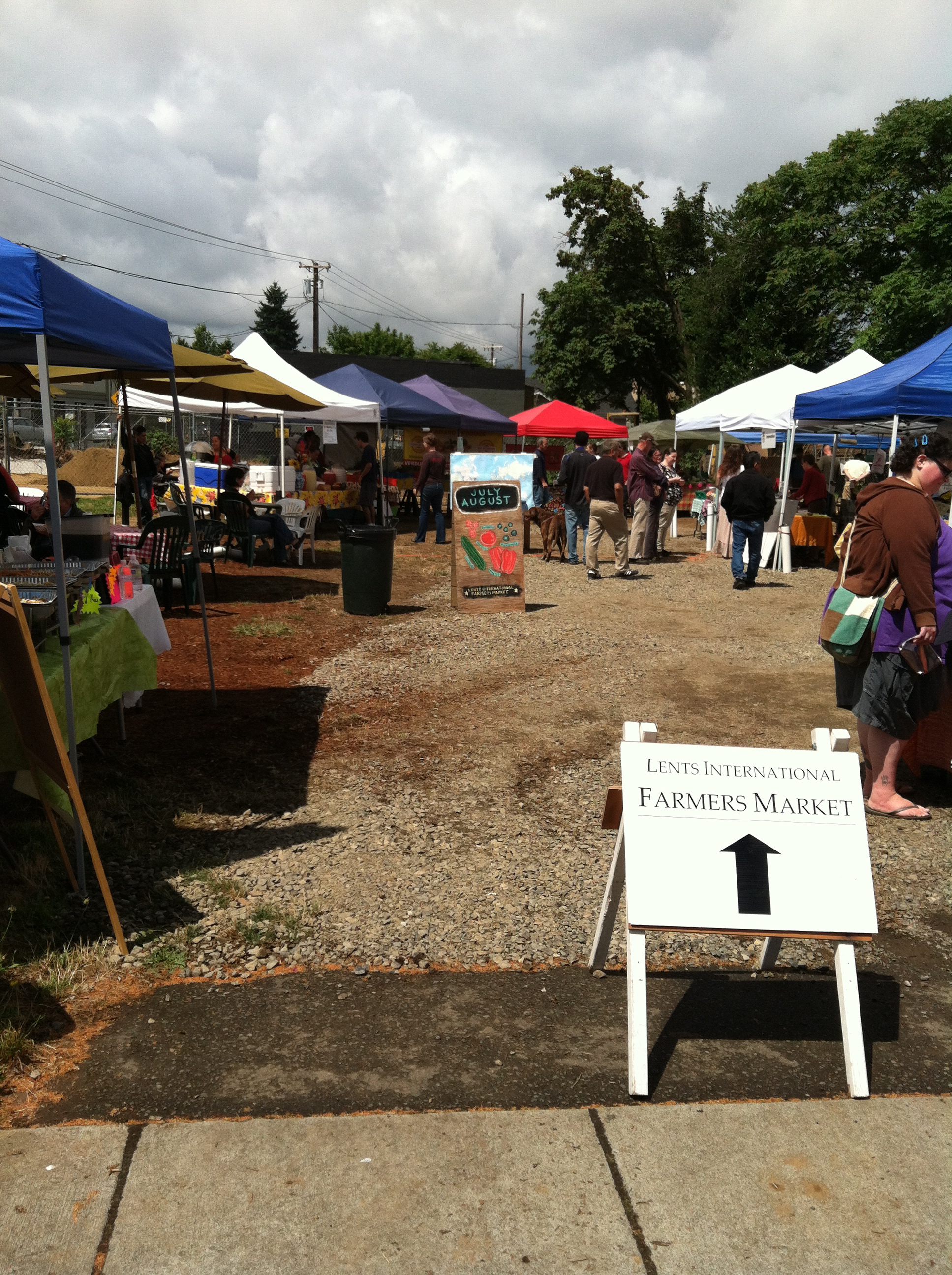
This past weekend our Portland Solutions group held our weekly meeting on Thursday to touch base and assess how we were doing in terms of staying on task and accomplishing our goals. On Saturday, we had three groups of two and went canvassing. On Sunday, we went to the farmers market from 10:30 to 4 p.m. to talk with members of the community.

Image

We plan to knock on a total of 1200 doors in the Lents area during the summer. Currently, we are planning a mega canvass that we will have in a few weeks. For the mega canvass we will be inviting a large group together to come walk around the neighborhood and talk with residents. We will also be contacting local reporters and other media sources to gain some media attention, which will help more people become aware of our program.

For me, canvassing is getting more and more comfortable. And the more comfortable I feel, the more I am able to enjoy it. The weather on our canvass day was excellent as well, which made it easier for us to walk around and be efficient while canvassing. It’s nice to see people walking around and enjoying the sun. Everyone seems to be in better mood on a nice day and the sunny weather is always a fun topic to talk about in Portland.

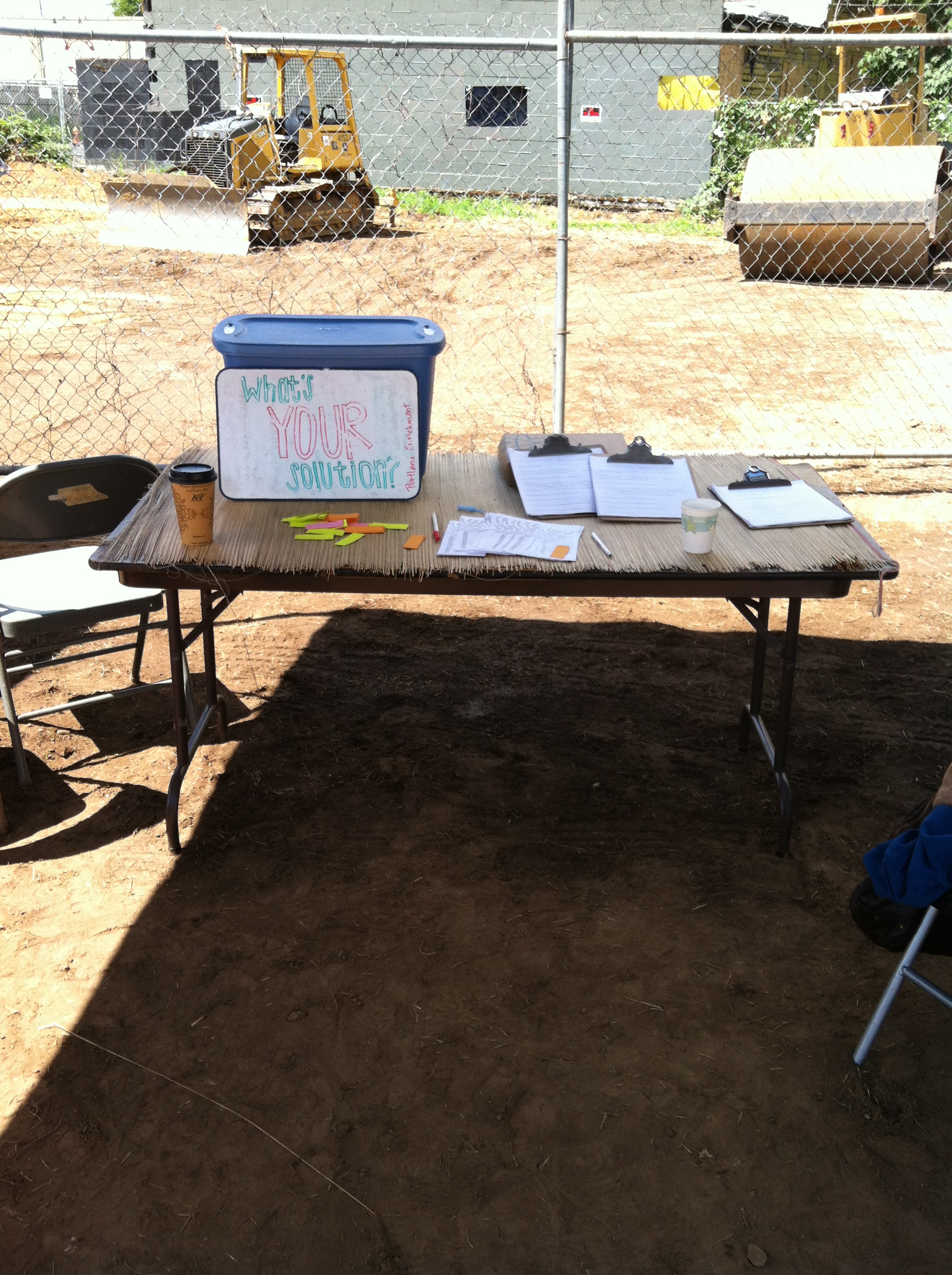
People in the area love going to their local restaurants, salons and stores. A question we asked folks at the market was “What is your favorite local business.” I heard many great descriptions of a number of places I will need to check out sometime. It always seems I find the best places to eat or to buy things at after talking to others. All of the favorite local businesses were posted on our map of Lents at our table.Image

Nearly everyone that came up to our table that Sunday commented on the empty lot behind us and they asked if we knew what the city was doing about that, or why they knocked the buildings down that were there in the first place. I had no answer for them unfortunately, but I found it interesting that so many people noticed and seemed to care about what was going on back there. It is now a goal of mine now to find out why the buildings in the lot were torn down. I learned Sunday that Lents has a history of demolishing buildings and not rebuilding; the residents don’t seem to like that too much.Image

A Peace & Justice Garden

Aside

For the past three weeks, squished on the couch in what might be the hippie-est living room in all of Minneapolis (maybe even the whole Midwest), my world has been rocked. I haven’t DONE anything too significant… pulled weeds here and there, trimmed some trees, harvested garlic… But little by little, I’ve started getting my head around something I’ve come to believe is the absolute most important thing we can do in order to close the gap between how the world is and how it should be. And that is, empowering communities to transition to a fundamentally different way of living. It’s a lifestyle in which environmental impacts, both negative and positive, are experienced rather than displaced. It’s a lifestyle you would diagram as circles, one cycle feeding into the next. It’s a lifestyle to which you would apply words like “enduring,” “self-sufficient,” and “conscientious.” It’s a lifestyle where social capital is what makes you rich, organizing neighbors is what gives you power, and love is the most potent drug around.

There’s an awful lot of talk out there about the evils of capitalism, inequalities plaguing our education and healthcare systems, epidemics of obesity, peak oil, and a whole slue of other injustices I can’t pretend to fully understand. But over in Phillips on 17th avenue and 24th street, my world has been rocked because Lynne Mayo, a fiery woman with a plan, is doing something about it.

Lynne has taken what has become a quite devoted posse of Summer of Solutions participants under her wing. She’s made it her business to get to know us, insisting we take mug shots next to our names so that she can work on memorizing them. She’s taken time to sit with us, offering up homemade raspberry pie and asking us questions trying to get at what makes each of us tick. She’s shown us documentaries exposing the dangers of genetically engineered foods. She’s brought in neighbors to teach us about herbs. She taught us methods of bio-intensive gardening and let us have a go at it as we began preparing plots for fall planting. She introduced us to permaculture, helping us to understand the importance of caring for the earth, caring for people, and sharing the wealth. She adds a new book to her recommended reading list every day: James Hansen’s Storms of My Grandchildren, Richard Heinberg’s Peak Everything, Atina Diffley’s Turn Here Sweet Corn, Howard Zinn’s A People’s History of the United States….If only I could read as quickly as Lynne can spew off titles.

What have I gotten out of my time with Lynne so far? Well, my “to read” list as multiplied 10 fold. My knowledge of weeds and plants has expanded. I can confidently tell you the difference between a pitchfork and a digging fork (don’t worry, Lynne, I wouldn’t dream of digging with a pitchfork). But the most important thing Lynne has given me in just our first few weeks is this feeling I can only possibly describe as exuberance. An exuberance that translates into insatiable energy because over on 17th Ave, things are moving… plants are growing, organics are composting, greenhouses are building, seeds are starting, and slowly but surely, peace and justice are coming.

-Hannah B. is a SOS Twin Cities 2012 participant

Old Friends and New Connections

This week at Growing Food and Sustainability was a blast!

The week started out with an enjoyable Downtown Middleton Farmers’ Market. There were more people than the previous week, due to the more moderate and pleasant weather. This was great because our stand had many new children and families stopping by to participate in our kids’ activity. This week the topic was waste disposal. They had to match up different types of household waste, like plastic baggies or apple cores, with composting, recycling, garbage, or hazardous waste. The kids really enjoyed it, and some of the parents learned something new too!

Farmers’ Market Kids’ Activity Table

The Farmers’ Market was also especially fun this week because there was a new produce stand! This new stand, called “The First Acre”, is run by a couple mutual friends of Growing Food and Sustainability, who are fresh out of college. It was great to see old friends at the market, as well as to see some fresh and young faces. Overall, it was my favorite Farmers’ Market of the year! Now our mission is to make more consumers aware of the market to help support these hard-working farmers.

The First Acre Farm Stand

The other part of the week that really stood out to me was an activity that we did with our middle and high school aged participants on Wednesday. We used chalk to trace out the energy system, starting with the sun. It was especially illustrative because the youth participants could literally see the closed loops with systems like composting, and the literal dead ends with the fossil fuel system. The discussion surrounding this activity was quite deep, though a bit heavy, and it seemed as though all the participants were engaged and learned something.

Energy mapping with chalk

This activity had an unexpected result for me. I really enjoy making flow diagrams like this (which I knew already), but I learned that they are an extremely good way to convey information to others, and they’re great discussion starters. I also learned that I enjoy teaching about systems very much. These are both things that I think I will find useful in my future, since I plan to become a high school teacher.

Overall this week was excellent, and I look forward to the upcoming weeks of Farmers’ Markets and lessons. I also enjoyed the unexpected benefit of learning something new about myself from the activity!

Thanks,
Colin

A Beautiful Day in Portland

Last week our Portland Enrichment team divided into sub groups so we could have a few people focus on particular goals that we wanted to achieve by the end of the summer.  At our meeting we brought out a large, white sheet of paper that we filled out from launch week. On the paper were certain job descriptions such as Media, Community Events, Data Management, and Contacting Partners.

Each category had a leader and one or two other people to help out the leader in that category as well. This structure allowed individuals to focus on what they want to do as well as maintain a balance of power between everybody.

At the meeting we also decided who will be facilitating the next meeting, who would be doing a confluence call with other programs nationwide, and discuss our shifts for working at the farmers market that Sunday.

Sunday was our group’s first time at the farmers market and we were able to have a tent and table set up for us. At our table, we had a poster size map of the Lents area and we asked people at the farmers market what their favorite place in the Lents area was.  When people decided on a favorite place, they would write it on a sticky note and place it on the map wherever the place happened to be.

We got a lot of responses and our map became full of colorful sticky notes. People really took pride in where they live and what they like to do in the area. In fact, many people said their favorite place was the farmers market that we were currently at.

After asking residents what their favorite place was, we asked them if they would like to take our survey. Many people decided to take the survey because they were already talking about all the things they liked in the neighborhood. We received a lot of input from people at the farmers market and I’m excited to see/talk to more people the next time our group goes and maybe even see some of the people that we that were at the market last time.

At the end of the day, we accumulated about 15 surveys and had the pleasure of watching and talking to a variety of people. The farmers market offers something for people of all ages and is a great place to spend the day, especially in the summer, here in Portland.

Our Bumpy Days at GFS

Last week was the third week for the GFS (Growing Food and Sustainability) summer program in Middleton. It has been more challenging for all out participants as compared to the previous weeks. Check out what has happened and our reactions:

  • We had a super warm week with temperatures ranging from around 90-104 degrees Fahrenheit (on Thursday the heat index was 120). All of the plants were so desperate for natural watering and it was unpleasant for us to work outside under such extreme weather. (It might be worth mentioning that we were so excited that it rained on Tuesday, but it only lasted for a couple of minutes). As our response to this situation and parents’ concern about it, we decided to have more indoor activities with our students so that everybody could maintain their health and excitement throughout the program.
  • Our bean plants in the front bed were ‘trimmed’. We assumed that deer might have done it. One of our Program Leaders, Gabrielle, asserted that the deer might have run out of food from their natural habitat due to the long drought (oh poor animals…and our plants too!)

Bean Plants Eaten by Deer

  • A number of other bean plants were severely damaged by Japanese beetles. We saw a lot of them all over the Youth Farm and ended up spending about half an hour catching them. We throw them into soapy water to kill them. We decided that we will have a bug-catching session every day to control their population and to prevent our plants from being damaged further.

Japanese Beetles!

  • Some kind of animal ate our planted seeds which were surrounded by a cage made of 1/4 inch hardware cloth in the greenhouse. It was our second attempt of planting squashes and melons. Gabrielle was determined to have the third try by reseeding and putting the tray inside the closed hallway. The next day, we were disappointed to discover that our seeds were eaten again! (what a smart kind of pests we have here). We decided to have the fourth try and put the tray inside the classroom. This might be our last try since we are running out of seeds (keep fingers crossed).
  • Despite the fact that we were having a national public holiday on the 4th of July, we had our program as usual. That morning, Lauren, one of our full-time participants, quickly realized as soon as she woke up that there was no bus going to Middleton from Madison throughout the day due to the holiday (Our full-time participants, Lauren and myself, depend on the Madison Metro bus service to get to Middleton form downtown Madison every day for the program). We soon came up with the solution: Lauren and Ain took a different bus to get halfway to our program venue and Natalie fetched them from there by car. Problem solved and the program ran just like any normal day!

Along with all the challenges that we have faced throughout the week, there are also a few exciting updates for everyone to cheer up for:

– We had a new kid in our Tuesday/Thursday group who attended our program for the first time last Tuesday. Her name is Elizabeth. She is six years old and a smart friend of the triplets. Thanks to Virginia, the triplet’s mom, for bringing more people into the program!

Lauren and Elizabeth

We built worm bin with the Wednesday/Friday group with instructions by Gabrielle. We are going to use the worm bin this summer to do vermaculture composting (an indoor composting method which uses worm as decomposer).

– We are having adorable baby eggplants at the Youth Farm. We might start harvesting eggplants pretty soon!

– The sunflower seeds that were planted by the Wednesday/Friday group are already sprouting at the front part of the Middleton High School garden.

Our compost is now feeling warm after we added beer mash last week (lots of nitrogen!)

We recovered the strawberry and raspberry plants from being dried out by the extreme heat after we watered them generously throughout last week. Now they look green again!

We harvested onions, peppers, radishes, beets, and tomatoes for the first time. We might be getting more of them soon!

– Ain

Cross-posted from http://growingfoodandsustainability.wordpress.com/

Getting Started and Planning for the Future

On day two of launch week, our Summer of Solutions team met with representatives from partner organizations that we would be working with throughout the summer. When the meeting began there was about 15 of us and we all introduced ourselves. Our partners gave background about their organization and how they helped benefit the community.

Common areas of focus were energy efficiency, transportation and local food and farming. Some of our partners include Million Monarchs, Zenger Farm, Green Lents, Foster Green, Urban League and Mt. Scott Community Center. Our meeting was held at Mt Scott Community Center, which is in the neighborhood where we would be canvassing.

We then went on a walking tour throughout the town of Lents. Our leaders taught us the history of the city and our group had a chance to grow accustomed to the area that we would help to improve. It was interesting to see the diversity of people and the unique landscape of Lents.

The next day our group concentrated on identifying our goals for the summer. Our group filled out an asset map, which is a way for group members to identify what they and their co-workers can contribute to the team.

We also discussed what we would do if certain challenges were to arise such as if we were canvassing and some one who opens the door doesn’t speak English. We also put together a timeline so we will be able to keep track of our progress and estimate about how long certain projects may take.

A common goal of ours is improving the program from last year.  Everyone from our group was able to contribute ideas and will be able to use their skills to benefit the group. We hope to gain more media attention, get more people to participate in the neighborhood challenge, and host an event at the end of the summer.

Bonding Over Bugs

“The highlight of my week, which may sound a bit morbid, was killing bugs.”

It was the second week of our summer program, and it was awesome! Between tending the garden and youth farm, running our camp for elementary through high school age kids, cooking, learning to grant-write and canvass, Katie’s skill-share on making your own cleaning supplies, biking our produce to MOM (Middleton Outreach Ministry Food Pantry), and our community work-day, it was a busy but fun-filled week.

We spent Thursday cleaning up the front of the high school garden. Before we set to working on it, it was overgrown with weeds and looking pretty miserable. We did some major weeding, and designed an awesome new area where we planted lupine and three varieties of sunflowers (that will grow 2 ft, 7 ft, and 12 ft tall!). It was a crazy hot day, but our hard work totally paid off. Along with the awesome red PVC pipe planters we hung up last week for the herbs, the garden area is looking beautiful these days.

The High School Garden Being Transformed

The highlight of my week, which may sound a bit morbid, was killing bugs. Japanese beetles have basically been attacking the youth farm. Their favorite plants to munch on seem to be the potatoes and beans, but they have proven themselves to not be picky-eaters. We have found them on the tomatoes, kale, broccoli, and more. On Friday, we decided something had to be done. We grabbed a bucket of soapy water and the helping hands of the kids in our program, and set out to capture those critters. It was quite a sight – about ten of us, running/sneaking around the farm to hunt down the evil beetles, and throw them in the bucket. We were all on a mission together to save the youth farm from the ensuing invaders.  In the midst of all the craziness, it was a great bonding moment for us and our high school participants. At our weekly meeting later that day, it came up as a highlight in a number of people’s weeks.

Unlucky Japanese Beetles

Another highlight for me was our Saturday community work day. Every Saturday we have a community potluck from 12PM – 1PM and a community work day from 1PM – 4PM. Thus far we have not had much time get the word out, so it has mainly just been program participants. Recently I have been telling my friends all about the awesome stuff we’re doing here at Growing Food & Sustainability, and have been encouraging them to come out on Saturdays to see what I’m talking about. I was super excited when seven of my friends showed up to volunteer this weekend. We got to work right away, weeding what we call “the triangle”—basically a triangular patch on the youth farm which had never been weeded. The job seemed overwhelming at first, but with our manpower we were able to clear out the triangle in no time, and even begin transplanting our squash!  We even had time left to weed the rest of the farm, water everything, and go on a Japanese beetle killing spree. It was great having so many of my friends out to support our program. In future weeks as we continue to spread the word about our community work days, I hope we will have many more people join us out on the youth farm.

Weeding “The Triangle”

Overall, it was a very productive week. It was encouraging to see our garden and farm transformed by all the weeding, planting, and bug-killing we did, but also to see friendships strengthen and grow as a result of working alongside one another for the sake of sustainability. Bring on week 3!

– Lennea

Cross-posted from http://growingfoodandsustainability.wordpress.com

Chronicles of a new dumpster diver

Cross-posted from iowacitysos.org.

By Eleanor Marshall, Iowa City Summer of Solutions Project Leader

The landfill is only about 8 minutes outside of town, but that’s thing about Iowa: once you leave city limits there isn’t much difference between 8 and 80 miles. It’s all endless rolling hills and rising corn stalks: waves of grain that are as foreign to a city dweller like me as the actual ocean is to America’s heartland. I mean, I’ve seen King Corn and volunteered on organic farms, but my roots don’t grow from this rural landscape – I’m just being introduced.

And we were every bit the gawky tourists – our station wagon sandwiched between semis dropping of massive loads, driving against the flow of traffic, grasping desperately for the broken lawn chairs the stoic guy with the pick-up just pitched without a second glance. It’s uncomfortably foreign-feeling to be around what is really just an accumulation of the contents of the trash below the kitchen sink or last month’s garage sale rejects. But that’s our whole point. Determined to reclaim trash and transform it into art –  and teaching children at summer camps and challenging local artists to do the same – our art supply shopping spree came with a mission but not a line-item list. We’re still not even sure what to expect.

I’ve gone dumpster diving before, but this was my first visit to the dump: the final destination. It’s probably embarrassing to admit that I kind of expected to be scavenging in an enormous heap of trash like the kids in documentaries about third world countries. But even when you drop things off at the actual landfill, they’re just plopped into more dumpsters and only later laid to rest in the mass grave that lurks somewhere out of sight from the dumping grounds.

But even the dumpsters holding just a few days’ worth of discards turned out to be practically bottomless goldmines. From mangled bikes to barely creased microbiology textbooks (I wonder if there’s a chapter on landfill microbes…) to an entire truckload of size ten shoes, each find was a diamond – a wind chime or bench seat waiting to happen.

I was most dumbstruck by the number of unopened items that literally go from distributor to dump truck without a single use – not even a pity test run. A sampling of our still-sealed finds includes: a fondue set, a wine corker and cooler, a coffee maker, several sets of durable plastic plates, and mountains of un-opened gauze packets.

Of course, my favorite finds were the old ones – some discarded photographs or the old, elegant doorknobs we spent a good half hour scooping from the bottom of the scrap metal bin.

Finding this stuff invoked the weirdest mix of exhilaration and outrage. There was an instinct awakened when I liberated my first trash treasure: urban living meets American pionner scrimping every scrap and innovating its second life. I felt like a savior…until I considered how little I was saving just compared to how much I throw away – and then that multiplied by hundreds of thousands. And, my god, the brand new appliances! As much as I like taking them for free, I can’t help but wish the sofas and the shelves weren’t thrown out in the first place, even if that means they wouldn’t be mine in the second place. With all the secondhand stores, recycling centers, and other uses awaiting even the shabbiest of items, it seems inexcusable to just toss it all away in endless piles.

And the cherry on top is that it’s technically illegal to take this stuff. If someone wants to throw it away, they get their way – even if they don’t want to own their toaster or tent anymore, they get to make sure no one else can have it. There are a lot of reasons behind the rules – privacy, safety, liability – but the outcome seems almost childish.

In fact, the entire concept of taking all of our waste and burying it in the backyard (or someone else’s, rather) seems laughably primitive – but it’s ironically become an emblem of modernization and urbanization and the weirdness of the way city folk send trash “away” and keep consuming in excess.

Maybe, in the end, I’m glad I could only see the dumpsters, not the dump. Because it’s important that we look – that we watch our lifestyles all the way to the end of the line – but I don’t want to get lost. Right now, I can’t solve or stop landfills, and just lamenting them is wasted energy. We’ve got enough waste on our hands – it’s time to create art.

To learn more about Iowa City’s Sustainable Art project (and our other projects this summer), visit iowacitysos.org or find us on Facebook.