Iowa City making noise

It’s been an exciting week in Iowa City. One of our program leaders – Zach Wahls, maybe you’ve heard of him – has been fighting hard for marriage equality across the nation the past few months. He gave a speech a while back to the Iowa legislature, and it’s been blowing up the Internet (again). It recently hit 12 million views – woah.

It’s pretty easy to be proud of our friend. It’s also been pretty easy to get excited for this upcoming summer. We continue to work on projects from this past summer and have been planning away for new ones.

Update on 2011

IC is on the verge of something great. Our Solar Schools project – an initiative to install solar panels on two local schools in the Iowa City Community School District – has grown tremendously. After working with the school district, the project now includes at least 10 schools, and our team has been working tirelessly to get this passed. If the project is approved, it will be the largest solar project network hosted by a public school system in the nation.

Looking forward – 2012 projects

Our Power: Born in the Twin Cities, the Our Power program is a home weatherization initiative for low-income households in the Iowa City area. The program combines strong outreach and educational components focused on energy/environmental benefits of winterizing homes, the effect on residents’ energy bills and local resources for homeowners and renters. We recently received an $8k grant from Re-Amp, an alliance of foundations focused on clean energy issues, to get the project off the ground.

Iowa City Roots: Jumping on the local food bandwagon is easy to do in Iowa City, where our community’s educators, farmers, expert gardeners, parents and students all have a common goal: feed our kids with fresh, local and HEALTHY foods! We’re in the planning stages of this bloomin’ awesome project, which aims to construct and maintain 6 community gardens in public parks and schoolyards throughout the growing season of 2012. Partnering with the Parks and Recreation department of the City of Iowa City, the ICCSD, the Johnson County Local Food Alliance and dozens of community members, we have received a bounty of support thus far; the planning will continue through the dormant winter months as we secure land and funding–be on the lookout for things to start sprouting up come March!

Internship program: We working with the University of Iowa Career Center to create internship opportunities for U of I students interested in gardening, green economy work, clean energy issues and other community-based projects. Our team incorporates leadership development and youth empowerment in all aspects of our organization, making us aptly suited to be a Community Based Learning partner with the University. We are also working with professionals in local green businesses to match interested interns with sustainable companies in need of help and innovation.

White Roof and Neighborhood Compost Pilot projects: still in preliminary stages, these two projects aim to involve community members in simple intiatives that make a big impact. White roofs are perhaps the easiest way to engage businesses in sustainability, and with a lively downtown business community, we hope to provide white roofing services while partnering with local hardware and home improvement stores. The Neighborhood Compost Pilot is a branch of Iowa City roots, and hopes to bring composting intiatives to the community garden centers we’ll be working with.

Who we are

Our team is led by Zach Gruenhagen, Hadley Rapp, Zach Wahls, Tom Frakes, Eleanor Marshall and Kerri Sorrell. All of us are Iowa City natives or students at the University of Iowa. We’re committed to building a model of sustainability in Iowa City, one that can hopefully be replicated in other parts of our state. Iowa may be small, but we’ve got a lot of potential to do big things in this unique community.
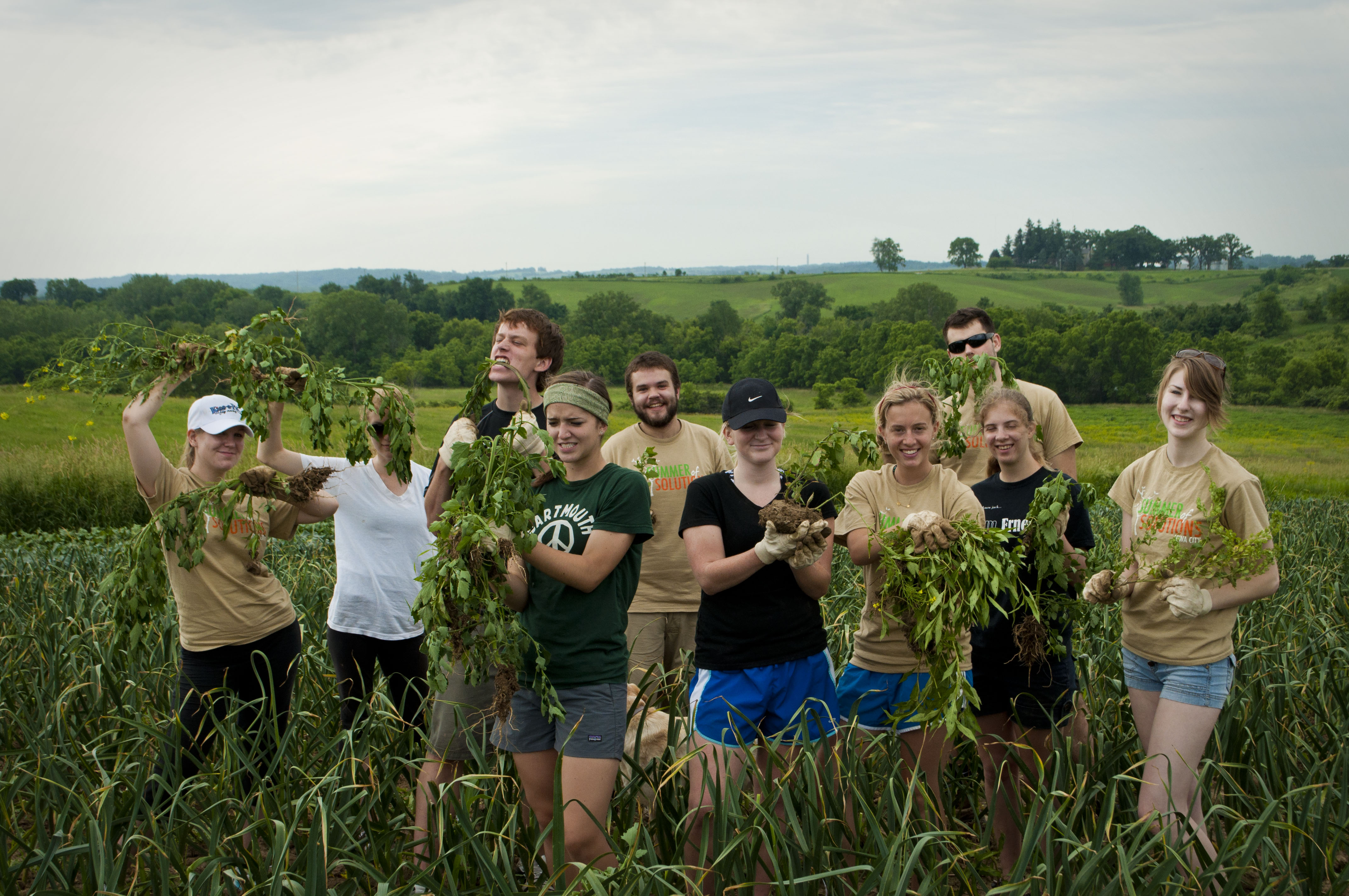
Interested in keeping up with Iowa City Summer of Solutions? Check us out on Facebook, Twitter and at iowacitysos.org. We can’t wait for what promises to be an exciting, exhausting and exhilarating summer.

p.s. – Did you know Grand Aspirations is in the running to win $25K in the Pepsi Refresh Project? We’re working with the Progressive Slate to fund-raise towards our amazing programs and leaders. You can vote every day in December, so mark your calendars! Share this link: http://bit.ly/sWzLvl with your friends online and help us spread the word! Go team!
Growing Food and Sustainability-Middleton, WI

The team in Middleton, WI is so excited to be a part of this inspiring network of youth leaders!

Our Program

We are designing and running a sustainability and environmental education program primarily for middle and high school youth that focuses on gardening and food production but also incorporates art, people-powered transportation, and multi-age relationship building through teaching and mentorships.  The program’s home base will be the garden and greenhouse, located on public school land in central Middleton, where we will hold the majority of the workshops and host open garden work hours.  However, we will also expand our work into the greater Middleton community.  Some of our ideas include running a kids activity table and possibly selling some of our produce at the Downtown Middleton Farmers’ Market, taking group bike trips to the nearby Bock Community Garden, and delivering (by bike trailer) a percentage of the produce we grow to the Middleton Outreach Ministry’s food pantry.

Workshops will incorporate a variety of sustainability topics and will often use the garden as a hands-on classroom.  Students will learn basic gardening skills such as bed construction, seed starting in the greenhouse, composting, transplanting, caring for plants, maintaining the garden, harvesting, washing, and distributing produce.  We will also discuss and put into practice topics such as nutrition, the nutrient cycle, alternative transportation, water conservation, energy efficiency, and we will host several cooking classes at the nearby Willy Street Co-op.  All of this will help connect the garden to the larger issues of sustainability, health, and justice.  Personal expression through art and writing will be a part of every workshop as well.  We will incorporate garden-fresh snacks as often as possible, and participating students will have the opportunity to bring fresh produce home to their families on a regular basis.

During open garden work hours, students will be able to spend additional time at the garden based on their level of interest.  The garden will be a safe, supervised space, where parents can feel comfortable leaving their kids and where kids will know they can interact with a supportive adult.

Gabrielle Hinahara

Gabrielle has extensive farming and gardening experience and has also worked with youth.  In college, she was involved with F.H. King Students for Sustainable Agriculture, where she helped to lead educational workshops for the student body in addition to volunteering in the garden.  In the summer of 2010, she worked as the head counselor at the Frost Valley YMCA Farm Camp in New York, where she helped run garden-based outdoor education classes, counseled middle school-aged youth, and advised and evaluated the counseling staff.  In the fall of 2010, she worked as an intern at Growing Power, an urban farm in Milwaukee, WI, where she learned about intensive growing systems such as vermiculture and aquaponics.  She recently completed a full-season apprentice at Simple Gifts Farm in Amherst, MA, which runs a 300-member CSA and also sells at the local farmers market.  This is where she gained most of her agricultural knowledge, including learning how to plan greenhouse and field planting schedules and how to grow and harvest almost every type of produce, from strawberries to squash to lettuce. 

Natalie Hinahara

Natalie has significant experience organizing groups of peers and also in effectively communicating and partnering with adults.  She was the student representative on the City of Middleton Sustainability Committee both her junior and senior year of high school and was president of the high school Ecology Club during her senior year.  She also has experience working with youth in a garden setting, since she volunteered in Middleton’s Bock Children’s Garden in the summer of 2010.  In college, she is currently a member of the UW-Madison chapter of Slow Food and is an intern in WISPIRG’s anti-big ag campaign, where she is learning community organizing skills.  She is also majoring in art, so her talent in this area will contribute to the arts portion of our program.

Right now, we are working on securing land for garden space at both Middleton High School and Kromrey Middle School.  We are excited to know how much land we will have so that we can design the gardens!

If you are interested in keeping updated on our progress, please join our facebook group!

Pioneer Valley Summer of Solutions: Take 2!

Just weeks after our program ended last summer, the Pioneer Valley of Massachusetts was hit by Hurricane Irene. Bad. 

I was in North Carolina for the Grand Aspirations National Gathering as the storm worked its way up the East Coast.  The GA crew was fine, albeit delayed in our travel plans.  But when I got back to Franklin County, the home of program, I could see Irene had done serious damage.  Turners Falls and Greenfield, the hubs of activity for Summer of Solutions, were spared the worst of it, but near-by neighbors in Shelburne Falls, Conway and many other small towns lost roads, homes, electricity, farm crops, animals and more.  Seeing news footage of the main bridge being wiped out in Shelburne Falls was devastating.  We had helped partner Co-op Power to weatherize several homes in this beautiful and tight-knit community.  

Image

A big lesson of 2011 for me has been that unprecedented weather in our rural river valley and the surrounding mountain towns is incredibly devastating.  This lesson came in waves: first the tornado which struck Springfield and other towns south of us in June, causing massive damage, then the hurricane in August, and most recently with the surprise Halloween snowstorm, which dumped a foot of snow overnight and knocked out power for almost a week in many parts of the region.  Narrow mountain roads aren’t built to withhold major flooding; aging bridges across the Connecticut and Deerfield Rivers can’t handle 100 Year Floods every year.   In an area which depends on agriculture, many small farmers had their worst season in years and lost thousands of dollars in crops.  

While it has been a sobering year to the realities of climate change, I feel hopeful for what we are building in the Pioneer Valley.  I also feel a new commitment to learning how to sustain ourselves and our communities in a changing climate. We will be at it again in 2012. 

Pioneer Valley Summer of Solutions is based in Greenfield and Turners Falls, MA, two towns in western Massachusetts along the Connecticut River.  These towns were rooted in manufacturing industries and are traditional crossing points for the surrounding communities, as far back as when the Pocumtuc tribe lived on the land. 

SoS in 2012 will continue our farming and community education projects from 2011 and expand in new directions.  In 2011 we helped start the Summer Workshop Series, hosted at the Brick House Community Resource Center in Turners, which was made up of dozens of free classes on topics from wood-working to self-defense to herbal medicine.  We will continue this partnership with the Brick House, including the Snack Garden, which we planted and tended with Spanish-speaking neighbors kids in the Kids Gardening Class. 

Image

We also are continuing a fruitful partnership with Harvest Moon Farm, across the river in Greenfield.  We started a “work-share” in 2011, helping with the Gwen and Eric’s crops in exchange for a quarter acre plot of our own.  We’ll be expanding to grow more vegetables to sell, and expand options for Greenfield residents to eat healthy, affordable and local food and be a part of its production.   We also will be using the Greenfield Community Kitchen to develop our own prepared food product.  

As a program in a small, rural community (combined Greenfield and Turners are under 25,000 people) we face challenges and advantages.  Living in the heart of amazing natural resources reminds me how we depend on them for everyday existence, and even in rural communities, access is lacking.  Learning how to create prosperity in a community which has been abandoned by many commercial industries is more than a summer experience, but we’re lucky to work with a lot of other dedicated residents. 

Image

Myself (Martha Pskowski) and Erika Linenfelser are returning as second year program leaders, and we’re hiring new local leaders.  Erika and I are both students at Hampshire College in near-by Amherst.  I am excited to deepen my connections in this community and explore ways to make more self-sustaining options for youth in Franklin County, who often relocate to find opportunities.  SoS is an exciting way to connect youth to older residents of the area to create a shared vision for the community.  I also can’t wait for more harrowing bike rides on our narrow roads, and refreshing swims in the Connecticut River after work days.  If you make it out to the Pioneer Valley, you’re sure to be charmed by our beautiful surroundings, and taken aback by the vitality of our local community. 

Thoughts following Midwest Powershift

I spent the weekend at Midwest Powershift in Cleveland. Among the rallies, trainings, and speeches, I was able to catch some downtime with fellow Summer of Solutions program leaders and participants from around the Midwest. Especially valuable was a conversation I had with members of other Midwestern programs on Saturday night.

500 young people applaud Joshua Kahn Russell's keynote poem at Midwest Powershift in Cleveland. Photo credit Ben Hejkal.

This conversation helped me articulate two things: one, the “good environmentalists vs. the evil polluters” framing I saw a lot of other places during the conference makes me deeply uncomfortable, and two, if the green economy is going to work it needs to be the whole economy, not a side industry.

Continue reading

The View from Four Years Out

When I helped close the 2011 Twin Cities Summer of Solutions three weeks ago, I knew something amazing was happening, but in the flurry of it all I wasn’t really able to identify it. I started to get a sense of it when I first sat down at the Grand Aspirations August Gathering two weeks ago, when forty people from all over the country streamed in with wondrous stories of their work creating the green economy. By the end of the Gathering, last week, the full depth of the change was starting to dawn on me and was brought to the front of my attention when Ethan Buckner, a friend and Oakland Summer of Solutions Program Leader, said smiling at the end of a big group hug, ‘you know, we’ve created something really remarkable in the past few years’. Now, after a week of catching up and taking the next steps forward back in Minnesota, I’m finally seeing the view from four years out.

Four years ago was about 6 months after the events that got Cooperative Energy Futures and the Alliance to Reindustrialize for a Sustainable Economy off the ground – the seeds of my green economy work in the Twin Cities. It was about 6 months before the vision for the Summer of Solutions and Grand Aspirations emerged. Four years ago, there had been no national gatherings of thousands of youth activists, candidate Barack Obama was barely a competitor, and the economy had not yet tanked. The dream of a green economy was barely starting to be voiced, and the idea that we could sustain ourselves, our communities, and the future of our world by creating new ways to feed, house, power, and transport our society was an exciting but utopian ideal.

So what has changed?
Continue reading

Late greetings from Portland: The Foster Community Action Day

On Saturday, we had our Foster Community Action Day. It was the culmination of weeks of hard work and organizing. At times, the pace became frantic as we made last minute adjustment and preparations. Nonetheless, everything got done, and spectacularly so.

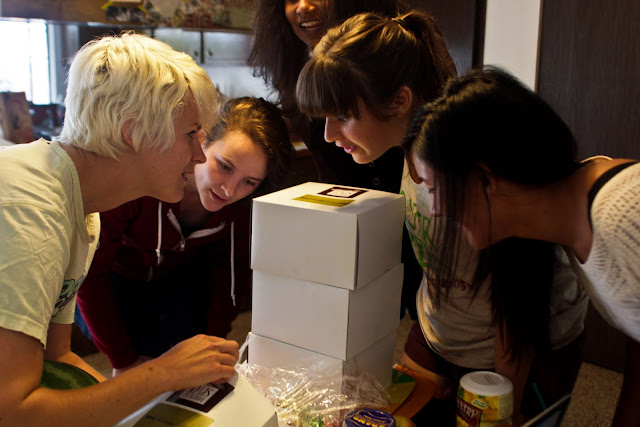
The day started separately for all of us. We split up into two groups. Naomi, Anastasia, and I (Leo) went to New Seasons Marketplace to buy refreshments and snacks for the volunteers. New Seasons was nice enough to donate a $50 giftcard to help fund our food purchases. Earlier that day, Naomi also picked up several cakes from Baker and Spice Bakery, again donated.


The others, including Shabina, Nathan, Huntley, Barbara, Kari, and Allison were busy at our secret headquarters (aka the Shrub House) assembling clipboards and other materials for the volunteers. They soon received word that more volunteers than they anticipated would be arriving: several people from the Corvallis Summer of Solutions program would be joining us!

The food group reconvened at the Shrub House to quickly prepare some food for the volunteers. We purchased chips, dips, and a variety of fruits and vegetables for the volunteers to eat in between canvass areas and rest stops.

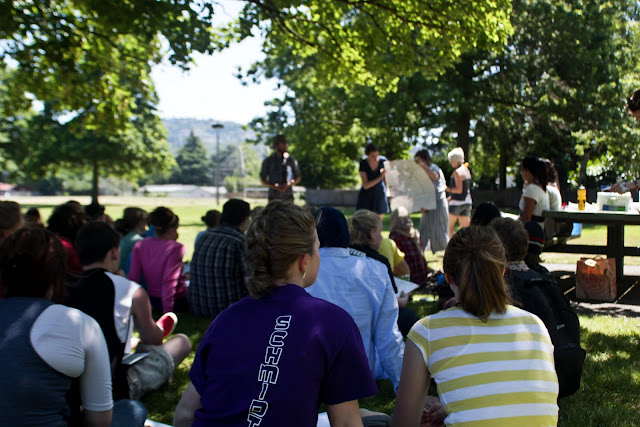
Once the volunteers from Corvallis arrived and introductions were had all around, we packed all our materials and food and moved to the park next to Kelly Elementary, where our training would be held. Shortly thereafter, about 25 volunteers from Second Stories, as well as their older interns arrived at the park.

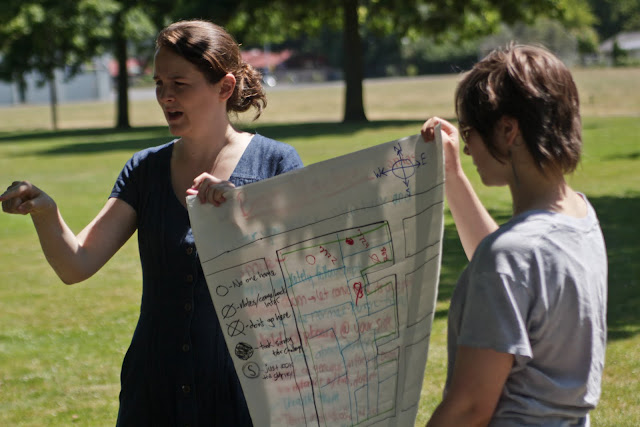
Nathan and Allison did a thorough canvassing training for them. Many had never canvassed before and were quite nervous about the experience. We explained to them the basics of what we were doing, as well some logistics, such as our coding system and how to read the turf maps. Finally, we split into groups to practice the canvassing script and giving surveys and challenges.

Heading out with volunteers in tow, we each were assigned a block or two of houses in the Kelly Elementary area. Some volunteers were nervous, others were eager, and the whole experience went very quickly.

We ended up covering nearly all the turf that we had set out to cover, basically finishing all the turf in the Kelly School area. Many of the groups had multiple challenges and surveys. The numbers aren’t quite in yet, but we’ll keep readers updated as they roll in!

https://picasaweb.google.com/s/c/bin/slideshow.swf

Worried about Defecits and Unemployment?: Community Powered Energy

As the federal government eyes a shutdown and Minnesota cautiously creeps towards the end of its state-level closure, the underlying questions remain unanswered:

  • How do we balance budgets and live within our means by raising income and cutting waste without sacrificing the essentials, whether at the government level or for people already living on the edge?
  • How do we create lasting jobs and economic opportunity when the costs of living keep rising and people have less money to spend?
  • How do we bridge traditional divides (partisan, ideological, socioeconomic, and cultural) to work together creatively for public health, geopolitical stability, climate and energy solutions, community resiliency, and social justice?

For the neighborhoods around Midtown in South Minneapolis, where the recession has left unemployment edging towards 40%, foreclosure running rampant, violent crime rising, and neighborhoods and community organizations struggling with funding cuts, these questions are at the fore. Things have always been challenging here; absentee landlords control much of the housing, and a large portion of people’s income leaves the community to pay for goods and services elsewhere. Many local residents (the area is primarily low-income, people of color, and has many recent immigrants and non-English speakers) feel they have little agency in corporate and governmental decisions affecting the neighborhood.

In times of crisis, communities can turn against each other in a desperate attempt to protect what remains, or towards each other to work together to create new opportunities and long term solutions. In the Twin Cities Summer of Solutions, we’re helping the community use the opportunities that clean energy and energy efficiency provides to make the latter choice. Scaled up, we hope this work may serve as an example for a world facing challenging times.

The seven neighborhoods (over 13,000 households and over 500 businesses) we’re focusing on together spend over $63 million each year paying for electricity, heating, and gasoline – that number will only go up as prices rise. That money is creating few local jobs – the majority of it pays for coal mining, oil drilling, natural gas extraction, power plants, natural gas pipelines, and more. I don’t need to recite the list of problems these things create for both the local community already plagued with asthma and other respiratory illnesses and for our broader nation and planet. 30-80% of this $63 million/year  can be avoided through behavioral changes and available technologies that pay for themselves, reducing the negative impacts created. Collectively implementing these practices cuts the cost of implementing them (opening access to people and making it easier to finance) and dramatically increases demand for local green business and green jobs, putting people back to work (or into it for the first time). Eliminating those costs helps individuals and businesses balance their own budgets and create new jobs and income. This in turn reduces reliance on public subsidies and increases public income, making economic recovery and fiscal responsibility connected instead of opposed. In doing so, we help create a win-win-win scenario for residents and businesses and across cultural and socioeconomic groups; building community and helping people unite across difference for a common goal.

We believe energy efficiency and clean energy can be a driver for stronger communities and a renewed economy. And more than our belief; we’re making it happen.

So here’s the low down on what’s happening around energy in the Twin Cities …

Continue reading

My 40 New Best Friends

Five days ago I remember sitting nervously around a bowl of cherries at a fellow program leader’s kitchen table. Our conversation kept switching with the tense energy of those with much to say but too many thoughts to clearly express any of them. Have we figured out housing for everyone? How much money do we still need to fundraise? What time are we going to start tomorrow? Have you emailed the group the address yet?

Now I look around at a sea of young faces, all different races, different backgrounds and with different reasons why we decided to spend our summer working to create ingenuitive grassroots solutions to Oakland’s most challenging environmental and social problems. Despite our differences, I can confindently say that there is not a single person in the room who I wouldn’t feel comfortable talking to and confiding in. Moreover, there are many people in the room whom I’ve told more personal things about myself than I have to friends I’ve known for years.

This story of immediate friendship might be written off as “cute” just as Summer of Solutions is often written off as just another “summer camp.” But in many ways, I believe that the community we are creating is a model for how the rest of the world should function. Imagine if diverse groups of people, from all different income levels and racial backgrounds, came together to really think about the problems that their community was facing and then worked together to solve those problems? Sound idealistic? Maybe, but if you truly believe as I do that at some point all of these smiling faces sitting around me are going to take the knowledge that they’ve learned this summer to become even better leaders in their communities and country then perhaps a solutionary world isn’t that far off in the future.

Solutionaries Worldwide!

This fall, solutionaries around the world are getting interested in Summer of Solutions. As we grow together across the country and make more and more connections nationally and internationally, new opportunities are emerging.

Like this one: e-GLO

e-GLO (Global Learning Opportunity) is a project inspired by the Earth Charter, an international document written to encourage “respect and care for the community of life,” “ecological integrity,” “social & economic justice,” and “democracy, non-violence & peace.” People all around the world are developing Earth Charter projects to make their communities more sustainable.

Summer of Solutions – Fayetteville, through OMNI Center’s youth program, Teen Leadership Corps, won a $300 scholarship to represent the United States in e-GLO.  I also want to see solutionary representation from other cities, not just Fayetteville, so that everyone can benefit from the materials and network. It’s truly inspirational!

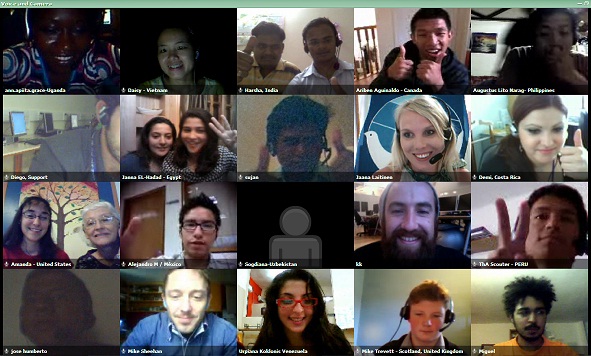
In e-GLO, 30 youth from around the world get together online via a type of Skype platform.  We share our projects and inspirations, answer polls like the one above, listen to guest speakers, view video and powerpoint presentations, discuss important questions like “How do we spur the capacity for innovation among youth leaders?” There is also a very human component to the course: each time we connect, we can chat with each other, wave across oceans, and share a little about what’s going on locally. Want to participate? e-GLO #3 lasts until December 7th, 2010. Follow the course material on the e-GLO schedule. You can access the training materials, too! Or join the Facebook group and find out what people are doing around the world, via project templates, videos, and photo slideshows.

Watch e-GLO’s video here. (It’s not possible to embed the video from this website)

The course has already begun to affect the way we do Summer of Solutions here in Fayetteville.  Someone can’t attend a meeting or lacks transportation? No problem, let’s Skype them in. We don’t have access to a business trainer? Ask Hadijah, a  professional who teaches business skills in Uganda and is interested in Summer of Solutions for Ugandan youth.  Not sure about which materials to use for social entrepreneur trainings? We can now use the professionally designed powerpoints and PDFs from e-GLO to help each other learn and achieve more for the community and the planet. The biggest learning curve for me has been the access to new technology.  e-GLO really stresses the importance of social media tools, and their tutorials are engaging and encouraging.  I’m beginning to notice that technology is becoming more exciting, and a bit less threatening.

But the best part about e-GLO is the people! Our facilitators in Canada and Costa Rica, and our tech specialists around the world, are funny, helpful, and inspiring people.  The youth who participate in the program stand out as innovators guided by their passion for a more sustainable world.  Meet the e-GLO solutionaries!

This is a pic from one of our recent e-GLO sessions! Each square is a different participant from around the world.

First day of the national gathering!

I just got here to Fayetteville last night for the Grand Aspirations national gathering. So far, I have been extremely impressed with the level of real engagement with the community that I have seen here. I have been on the working group planning the event along with Amanda, Ryan, and Sarah here in Fayetteville and Matt from the Twin Cities. Our Fayetteville working group members kept telling us about all the donations that were coming in from the community, that people who they’d never met were calling them asking to bring produce from their farms. I’m really impressed with the way that the Fayetteville program is made up of people who are a part of this community and have been for years and working in a very integrated way with community partners. Continue reading