Note: this is actually Mina’s post, cross-posted from her blog.


For pretty obvious reasons (i.e., Captain Planet is heroic, I am maniacal). Continue reading

I’ve always had a lot of hobbies, and loved learning new skills. Knitting, spinning, gardening, biking, journal-making you name it. But they were always just that: hobbies. The world I grew up in told me I could have as many hobbies as I want, but at some point you get a career. Most likely in an office. Most likely in front of a computer.
And because ever since seventh grade when I stood up for monarch butterflies in a science class discussion of GMOs I have been labeled as a do-gooder and environmentalist, I sort of imagined my fate in the office of a non-profit, getting paid meager wages to do tasks I cared about theoretically. Recently I have felt that because I have no idea what the world will be like in three years, I can’t really know what I’ll be doing. While I still believe this, Summer of Solutions is opening my eyes to the potential to make a job out of the things I love.
One of my favorite organizations of all time is Books for America in DC, where I volunteered for awhile and now always make a point to stop by when I’m in town. It was started by a guy who collected books in his apartment to donate to schools, shelters and prisons. His collection grew so large he started an organization out of it, which now has a warehouse of books that teachers and others can choose from. All the books that can’t be donated are sold in the store in Dupont Circle at bottom dollar. The proceeds are donated to the same institutions that get the books. So it’s a non-profit that consistently makes money. The recession year of 2009? Biggest profit margin ever. Why is this so revolutionary?
(http://www.booksforamerica.org/)
The non-profit sector has been at it for a while, but something’s not working. Not for our schools, our health, our natural world or our workers. Relying on grants and donations to fund “good work” only gets us so far. If we’re trying to change the system that created these problems why remove ourselves from competition with it? Innovation drives change. Books for America can compete as a bookstore while sustaining its charitable mission. That changes the rules of the game, instead of operating in the margins.
So what am I going to innovate?
I spend a lot of time thinking about waste and overconsumption in America. The amount of stuff that’s sitting out there in someone’s basement or attic or garage. Books, bicycles, lampshades, birdcages, futons. The fossil fuels poured into all this stuff. And then the number of people who wake up in the morning needing something desperately. How do we bridge that gap? How, like Books for America, do you turn that exchange into something more than charity, into something mutually beneficial?

Books for America. 22nd and P if you find yourself in DC.
Isn’t it great when you get to meet someone you really admire, and she turns out to be just as intelligent, interesting, and just darn nice as you had always hoped? That was my experience at Majora Carter’s Green The Ghetto event in North Minneapolis. The event was put on by Matt Entenza’s campaign for governor. Majora even took a picture with those of us who’d come from the Twin Cities Summer of Solutions program:

Solutionaries with Majora Carter
Earlier in June, I took the 21 bus along with four others to University in St Paul and then caught the 16 headed east. We arrived at Sibley Bike Depot, tucked in a strip mall past the “Sugar Rush” donut shop. Chocolate and sugar wafts down the hall into the bike shop. Inside the walls are lined with drawers of varying heights and sizes with bike parts and tools hanging above. The shop floor has several bike stands to work on and tools. There are also bikes for sale on display- Schwinns and Huffys and Raleighs and more.
We got a peek into the bike storage room which is usually locked up. A pile of bikes at least a dozen feet high and 30 feet long dominates the room. The bikes are layered one on top of the other; handle bars jammed into back wheels and seats knocking into pedals. All of them are donations.

Sibley Bike Depot is a non-profit community bike shop that Summer of Solutions is partnering with. It has gone through several incarnations as an organization, one of them being the Yellow Bike Collective, which inspired the Yellow Bikes of Hampshire College (where I go and occasionally have a go on a Yellow Bike). Recognizing how many opportunities bikes open up, Sibley’s current mission is to increase bike access in the Twin Cities. People donate bikes to Sibley, then volunteers and staff fix them up for sale. People who come into the shop and work on a bike can earn it to keep.
Continue reading
Summer of Solutions in Worcester has been noticed! About a week ago, we were contacted by Lauren McShane from Worcester Magazine looking to do a piece on us. Some some of us got in touch with her to tell her what the program was all about and we met with her to take a photograph as well at our community garden over on Richards St. (unfortunately, it looks like the photo didn’t make it online). The link to the article is here: http://worcestermagazine.com/content/view/5394/
The Worcester program will be working on three project realms in urban gardening and creating a pamphlet on it with the Regional Environmental Council, home and public building weatherization in Worcester and community art projects possibly including murals, sculptures in the parks and a DIY recycled fashion show.
We’re thrilled to have had this opportunity to get our message out to the media and the larger Worcester community and hopefully get some more people interested and involved! It’s shaping up to be a great summer and we hope everyone is just as excited as us.
-Jane Allegra, Worcester Carrier Pigeon
As Communications Facilitator for Summer of Solutions, I’m featuring every program to paint a broad picture of the depth and variety of solutions young people are building across the nation.
This post is drawn from a conversation I had with Amanda Bancroft, an AmeriCorps*VISTA volunteer at the OMNI Center for Peace, Justice, and Ecology. The main organizers of Fayetteville SoS are: Andrea Love, Maggie Strain, Karina Hunt, Banah Ghadbian, Jeanie Lopez-Hall, Chelsea Mouber, and Brian Kupillas. The post is co-authored by me and the Fayetteville team.
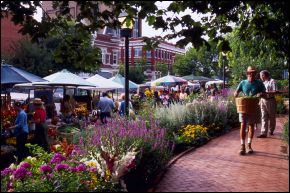
Leaders in the program have a strong interest in gardening and permaculture. There are already over 50 gardening projects, organizations, and networks in Fayetteville, and so Amanda sees the role of Summer of Solutions as one that will connect these already dynamic organizations together. The Fayetteville team has already partnered with the OMNI Center’s garden, the World Peace Wetlands Prairie, and the community garden at Unity church. In addition, the group has been given several acres of land and a greenhouse, which the team is hoping to develop for gardening.
Through building collective growing power in Fayetteville, Summer of Solutions participants will be facilitating a beautiful expansion of the amazing work already happening around the city.
Continue reading
As Communications facilitator of Grand Aspirations, I am featuring local programs to paint a picture of the diversity of solutions young people are building across the country. This week, I had the pleasure of interviewing Tim Krueger and Nora Graubard, two of the program leaders for Cleveland SoS. The other program leaders are Erika Zarowin, Ben Shapiro, and Phoebe Flaherty.
Leaders of Cleveland Summer of Solutions focus on connecting participants and interns with the broad network of organizations in Cleveland already working on issues of community development and sustainability.
Summer of Solutions in Cleveland is a project of the Ohio Student Environmental Coalition (OSEC). This coalition is a statewide network of student groups that work together to create a clean, safe, and just future. Participants in this program will be hired as interns of the OSEC, and will participate in as many aspects of the summer as they choose.
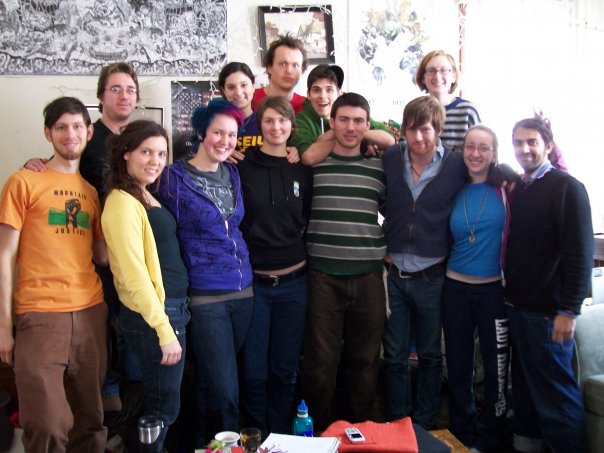
Members of the OSEC at their most recent retreat
The program’s main initiative is an energy efficiency project with the potential to effect change across the city.
Cleveland is an amazing city, with wonderful city officials to go with it. The goal of these elected officials is to weatherize every home in Cleveland in the next nine years. They are therefore partnering with SoS to collect data on weatherization in two key neighborhoods – Detroit-Shoreway and Clark Metro.
Participants will schedule interviews with residents of these blocks, collect data about receptivity to weatherization, residents’ income levels, and how much work is needed on the homes. As well as gathering information, participants will also teach residents about weatherization and energy efficiency.
After these interviews have been conducted, solutionaries will figure out what programs residents may be eligible for. This kind of follow-up will continue throughout the summer, with participants constantly striving to find the best way to meet the needs of residents, and by personally weatherizing homes.
Residents of Cleveland face the problem of food inaccessibility. Sometimes, Clevelandites have to travel across several neighborhoods to get to a grocery store. Many organizations throughout Cleveland have started up to focus on food availability, and gardening is one of the tactics employed to solve this problem. Though Cleveland is a national leader in urban gardening projects, there is still more work to be done.
Because the growing season is fairly short, one project is to look into forms of alternative agriculture and food justice initiatives that will last longer than the original growing season. In particular, they will be exploring straw-bale greenhouses on the East Side of Cleveland, near the Detroit-Shoreway and Clark Metro neighborhoods.
Cleveland Summer of Solutions is a multi-faceted program designed to make a sound, green future available to everyone. By focusing on these two neighborhoods in particular, solutionaries will be able to make dynamic, personalized changes to problems that are very real. Tim, Nora, Erika, Phoebe, and Ben are incredibly excited to meet the participants in the program, and to get the program running!
If you have specific questions about Cleveland SoS, contact the team at osecsummer [@] gmail [.] com.
If you know you would like to apply for this or any other Summer of Solutions program, please go here.
The priority deadline for application has already passed, but the program will be accepting applicants until April 19th.
 Over the next six weeks, the Ohio Student Environmental Coalition and young people across the state of Ohio, will be working to “make green a primary color.” We are working to define our decade by putting energy and climate concerns in the middle of the political discussion, and by building support for a clean energy economy that can solve our economic and environmental crises.
May 4th is primary day, and there is a lot at stake; the path forward on energy is being discussed in local and state races across the state, and has been at the centerpiece of the race for Ohio’s Senate seat where Republican Rob Portman will run against the victor of the Democratic Primary: a hotly contested race between Secretary of State Jennifer Brunner and Lt. Gov. Lee Fisher.
Both Brunner and Fisher already know that in the Buckeye State, young people are looking for real and ambitious solutions and commitment to fighting our economic and environmental crises; they both spoke at last November’s Ohio Power Shift conference where 500 students from across the state assembled to plan how to take their vision of a state free of environmental injustice, and bustling with clean energy to a reality.
With all these students back on their campuses, the plan is to continue the discussion with an ever broadening group of people, and make sure people know about the opportunity to weigh in through the primary elections. Voter registration drives are underway on campuses across the state to get young people registered by the April 5th deadline, and on April 3rd we’ll start shifting our focus to turning people out to vote for clean energy candidates during the early voting period leading up to election day on May 4th.
No matter who wins these elections, we’ll be building the movement of support for a just and sustainable economy. This movement is what has the potential to define our decade, and here in Ohio, we are working to build and flex it in many different ways. From Oberlin to Ohio Wesleyan to Ohio U, we are working to move our campuses beyond coal, and this summer we’ll be turning our talk into action through home weatherization, energy efficiency and urban gardening initiatives in Cleveland. But first, it’s time for our politicians to wake up and for us to make green a primary color!

 Solutionaries