Middleton’s Community Greenhouse and Video Debut

Start your seeds in the MHS greenhouse this spring!

This spring, Growing Food and Sustainability (SoS Middleton) has programmed and cleaned-out the greenhouse at the high school so that after years of disuse, it is now up and running and growing beautiful seedlings!  Our program only needs to use a fraction of the greenhouse space, so we would like to invite all community members to start garden seeds in the greenhouse this spring!

Every weekend this spring we will host weekly Community Greenhouse Hours when the greenhouse will be open and a Program Leader will be present.  This is time when anyone using the greenhouse can check on their plants, plant more seedlings, remove their seedlings, etc.  Community Greenhouse Hours will be posted on our website homepage.  For guidelines and more details, please click here.  We look forward to seeing the greenhouse teeming with life and activity!

Watch Growing Food and Sustainability’s Video Debut!

Join these lovely ladies and the rest of the Middleton team for an incredible summer!  We still have openings for full-time participant positions and stipends available (allocated based on financial need).  To apply, please click here.  Applications are reviewed on a rolling basis until May 15th.  We hope you’ll join us!

If you have any questions, please feel free to email us at: GrowingFoodandSustainability@gmail.com

Gabrielle and Natalie Hinahara
Founders, Program Leaders

Expanding Team, Expanding Solutionary Vision

This month has truly been one of expansion!  The network of people working together to make Growing Food and Sustainability a reality is growing everyday, as is our vision for a youth-led, community-based sustainability program.  We are reaching out to our neighbors, engaging high school Ecology Club students, and exploring the idea of adding a third garden site at the Middleton Alternative Senior High (MASH).  In the process of planning our Summer Program for middle and high school youth, we are finding ways to incorporate a wide variety of sustainability topics, including composting, water conservation, reuse of resources, and people-powered transportation.  With spring right around the corner, it’s an exciting time in Wisconsin!

Expanding Team

In this early phase of our organization’s development, we are using door-to-door canvassing as a primary tool for local outreach, community feedback, and resource generation.  We set aside a few hours every weekend to walk around Middleton and engage our neighbors in a conversation about our project.  The response has been incredibly motivating!  We’ve met master gardeners, teachers, community activists, parents, and even a dietician.  We’ve compiled an email list of 149 people.  AND we’ve raised over $600 to support our work this spring!

Middleton’s Program Leaders, Gabrielle and Natalie, both served as president of the Middleton High School Ecology Clubwhen they were in high school, so it only makes sense that we would collaborate with this group of students!  The Ecology Club decided to dedicate their spring semester weekly meetings to help us design the gardens, start seeds and take care of baby plants in the greenhouse, recruit more high school participants, and plan an event at the high school to highlight our program.  What a great group of students to be working with!
Presenting to the MHS Ecology Club

We’re exploring a possible expansion of our program to a third garden site at MASH, the Middleton Alternative High School.  Since this school has more available land, we’re hoping to site our “farm-style” garden here so we can grow a wide variety of annuals in a row crop layout.  We think that this new location will be a huge asset to our program and to the students attending MASH.  It will provide easier access to our program for at-risk students and will tie-in perfectly with MASH’s upcoming transition to a project-based model of education.  Incorporating the gardens into this style of learning will keep them in use throughout the school year and will give students a hands-on opportunity to learn about sustainability and agriculture.

Expanding Solutionary Vision

We are expanding the idea of a “school garden program” to incorporate a wide variety of sustainability initiatives and opportunities for green business ventures.

We are building compost containers out of reused shipping pallets to compost all of the refuse from the garden and from all meals that we host in the garden.  We are also partnering with Bloom Bake Shop, a local bakery, to pilot a bike-powered compost service.  Starting in March, we will pick up their used coffee grounds and vegetable waste once per week, compost it at our garden site, and use the finished compost to organically fertilize the gardens.  If this project is a success this summer, we will expand our composting operation to include food waste from the school cafeterias and other local businesses.

Water conservation will be incorporated into the garden through daily water use practices (such as not watering the gardens during the middle of the day) and through the use of rain barrels.  A number of our workshop topics specifically relate to water conservation, such as how to conserve water at home and rain garden design and installation.

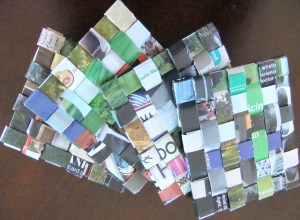
Growing Food and Sustainability incorporates art and creative expression through engaging projects and workshops, all of which focus on reused materials.  For example, we will teach students how to weave coasters out of old magazines and how to create beautiful mosaic frames using old CDs.  The coasters are also for sale on our website, with all proceeds supporting our program!  $12 for a set of 4.
The program’s reliance on bikes as our primary form of transportation guarantees that students will be involved with people-powered transportation on a regular basis.  We will transport all of the tools and supplies between our three garden sites by bike trailer, with students either walking or biking with us.  We will also deliver produce to the local food pantry once per week by bike trailer, and students will be invited to join us for this group bike outing.  These opportunities encourage individual use of people-powered transportation while simultaneously exposing our participants to the network of bike paths available within Middleton.

This summer we plan to pilot a raised bed home vegetable garden installation business at a local residence.  Community members who purchase this service will be provided with a custom-designed vegetable garden based on their needs, complete sourcing of materials and plants, installation, and instructions on plant care and harvesting.  We may also provide weekly maintenance for an additional fee.  The ultimate goal of this project is to train and employ local youth in work that benefits their community while simultaneously increasing local food production in Middleton.

Expanding into the Future

Last week we received three part-time participant applications!  We are looking forward to engaging these new team members in our work and to hearing their new insights and ideas for Growing Food and Sustainability.  Our goal for the summer is to involve 5 full-time participants, 5 part-time participants, and 5 high school interns.  If you are interested in joining our team, please apply online Applications are accepted on a rolling basis and stipends for full-time participation are available!

Growing Food and Sustainability-Middleton, WI

The team in Middleton, WI is so excited to be a part of this inspiring network of youth leaders!

Our Program

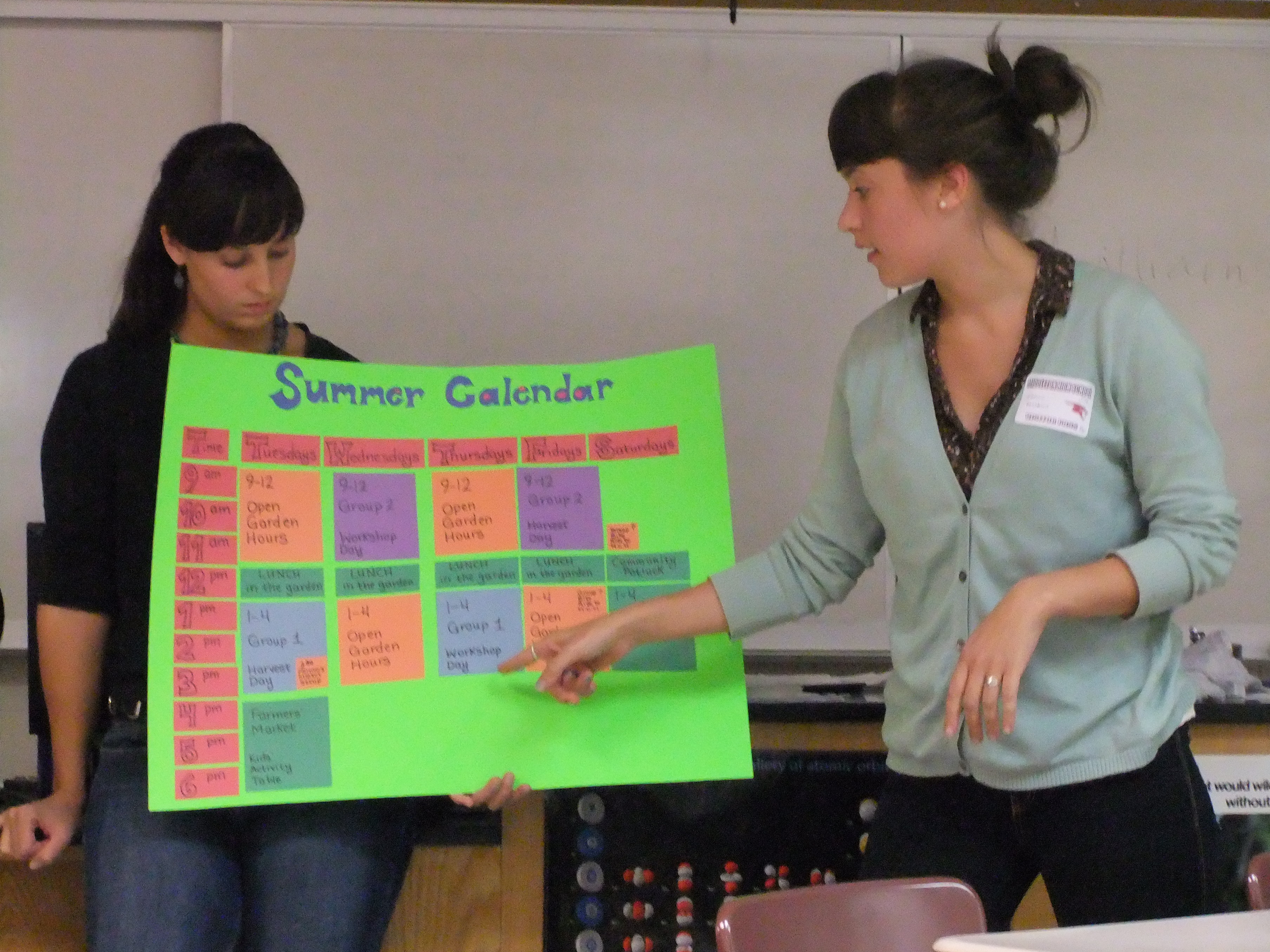
We are designing and running a sustainability and environmental education program primarily for middle and high school youth that focuses on gardening and food production but also incorporates art, people-powered transportation, and multi-age relationship building through teaching and mentorships.  The program’s home base will be the garden and greenhouse, located on public school land in central Middleton, where we will hold the majority of the workshops and host open garden work hours.  However, we will also expand our work into the greater Middleton community.  Some of our ideas include running a kids activity table and possibly selling some of our produce at the Downtown Middleton Farmers’ Market, taking group bike trips to the nearby Bock Community Garden, and delivering (by bike trailer) a percentage of the produce we grow to the Middleton Outreach Ministry’s food pantry.

Workshops will incorporate a variety of sustainability topics and will often use the garden as a hands-on classroom.  Students will learn basic gardening skills such as bed construction, seed starting in the greenhouse, composting, transplanting, caring for plants, maintaining the garden, harvesting, washing, and distributing produce.  We will also discuss and put into practice topics such as nutrition, the nutrient cycle, alternative transportation, water conservation, energy efficiency, and we will host several cooking classes at the nearby Willy Street Co-op.  All of this will help connect the garden to the larger issues of sustainability, health, and justice.  Personal expression through art and writing will be a part of every workshop as well.  We will incorporate garden-fresh snacks as often as possible, and participating students will have the opportunity to bring fresh produce home to their families on a regular basis.

During open garden work hours, students will be able to spend additional time at the garden based on their level of interest.  The garden will be a safe, supervised space, where parents can feel comfortable leaving their kids and where kids will know they can interact with a supportive adult.

Gabrielle Hinahara

Gabrielle has extensive farming and gardening experience and has also worked with youth.  In college, she was involved with F.H. King Students for Sustainable Agriculture, where she helped to lead educational workshops for the student body in addition to volunteering in the garden.  In the summer of 2010, she worked as the head counselor at the Frost Valley YMCA Farm Camp in New York, where she helped run garden-based outdoor education classes, counseled middle school-aged youth, and advised and evaluated the counseling staff.  In the fall of 2010, she worked as an intern at Growing Power, an urban farm in Milwaukee, WI, where she learned about intensive growing systems such as vermiculture and aquaponics.  She recently completed a full-season apprentice at Simple Gifts Farm in Amherst, MA, which runs a 300-member CSA and also sells at the local farmers market.  This is where she gained most of her agricultural knowledge, including learning how to plan greenhouse and field planting schedules and how to grow and harvest almost every type of produce, from strawberries to squash to lettuce. 

Natalie Hinahara

Natalie has significant experience organizing groups of peers and also in effectively communicating and partnering with adults.  She was the student representative on the City of Middleton Sustainability Committee both her junior and senior year of high school and was president of the high school Ecology Club during her senior year.  She also has experience working with youth in a garden setting, since she volunteered in Middleton’s Bock Children’s Garden in the summer of 2010.  In college, she is currently a member of the UW-Madison chapter of Slow Food and is an intern in WISPIRG’s anti-big ag campaign, where she is learning community organizing skills.  She is also majoring in art, so her talent in this area will contribute to the arts portion of our program.

Right now, we are working on securing land for garden space at both Middleton High School and Kromrey Middle School.  We are excited to know how much land we will have so that we can design the gardens!

If you are interested in keeping updated on our progress, please join our facebook group!