Iowa City making noise

It’s been an exciting week in Iowa City. One of our program leaders – Zach Wahls, maybe you’ve heard of him – has been fighting hard for marriage equality across the nation the past few months. He gave a speech a while back to the Iowa legislature, and it’s been blowing up the Internet (again). It recently hit 12 million views – woah.

It’s pretty easy to be proud of our friend. It’s also been pretty easy to get excited for this upcoming summer. We continue to work on projects from this past summer and have been planning away for new ones.

Update on 2011

IC is on the verge of something great. Our Solar Schools project – an initiative to install solar panels on two local schools in the Iowa City Community School District – has grown tremendously. After working with the school district, the project now includes at least 10 schools, and our team has been working tirelessly to get this passed. If the project is approved, it will be the largest solar project network hosted by a public school system in the nation.

Looking forward – 2012 projects

Our Power: Born in the Twin Cities, the Our Power program is a home weatherization initiative for low-income households in the Iowa City area. The program combines strong outreach and educational components focused on energy/environmental benefits of winterizing homes, the effect on residents’ energy bills and local resources for homeowners and renters. We recently received an $8k grant from Re-Amp, an alliance of foundations focused on clean energy issues, to get the project off the ground.

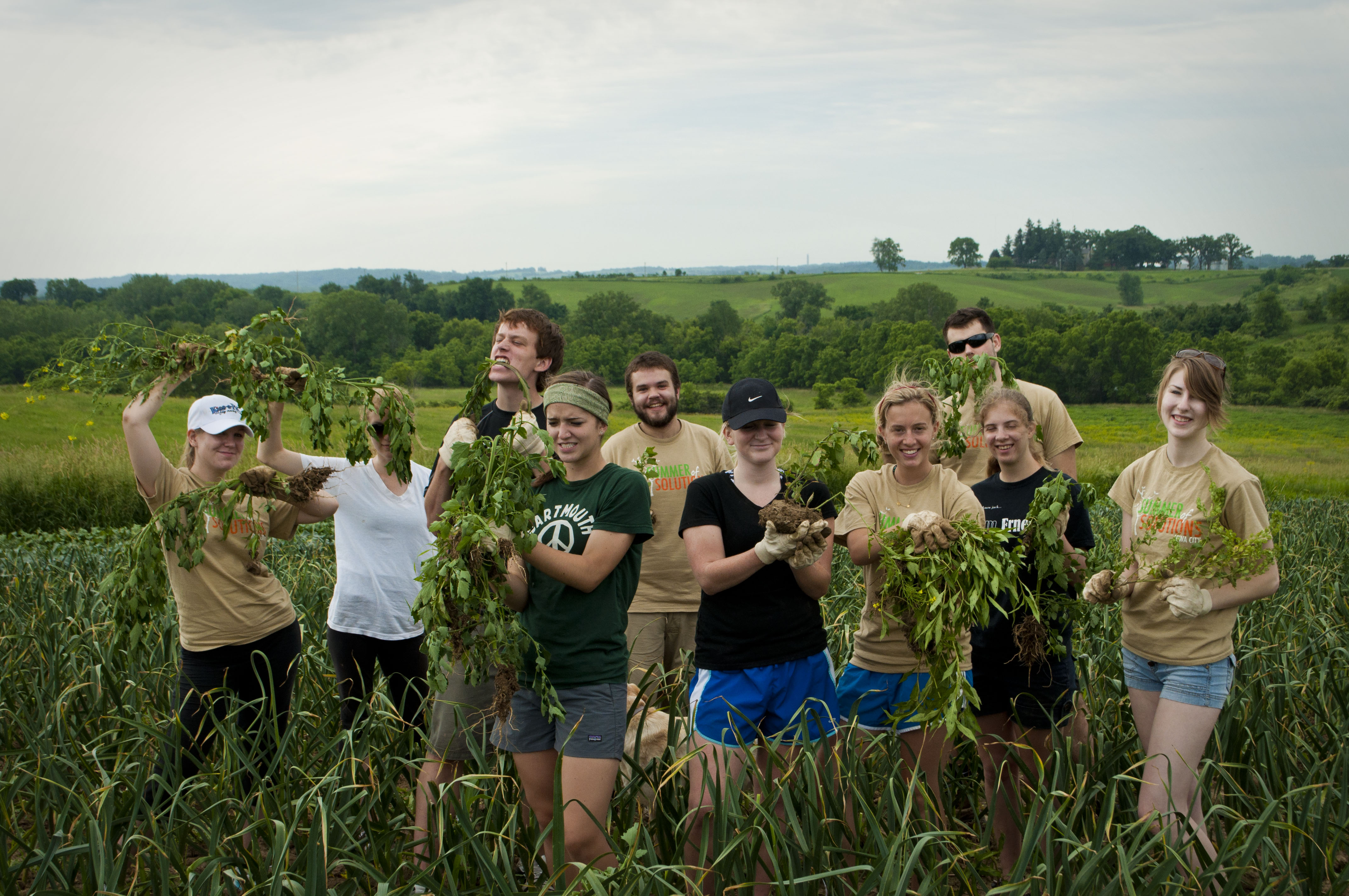
Iowa City Roots: Jumping on the local food bandwagon is easy to do in Iowa City, where our community’s educators, farmers, expert gardeners, parents and students all have a common goal: feed our kids with fresh, local and HEALTHY foods! We’re in the planning stages of this bloomin’ awesome project, which aims to construct and maintain 6 community gardens in public parks and schoolyards throughout the growing season of 2012. Partnering with the Parks and Recreation department of the City of Iowa City, the ICCSD, the Johnson County Local Food Alliance and dozens of community members, we have received a bounty of support thus far; the planning will continue through the dormant winter months as we secure land and funding–be on the lookout for things to start sprouting up come March!

Internship program: We working with the University of Iowa Career Center to create internship opportunities for U of I students interested in gardening, green economy work, clean energy issues and other community-based projects. Our team incorporates leadership development and youth empowerment in all aspects of our organization, making us aptly suited to be a Community Based Learning partner with the University. We are also working with professionals in local green businesses to match interested interns with sustainable companies in need of help and innovation.

White Roof and Neighborhood Compost Pilot projects: still in preliminary stages, these two projects aim to involve community members in simple intiatives that make a big impact. White roofs are perhaps the easiest way to engage businesses in sustainability, and with a lively downtown business community, we hope to provide white roofing services while partnering with local hardware and home improvement stores. The Neighborhood Compost Pilot is a branch of Iowa City roots, and hopes to bring composting intiatives to the community garden centers we’ll be working with.

Who we are

Our team is led by Zach Gruenhagen, Hadley Rapp, Zach Wahls, Tom Frakes, Eleanor Marshall and Kerri Sorrell. All of us are Iowa City natives or students at the University of Iowa. We’re committed to building a model of sustainability in Iowa City, one that can hopefully be replicated in other parts of our state. Iowa may be small, but we’ve got a lot of potential to do big things in this unique community.
Interested in keeping up with Iowa City Summer of Solutions? Check us out on Facebook, Twitter and at iowacitysos.org. We can’t wait for what promises to be an exciting, exhausting and exhilarating summer.

p.s. – Did you know Grand Aspirations is in the running to win $25K in the Pepsi Refresh Project? We’re working with the Progressive Slate to fund-raise towards our amazing programs and leaders. You can vote every day in December, so mark your calendars! Share this link: http://bit.ly/sWzLvl with your friends online and help us spread the word! Go team!
Growing Food and Sustainability-Middleton, WI

The team in Middleton, WI is so excited to be a part of this inspiring network of youth leaders!

Our Program

We are designing and running a sustainability and environmental education program primarily for middle and high school youth that focuses on gardening and food production but also incorporates art, people-powered transportation, and multi-age relationship building through teaching and mentorships.  The program’s home base will be the garden and greenhouse, located on public school land in central Middleton, where we will hold the majority of the workshops and host open garden work hours.  However, we will also expand our work into the greater Middleton community.  Some of our ideas include running a kids activity table and possibly selling some of our produce at the Downtown Middleton Farmers’ Market, taking group bike trips to the nearby Bock Community Garden, and delivering (by bike trailer) a percentage of the produce we grow to the Middleton Outreach Ministry’s food pantry.

Workshops will incorporate a variety of sustainability topics and will often use the garden as a hands-on classroom.  Students will learn basic gardening skills such as bed construction, seed starting in the greenhouse, composting, transplanting, caring for plants, maintaining the garden, harvesting, washing, and distributing produce.  We will also discuss and put into practice topics such as nutrition, the nutrient cycle, alternative transportation, water conservation, energy efficiency, and we will host several cooking classes at the nearby Willy Street Co-op.  All of this will help connect the garden to the larger issues of sustainability, health, and justice.  Personal expression through art and writing will be a part of every workshop as well.  We will incorporate garden-fresh snacks as often as possible, and participating students will have the opportunity to bring fresh produce home to their families on a regular basis.

During open garden work hours, students will be able to spend additional time at the garden based on their level of interest.  The garden will be a safe, supervised space, where parents can feel comfortable leaving their kids and where kids will know they can interact with a supportive adult.

Gabrielle Hinahara

Gabrielle has extensive farming and gardening experience and has also worked with youth.  In college, she was involved with F.H. King Students for Sustainable Agriculture, where she helped to lead educational workshops for the student body in addition to volunteering in the garden.  In the summer of 2010, she worked as the head counselor at the Frost Valley YMCA Farm Camp in New York, where she helped run garden-based outdoor education classes, counseled middle school-aged youth, and advised and evaluated the counseling staff.  In the fall of 2010, she worked as an intern at Growing Power, an urban farm in Milwaukee, WI, where she learned about intensive growing systems such as vermiculture and aquaponics.  She recently completed a full-season apprentice at Simple Gifts Farm in Amherst, MA, which runs a 300-member CSA and also sells at the local farmers market.  This is where she gained most of her agricultural knowledge, including learning how to plan greenhouse and field planting schedules and how to grow and harvest almost every type of produce, from strawberries to squash to lettuce. 

Natalie Hinahara

Natalie has significant experience organizing groups of peers and also in effectively communicating and partnering with adults.  She was the student representative on the City of Middleton Sustainability Committee both her junior and senior year of high school and was president of the high school Ecology Club during her senior year.  She also has experience working with youth in a garden setting, since she volunteered in Middleton’s Bock Children’s Garden in the summer of 2010.  In college, she is currently a member of the UW-Madison chapter of Slow Food and is an intern in WISPIRG’s anti-big ag campaign, where she is learning community organizing skills.  She is also majoring in art, so her talent in this area will contribute to the arts portion of our program.

Right now, we are working on securing land for garden space at both Middleton High School and Kromrey Middle School.  We are excited to know how much land we will have so that we can design the gardens!

If you are interested in keeping updated on our progress, please join our facebook group!

Thoughts following Midwest Powershift

I spent the weekend at Midwest Powershift in Cleveland. Among the rallies, trainings, and speeches, I was able to catch some downtime with fellow Summer of Solutions program leaders and participants from around the Midwest. Especially valuable was a conversation I had with members of other Midwestern programs on Saturday night.

500 young people applaud Joshua Kahn Russell's keynote poem at Midwest Powershift in Cleveland. Photo credit Ben Hejkal.

This conversation helped me articulate two things: one, the “good environmentalists vs. the evil polluters” framing I saw a lot of other places during the conference makes me deeply uncomfortable, and two, if the green economy is going to work it needs to be the whole economy, not a side industry.

Continue reading

Creation is Our Essence

Our economy is crumbling. One in seven Americans live in poverty. The only thing our partisan politic-deadlock government can agree on is a free trade agreement with South Korea that isn’t likely to produce anything different from every other free trade agreement we’ve created.

More for the rich, less for the poor.

So why the squirrel?

It brings me back. Back to the single greatest period of growth and leadership development I’ve experienced in my life: Summer of Solutions – Twin Cities. It was the summer of 2010, and it was when my potential to lead, to challenge, to create, was unlocked.

I learned how to organize, how to facilitate, how to create a proposal for successful implementation of energy efficiency measures in homes and then how to present it to the administration of an electric utility, the imam of a local mosque, the head of a children’s summer program. I learned about oppression and privilege. I learned how to use Google Docs.

Together, we door-knocked, created an urban farm in a day, fixed and rode bikes, hosted community listening sessions, developed plans to convert an old car factory into a green manufacturing and living zone, planted and harvested food across Minneapolis, wrote business plans, toured renewable energy facilities, organized fundraising events, and ate a lot of delicious vegan food.

That summer changed me, because it empowered me. It gave me the tools I needed to help create the vision I and others have for our world. A world where communities overcome divisions and rise up together to take head on the economic, social and environmental challenges we face.

There’s a reason the dandelion is the focal point of the Summer of Solutions logo. A versatile, highly nutritious plant that can take root almost anywhere, grow, and disperse for miles around the parent plant, the dandelion defines the methodology of the program to gather in low-income communities, build up local infrastructure while training the next generation of green social entrepreneurs, and spread.

I was fortunate enough to go through this great experience, and now it’s time for me to return the favor. So I’m creating.

In 2012, application pending, there will be a Summer of Solutions program in Los Angeles. Building largely off the great work of a local organization, La Causa, we will be working with various different organizations and leaders, and our focuses are likely to include food access, green business, urban agriculture, complete streets and bike advocacy, green manufacturing, renewable energy projects, and community organizing.

I can’t wait to see what creations emerge.

The application to build your own Summer of Solutions program is open until next Saturday, October 29th. I encourage others who are ready to take this step: to join an incredibly talented and growing network of young leaders who aren’t waiting for help from above–they are working now to create the change they wish to see in the world.

Patriotism

Last week, editors at The Nation asked their readers to answer the question, “What Does Patriotism Mean To You?” in 200 words or less.  Some Twin Cities Summer of Solutions folk responded to voice their feelings about our country, promote our vision, and spread the word about SOS.  My entry and those of a few others are posted below.

Patriotism is proactive. It is seeing and believing in a better America, and working to make that vision a reality. Patriots are not sticks floating down the stream of society, shifting and responding to each push and pull of the current that carries it. They are trail blazers pushing forward along the banks and through the valley. It is a difficult yet necessary role, for when the stream encounters a dam, it is the Patriots with the vision and grit to take on the challenge and the allegiance to see it through. They do not balk at, deny, or flee from our nation’s problems.

I am blazing trails in Minneapolis with the Summer of Solutions program.  We see the problems of our hollowed economy, divided communities and degraded environments as inherently connected, and our remedies seek to address them all. We are working hands on to create green jobs, promote energy efficiency, and empower communities across the country. What we are doing is unchartered territory, but we are pushing forward with passion using the assets we have to create a better America. And we won’t stop.

– Casey Wojtalewicz

This is the first Fourth of July when I can safely say that I’m proud to be an American.  I think this realization of my unique brand of patriotism is a result of the past few years I have spent abroad. I chose to attend university in Scotland with the assumption that outside the US, people would be less materialistic, or more earth-conscious and community-oriented. However, I realized that everything I was looking for could be found in my very hometown. Patriotism does not mean loving the political views and lifestyle choices of every citizen. Rather, patriotism is finding the pieces of your country that bring out the best in you, and caring about your country enough to make it a better place. In my hometown of Minneapolis, I am working alongside other youth to create community sustainability and build a green economy as part of a program called Summer of Solutions.  As I work the land in community gardens, talk to community members about energy efficiency, or bike around the Twin Cities, I feel patriotic for this piece of my country, and even more so, for what my country has the potential to become.

Elana Bulman

Patriotism demands that we find an America powered by dirty energy – which funds terrorism and destroys Gulf Coast livelihoods – unacceptable. It means that we lead smarter pathways for our country as car companies and banks and housing markets and energy suppliers that are “too big to fail” start taking our communities and our livelihoods down with them. Patriotism means embodying the entrepreneurial, can-do, team spirit that exemplifies our nation’s best moments as leaders in our workplaces, schools, churches, and neighborhoods. It means walking resolutely towards the dawn of a sustainable, socially-just, and prosperous economy powered by local entrepreneurs, strong communities, and clean and efficient energy.

This summer, I’m helping a new generation of leaders create their own careers in the green economy, empower their communities through collaborative solutions, and help others do the same. They are helping neighborhoods convert hobby gardens into viable urban farming businesses, recapture value from utility bills through energy efficiency, develop green manufacturing centers on abandoned industrial sites to create jobs, and create access to clean transit options. Here in Minneapolis and nationwide, the Summer of Solutions (www.summerofsolutions.org) is helping nurture this type of patriotism – the nitty-gritty on-the-ground leadership to take America forward.

– Timothy DenHerder-Thomas

More Using Less

I came to environmental issues initially from what seems to me to be a very middle class standpoint. My family had always been frugal, adverse to waste, etc., but these were choices that we made from some sense of social responsibility and personal financial responsibility, not absolute necessity. Moving my things out of my dorm room after my first year of college, I realized how much arbitrary stuff I’d kept throughout the year because of my socialized (and possibly genetic?) aversion to throwing things away. But this also meant that I had accumulated plenty of stuff, which made me think about the fact that despite the fact my family and I may have opted to not live excessively, we never went without, and certainly have always had small luxuries.

Therefore, as I gradually came to engagement in environmental issues growing up, I faced what I feel is, at least in my experience, a somewhat common paradigm that “doing stuff that’s good for the environment” means sacrifice. However, I always had this idea – that always felt vaguely idealistic due to current well-entrenched systems – that it shouldn’t mean sacrifice, that there were common sense ways, for example that more localized food production should be able to be environmentally sustainable and build local economies. However, I never felt particularly empowered to be able to make this happen.

My thoughts in the last few months about Cooperative Energy Futures (CEF) have been gradually informing this idea, and tonight Timothy told his story of growing up (which I don’t really want to delve into here because I feel it’s still his story to tell) and I felt like the way in which I perceived his observations and experiences in a way complemented mine. To describe what I took from his story tonight, I’m going to go with something else I’ve heard Timothy say, over a month ago: “Let’s see lack as an asset.” I see this as a way that can (maybe in different ways depending on background, but maybe not, I don’t know) engage people from many class backgrounds (both the “haves” and “have-nots”, let’s say) in ventures that are both environmentally and economically sustainable.

The model being tested by CEF understandably seems unusual: capitalizing energy efficiency can also be described as creating something out of less, which runs opposite to most modern notions about wealth creation. While this is not an entirely new concept (see the ’70s cookbook, More With Less), carrying it out on any scale and with distinct entrepreneurial intent is definitely not a widely-thought-about idea, but it has lots of opportunity as we’re getting to the point at which continued excess is seeming unfeasible. However, less excess doesn’t mean the end of “business.”

Tonight I was told that CEF has been described as “a different kind of more,” which I see as very well capturing what the future will look like in a myriad of sectors. This is a different type of business plan, and it allocates value differently in some ways, but it’s still a business plan. Such a business can still create value and support people.

[Note: Our community conversation I reference was under the understanding of confidentiality, and I got Timothy’s permission to reference him and his comments.]

——————————————————————————

Note: This post cross-posted from Discovering Solutions by Christina Getaz.

Summer of Solutions Worcester: It’s Artgarden Weather!

So there’s this giant community garden, right? And part of it is a huge plot filled with stalks of corn, but each ear is a can of spraypaint or a giant crayon or some sort of crazy crafty thing. The rest of the garden is full of regular plants, and there are people busily moving around, picking art and planting art and picking food and planting food. You look at it and you think to yourself “Wow, that’s some sort of amazing artgarden that spews fruit and beauty into the world. I want in on that!”

That’s how the SoS team envisions Worcester. It might not even be far from the truth. Worcester has quite a few hugely active community groups, whether they’re active in one neighborhood, the whole city, or throughout central Massachusetts. Last year, Summer of Solutions was one of those, working with gardens, spreading information on green job creation, and creating a Weatherization group that lives on to this day.

This summer, SoS 2010 is going to build on our old projects and pick up new ones. We will be continuing to partner with the existing Worcester groups interested in Community Gardening, we’ll expand our plots from last year, and we will create new plots and help foster communities of action around each of these gardens. We hope to work with the Regional Environmental Council – a group who does fantastic work within and around Worcester, especially with regards to community gardening – to make this set of projects run smoothly and integrate with extant projects.

Summer of Solutions Hits the Streets in Cleveland, OH!

As Communications facilitator of Grand Aspirations, I am featuring local programs to paint a picture of the diversity of solutions young people are building across the country. This week, I had the pleasure of interviewing Tim Krueger and Nora Graubard, two of the program leaders for Cleveland SoS. The other program leaders are Erika Zarowin, Ben Shapiro, and Phoebe Flaherty.

Leaders of Cleveland Summer of Solutions focus on connecting participants and interns with the broad network of organizations in Cleveland already working on issues of community development and sustainability.

Summer of Solutions in Cleveland is a project of the Ohio Student Environmental Coalition (OSEC). This coalition is a statewide network of student groups that work together to create a clean, safe, and just future. Participants in this program will be hired as interns of the OSEC, and will participate in as many aspects of the summer as they choose.

Members of the OSEC at their most recent retreat

The program’s main initiative is an energy efficiency project with the potential to effect change across the city.

Cleveland is an amazing city, with wonderful city officials to go with it. The goal of these elected officials is to weatherize every home in Cleveland in the next nine years. They are therefore partnering with SoS to collect data on weatherization in two key neighborhoods – Detroit-Shoreway and Clark Metro.

Participants will schedule interviews with residents of these blocks, collect data about receptivity to weatherization, residents’ income levels, and how much work is needed on the homes. As well as gathering information, participants will also teach residents about weatherization and energy efficiency.

After these interviews have been conducted, solutionaries will figure out what programs residents may be eligible for. This kind of follow-up will continue throughout the summer, with participants constantly striving to find the best way to meet the needs of residents, and by personally weatherizing homes.

Residents of Cleveland face the problem of food inaccessibility. Sometimes, Clevelandites have to travel across several neighborhoods to get to a grocery store. Many organizations throughout Cleveland have started up to focus on food availability, and gardening is one of the tactics employed to solve this problem. Though Cleveland is a national leader in urban gardening projects, there is still more work to be done.

Because the growing season is fairly short, one project is to look into forms of alternative agriculture and food justice initiatives that will last longer than the original growing season. In particular, they will be exploring straw-bale greenhouses on the East Side of Cleveland, near the Detroit-Shoreway and Clark Metro neighborhoods.

Cleveland Summer of Solutions is a multi-faceted program designed to make a sound, green future available to everyone. By focusing on these two neighborhoods in particular, solutionaries will be able to make dynamic, personalized changes to problems that are very real. Tim, Nora, Erika, Phoebe, and Ben are incredibly excited to meet the participants in the program, and to get the program running!

If you have specific questions about Cleveland SoS, contact the team at osecsummer [@] gmail [.] com.

If you know you would like to apply for this or any other Summer of Solutions program, please go here.

The priority deadline for application has already passed, but the program will be accepting applicants until April 19th.

Asheville Summer of Solutions: An Invitation

To the restless young person who wants to spend their summer collaborating with a community to usher in solutions to our planetary woes,

You are invited to join Summer of Solutions Asheville for a summer of extraordinary possibility. Unique to the city of Asheville, and yet tied to the other Summer of Solutions programs, SoS Asheville will work within our community to strive towards sustainable community development. This summer program, led-by and geared towards youth, will offer different levels of participation with some participants living together, while others work on projects for short term or part-time durations. Projects will focus on things, which are, or can become, solutions to the underlying global, regional, and local challenges we face, whether that is our fossil fuel dependency or our fractured local communities.
As this is the first year of the program in Asheville, every participant can have a hand in shaping the outcomes and creating the projects that will define our Summer of Solutions. We will live and work together on at least one large-scale project and several smaller projects through the summer that will challenge us to develop new skills.

Asheville has played host to adventurers, artists, and visionaries throughout its history and provides a fertile ground for a program like Summer of Solutions to emerge. Building on generations of this experience we will collaborate with partners from city council to art collectives. We are initiating SoS Asheville with a listening project in order to become more keenly aware of the possibilities for our place within the community. As the listening project continues we suspect that projects will come out of the countless conversations and public dialogues we have. Currently though, we are beginning to develop potential projects that will support an integrated understanding of the community, alternative economic models, and energy efficiency and conservation.

Tiffany Frye and JC Brew, who spent last summer with Summer of Solutions in St. Louis, are bringing Summer of Solutions to Asheville. JC, a student at the University of North Carolina Asheville, has been working in the Asheville community for several years now on many projects that have ranged from supporting green job creation with Asheville Green Opportunities (Asheville GO), to developing campus gardens that integrate permaculture techniques. Tiffany, a recent graduate from Washington University in St. Louis, is currently working with an afterschool program for middle school kids where she is helping to draw connections between their food and the land with gardening projects. Both JC and Tiffany are also helping to build the national organization, Grand Aspirations, which Summer of Solutions is a project of.

So, to the restless young person who is ready to roll up their sleeves and get to work, come to Asheville, for a summer of solutions (or continue to work from where you are) to truly “be the change you wish to see in the world.”

Apply HERE today!

We are also seeking funding for our program. If you are in a position where you can give, please help sustain our program by contributing here.  For any questions, suggestions, or ideas that need digestion, please send us an email at sos.asheville@gmail.com

Summer of Solutions in Burlington, Vermont

As communications director for Summer of Solutions, I’m featuring every program to paint a picture of the diversity of solutions young people are building across the country. This post will feature the amazing work happening in Burlington, VT and the dynamic leaders there.

There are seven projects happening this summer in Burlington. Some are continuations/expansions of last summer’s programs, and others are completely new.

The Programs: There are seven basic contiguous programs set to run this summer. Here’s a sampling of four programs:

1. Vermont Sustainable Heating Initiative

Last summer, participants worked with the Vermont Sustainable Heating Initiative to bring pellet-stove heating systems to low-income households. They received a grant for $20,000 to buy and install pellet stoves. Over the year, Tom and Beth Tailor have been keeping in touch with/checking up on recipients of the stoves. There are currently 15 different stoves in 2 counties in the state (Addison and Washington).

This summer, they are applying for another grant to expand this project. The program participants will continue the process of bringing pellet stoves to low-income households, and will be ahead of the learning curve, picking up the project after a year of research.

2. Bio-Fuel Feasibility study for Chittenden County

The program leaders received $25,000 in federal money, and $5,000 in local funding. This study will be researching the feasibility of starting a pellet manufacturing co-op in Chittenden County. Tom said that while it’s great to give pellet stoves to low-income people, a whole systems change also means a way to provide jobs. In particular, the manufacturing plant would be aimed at producing grass-based pellets, as a more sustainable pellet than wood.

3.  Passive Community Refrigerator/Freezer

Construction of a passive refrigerator freezer  construction for community use using W(n)IMBY {Why not  In My Back Yard}. The passive community freezer will freeze 2000 two liter soda bottles next winter and use them to keep the freezer cold year round.  It will be made in part out of recycled and natural materials. Construction of eatible landscape, including localavore rabbit warren, and sustainable gardens.

4. Vermont Engineering Summer Camp at UVM

Another aspect of the program involves educating high school students about green engineering. Last summer, Summer of Solutions program participants taught for a week at the Vermont Engineering Summer Program. According to Beth and Tom, this was one of the most fun aspects of the summer, and they are looking to partner as trainers again.

Last year, SoS participants and high school students built a small-scale, working windmill. This summer, a new strand of the engineering camp will focus on the engineering aspects of de-commissioning a nuclear plant.

The other three projects include starting a rabbit colony for meat and yarn, a permaculture garden, and a community garden.

To apply as a participant to Summer of Solutions – Burlington, go here: http://grandaspirations.org/apply/burlington.html

For more information, contact Tom and Beth Tailer at: tbtailer [@] hotmail[.]com