Alumni Spotlight: Brianna Besch

We are now accepting applications to participate in our 2013 Summer of Solutions programs!  Apply here!

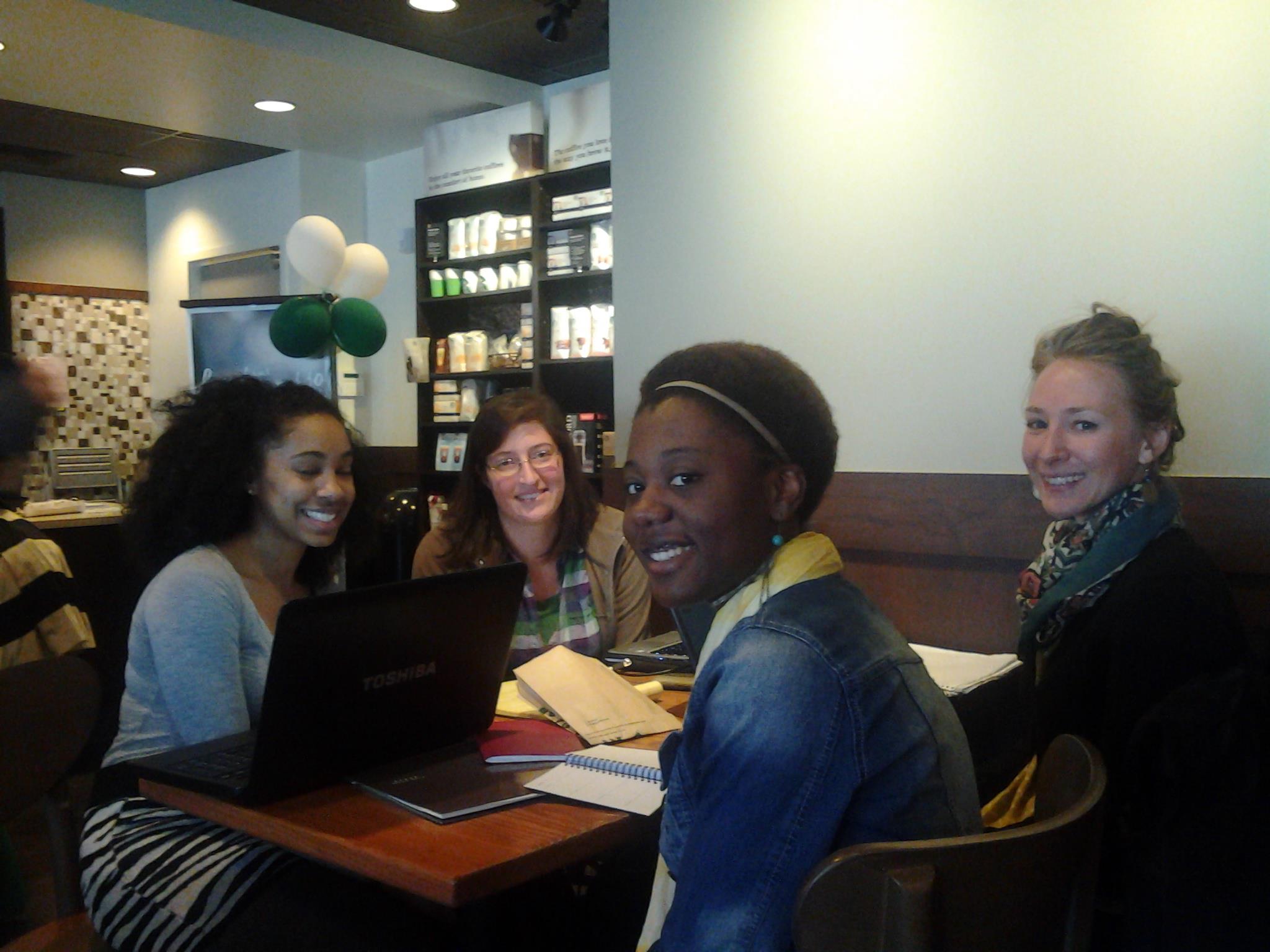
Hello!  My name is Brianna and I first got involved with Summer of Solutions the summer after my first year at Macalester College, in St. Paul, Minnesota. That summer my parents were moving from Cairo, Egypt, where I lived for my last three years of high school, to Bethesda, Maryland just outside of DC. I couldn’t really spend the summer ‘at home’ and wanted to do something more engaging than visiting relatives and cleaning the new house. I heard about SoS through my work with Cooperative Energy Futures, an energy efficiency co-op that was started by a lot of the same folks that SoS was founded by. I was already passionate about environmental issues both in the US and around the world, and excited to learn more about the Twin Cities. Given how much I respected the people I worked with in CEF, and how highly they spoke of the program, it seemed like a perfect opportunity.1

I still remember the first week of Summer of Solutions training as one of the most inspiring things I have ever done. Continue reading

Working Collaboratively

My reflection from last Friday’s gathering at Canterbury Elementary where a group of great people put hands on the land that we’ll all be tending for the season. I was very happy to have worked with those who showed up.

We came across a couple of teachers that showed interest in what we as a team of (7) were doing. The teachers asked questions like, “What school do you all go to?” and “Are you high school students?”  We answered that we were all members of the community, some in college etc. Teachers briefly shared ideas and included that they too had worked hard in the garden but that there were to many bugs that were no good for gardening and did not continue. Challenges will come about and part of creating some lube for those challenges will be through communication and meetings.

The following are my thoughts on working in a collaborative manner. Continue reading

DC Seeks a Program Leader!

Exciting news!! The leadership team of Cultivating Intergenerational Leaders (the Washington DC program) is in the process of looking for an additional program leader!  We are looking for a college student who has an interest in food and environmental justice as well as a passion for working with youth. We currently are reviewing the applications and starting our first interviews.  In order to apply, applicants can visit:
https://docs.google.com/spreadsheet/viewform?formkey=dERMRkpZXy11UlFLdXFDTUFLcUFjYnc6MQ#gid=0

While Josephine and I have helped jump-start the program, we look forward to welcoming a new program leader to our team to help our efforts and will post a follow-up blog announcing our new program leader very soon!

– Jeremiah

Race and class in Little Rock

Outreach team at work!

Outreach team at work!

Though the Little Rock team has not done any specific anti-oppression work yet, issues of race and class have begun to surface.  In particular, our plans for community events and fundraisers have sparked some interesting conversations.  After our March meeting, a few folks stuck around to talk informally.  One participant posed a question regarding an upcoming door knocking session: how will the majority Black, low-income community where we work respond to the diversity of our group? Several people told vivid and fresh stories illustrating a lack of acceptance for racial mixing from both white and Black people in our community. Little Rock, like the rest of the South (and the rest of the U.S., for that matter), has not found its way to racial healing or equity despite incessant talk about our role in the civil rights era with the Little Rock Nine, Daisy Bates, the Freedom Riders, etc.

Continue reading

Alumni Spotlight: Cecelia Watkins

We are now accepting applications to participate in our 2013 Summer of Solutions programs!  Apply here!

My name is Cecelia Watkins, and I am a proud Summer of Solutions alum. This is my SoS story.

After four years in a liberal arts college and many more years spent desperately wondering how to funnel my passions and skills into making a difference in this crazy, suffering world, I found myself at somewhat of a loss. I was a second semester senior in college, and despite an incredible amount of growth and community support, I found myself looking into my future with a deep and unrelenting anxiety. First off, I struggled to determine what I wanted to do in the next year (not to mention the much larger perceived struggle of deciding what I wanted to do with my life). Secondly, I felt a deep fear that even if I miraculously decided what I wanted to do, there was no way I’d ever be able to get paid a living wage to do it (let alone a student-debt-alleviating wage).4

While at the PowerShift convention in Washington DC that spring, I ran into two young men standing behind a table with the banner “Summer of Solutions.” A few lengthy conversations later, and I decided to sign on to the SoS program based in the Twin Cities—the land where I grew up, where I’d hardly been since leaving for school four years prior. Why did I sign up? It neatly filled a gap of time between my graduation and a work exchange I had set up starting in late August. It sounded cool. And it would fulfill my guilt-driven longing to bring my new passions and energy back to my neglected hometown. Continue reading

Sofia’s Better Idea for EU Funds

“In 2012, the CEE Bankwatch Network, in cooperation with its partnering organizations from Bulgaria, Croatia, Czech Republic, Hungary, Latvia, Macedonia, Poland and Slovakia organized a series of contests for best citizens’ sustainable project proposals: ‘Better Ideas for EU Funds’.”

Our Sofia, Bulgaria, program’s project “Bees in the City Park” was selected as one of these projects! 

“The project – settling of a bee colony – will be implemented on the roof of a public building in one of the many parks in the Bulgarian capital, Sofia. Workshops for both children and adults will be run by professional beekeepers, biology teachers and volunteers. Children will be given the opportunity to produce some honey themselves.”

Check out this short video clip of program leader Elena being interviewed at the event!

Canterbury Garden in the Works

An update from Summer of Solutions Arleta!

In mid-February, we met up and discussed some visions that we have for the garden at a local elementary school which include monthly or biweekly cleanups and tree care. We took a short tour and learned some background info on what we’ll be diggin’ into and plant the growth that is deeply welcomed in our lives and those of our community. There is an application that will need to be filled out to be able to work as a volunteer during the day and after school hours. There is a lot yet to be communicated, but for the most part things are moving forward. :) We will be continuing to do some work on Fridays.  Come and share your visions and work on spreading a beautiful message through gardening to the 1000+ children attending this elementary school. There will be some milk and cookies, and maybe coffee too. ;)1

Continue reading

Good News, Bad News, and Lessons Learned

Greetings fellow Solutionaries and loyal readers,

Bad news first. The house we worked on throughout January, which we were planning to convert into a residence and community resource for sustainable home upgrades, is slated for demolition. There is much commotion with the city right now, other folks are trying to take ownership of the project and move it forward. It isn’t in the ground yet, but its future is definitively uncertain.

All’s going well with Soulardarity. We’re in the midst of a planning stage. After the first light went in, we’ve been revisiting our long-term planning and business model. I’ve been spending a fair amount of time driving around Highland Park, meeting neighbors, and planning community meetings to facilitate active involvement in the planning and implementation of this project. We’ll be developing our master plan, partnerships with the city and neighborhood association, and a design for the streetlights we hope to build right in Highland Park. I don’t want to give away too much detail right now, but the plan right now is to launch a Capital Campaign in the next few months with the goal of raising $1.5 million to install 200 solar streetlights all in one fell swoop.

I’ve also been working with Detroit SOUP to get the Highland Park neighborhood SOUP underway. Detroit SOUP is a crowd-funding event that’s been running for three years. Every month, they hold a community dinner. It costs $5 at the door, which gets you soup, salad, bread, and a vote. Four people propose creative projects that benefit the Detroit community, give short presentations and take questions. Afterwards, everyone eats and talks and votes and, by 8:30, someone walks away with the door money (currently between $1000 and $1500). With support from one of their grants, we’ve held two Highlanf Park SOUP’s at St. Benedict Hall, and are excited for the first SOUP to occur at Nandi’s Knowledge Café, which is a little easier to find. Continue reading

Insights from the Next Generation

Hello friends, and happy (almost) spring!

I’m Sara, a first-year intern at Growing Food and Sustainability. I wanted to tell you all a little bit about one of the great things I have been able to do with our team so far this year. Beginning last fall, I began working with our GFS team at Clark Street Community School; over the past few months, I have been fortunate enough to co-lead their weekly Ecology Club meetings. In our 90 minutes together on Friday mornings we have had some amazing discussions already, and I imagine they will get even better as times goes on and we move from inside the classroom to outside in the garden.

A lot of what we have been talking about over the winter season has related to general questions of sustainable living. Currently, they are working away at a bottle-recycling program with other organizations in their school, and we have started some plants under light tables–just to get our hands a little dirty this winter! We have also done some great asset-mapping exercises to help them realize how effective they can really be as agents for change, and how their talents and networks really matter when it comes to making a difference.

We have about about 10-14 youth at each meeting, which is so exciting to see–it’s a great combination of returning students and new faces! These kids are from a wide variety of households and labor backgrounds, and in the first days of each quarter one of the most interesting things for me is learning what makes them tick and where their realm of experience is rooted. We have had some wonderful “get-to-know-you” sessions, where we talk about everything from where we like to go in our free time to what our ideal superpower would be (who knew there were so many people who would swim to the bottom of the ocean?).  After these sessions, I feel like we are all on the same level, all ready to tackle some really important and difficult issues.

The various backgrounds in our group have made for some diverse discussions; we have a dairy farmer who wants to make it a career, a boy who loves all things motors, a girl who loves drawing, horses, and “being outside away from the city,” a boy with a wry sense of humor and a starkly realistic view on political and global military relations, and of course, plenty of budding environmentalists–who also love their iPhones and video games. The things that these students know surpass a lot of what I was thinking about (or at least actively discussing) in high school–it’s incredible. One boy talked about methane digesters during our first discussion about current alternative technologies that are being explored; another explained that in order for ideas like composting, consuming less, or consuming differently to become popular, people simply need to start “walking the walk,” and per societal norms, the rest will follow. They have amazing insight, which is so refreshing for me, especially since I haven’t been in a high school environment for nearly a decade–and let me tell you, as much as I wish I could say so, I was not concerned about the future success of methane digesters ten years ago.
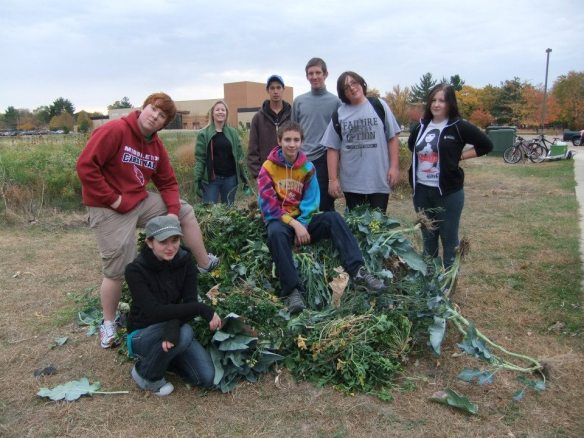
1Clark Street students helping us clean up the youth farm last fall Continue reading