From Bennies & Johnnies to Solutionaries

First, let me introduce myself. My name is Maddy Dragich and I am currently teaching 10th grade geometry in Stuttgart, Arkansas. I am originally from Arden Hills, MN, and I just graduated in May 2011 from the College of St. Benedict/St. John’s University (CSB/SJU). In college, I majored in Peace Studies and French. People are often confused by what it means to major in Peace Studies.. Well, let me give you a quick summary. To me and many of my peers, the field of Peace Studies is an in-depth exploration of the history of war and how our past can help us to prepare for peace in our future.
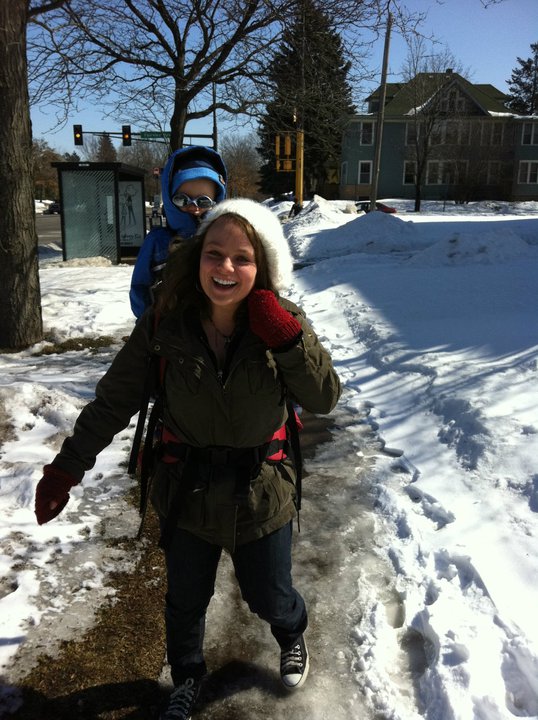
Now that I re-read that last sentence, I realize that you might be thinking that it sounds a bit idealistic… well in many respects you might be right. However, I would argue that without a bit of idealism, how could we attain the vision we want for the world? This question brings to mind a project that all senior Peace Studies majors were required to complete at CSB/SJU: a future studies project. Our task for our senior seminar was to identify a current issue/challenge/problem in the world and then write a paper from the year 2041 outlining how we spent the past 30 years addressing the challenge and ultimately created a more peaceful and just world.

After participating in brainstorm sessions, guided meditations, and reading about the invention of future studies projects, I came to the conclusion that I was going to create peace in the future through the implementation of backyard mini farms. Each household across the U.S. would attain 60% of their food from their own backyard or a community garden located in a 2 mile radius of their house. I will spare you the 20 page paper details of how this was accomplished (for the time being), but the entire process led to many sleepless nights and even more arguments with my roommates about whether or not it was a good idea for each household to have 4 hens in a small coop in their backyard.

On the day that our seminar presented our projects to one another, I discovered that my project idea was almost identical to two of my peers, Casey Wojtalewicz and Chris Morgan. After we all finished presenting, I remember talking with the two of them and agreeing how powerful of a team we could be in the future when our projects and ideas cross paths. 
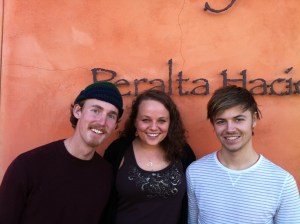
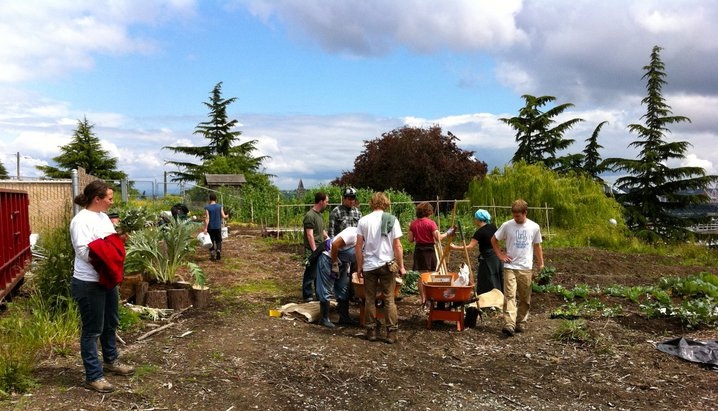
Fast forward to January 2012: I was teaching high school geometry in Stuttgart, Arkansas, Chris Morgan was volunteering with the Vincentian Volunteer Corps in Denver, and Casey Wojtalewicz was working as an intern for the Sierra Club in LA. On January 5th the three of us were reunited at the Grand Aspirations / Summer of Solutions winter training session for program leaders who are going to lead Summer of Solutions programs in various cities around the country this summer. Throughout the training, Chris, Casey and I developed our plans to work with a group of young Solutionaries (teams of individuals who focus on creating holistic solutions to local economic, environmental and social challenges) this summer to raise awareness about and create positive change in our communities concerning environmental justice. All three of our projects will address small scale agriculture and energy usage in our communities. We suddenly came to the realization that we were taking the first step towards accomplishing our Peace Studies project goals that we had written about only seven months before.

At the training it became clear to me that idealism is really only something that exists in the minds of the unimaginative. Sure, when we wrote our project ideas, the future seemed somewhat idealistic. However, when you commit yourself to a future goal and have peers to support you in this goal, the sky is truly the limit. I look forward to writing future blog posts about the progress of our Summer of Solutions project in Stuttgart and to hear more about the other projects around the country!

Peace and Love to the Dreamers.
Expanding Team, Expanding Solutionary Vision

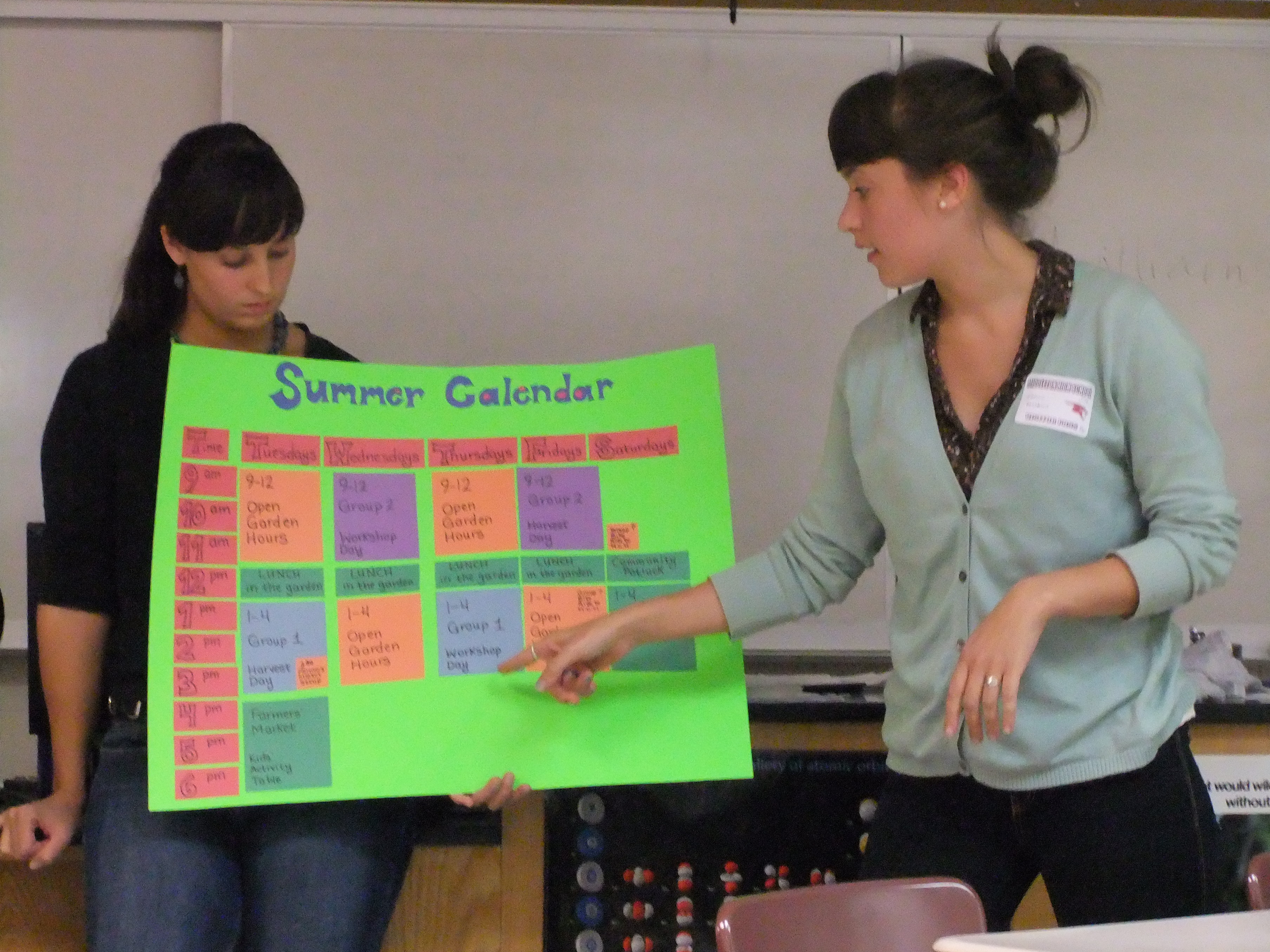
This month has truly been one of expansion!  The network of people working together to make Growing Food and Sustainability a reality is growing everyday, as is our vision for a youth-led, community-based sustainability program.  We are reaching out to our neighbors, engaging high school Ecology Club students, and exploring the idea of adding a third garden site at the Middleton Alternative Senior High (MASH).  In the process of planning our Summer Program for middle and high school youth, we are finding ways to incorporate a wide variety of sustainability topics, including composting, water conservation, reuse of resources, and people-powered transportation.  With spring right around the corner, it’s an exciting time in Wisconsin!

Expanding Team

In this early phase of our organization’s development, we are using door-to-door canvassing as a primary tool for local outreach, community feedback, and resource generation.  We set aside a few hours every weekend to walk around Middleton and engage our neighbors in a conversation about our project.  The response has been incredibly motivating!  We’ve met master gardeners, teachers, community activists, parents, and even a dietician.  We’ve compiled an email list of 149 people.  AND we’ve raised over $600 to support our work this spring!

Middleton’s Program Leaders, Gabrielle and Natalie, both served as president of the Middleton High School Ecology Clubwhen they were in high school, so it only makes sense that we would collaborate with this group of students!  The Ecology Club decided to dedicate their spring semester weekly meetings to help us design the gardens, start seeds and take care of baby plants in the greenhouse, recruit more high school participants, and plan an event at the high school to highlight our program.  What a great group of students to be working with!

Presenting to the MHS Ecology Club

We’re exploring a possible expansion of our program to a third garden site at MASH, the Middleton Alternative High School.  Since this school has more available land, we’re hoping to site our “farm-style” garden here so we can grow a wide variety of annuals in a row crop layout.  We think that this new location will be a huge asset to our program and to the students attending MASH.  It will provide easier access to our program for at-risk students and will tie-in perfectly with MASH’s upcoming transition to a project-based model of education.  Incorporating the gardens into this style of learning will keep them in use throughout the school year and will give students a hands-on opportunity to learn about sustainability and agriculture.

Expanding Solutionary Vision

We are expanding the idea of a “school garden program” to incorporate a wide variety of sustainability initiatives and opportunities for green business ventures.

We are building compost containers out of reused shipping pallets to compost all of the refuse from the garden and from all meals that we host in the garden.  We are also partnering with Bloom Bake Shop, a local bakery, to pilot a bike-powered compost service.  Starting in March, we will pick up their used coffee grounds and vegetable waste once per week, compost it at our garden site, and use the finished compost to organically fertilize the gardens.  If this project is a success this summer, we will expand our composting operation to include food waste from the school cafeterias and other local businesses.

Water conservation will be incorporated into the garden through daily water use practices (such as not watering the gardens during the middle of the day) and through the use of rain barrels.  A number of our workshop topics specifically relate to water conservation, such as how to conserve water at home and rain garden design and installation.

Growing Food and Sustainability incorporates art and creative expression through engaging projects and workshops, all of which focus on reused materials.  For example, we will teach students how to weave coasters out of old magazines and how to create beautiful mosaic frames using old CDs.  The coasters are also for sale on our website, with all proceeds supporting our program!  $12 for a set of 4.

The program’s reliance on bikes as our primary form of transportation guarantees that students will be involved with people-powered transportation on a regular basis.  We will transport all of the tools and supplies between our three garden sites by bike trailer, with students either walking or biking with us.  We will also deliver produce to the local food pantry once per week by bike trailer, and students will be invited to join us for this group bike outing.  These opportunities encourage individual use of people-powered transportation while simultaneously exposing our participants to the network of bike paths available within Middleton.

This summer we plan to pilot a raised bed home vegetable garden installation business at a local residence.  Community members who purchase this service will be provided with a custom-designed vegetable garden based on their needs, complete sourcing of materials and plants, installation, and instructions on plant care and harvesting.  We may also provide weekly maintenance for an additional fee.  The ultimate goal of this project is to train and employ local youth in work that benefits their community while simultaneously increasing local food production in Middleton.

Expanding into the Future

Last week we received three part-time participant applications!  We are looking forward to engaging these new team members in our work and to hearing their new insights and ideas for Growing Food and Sustainability.  Our goal for the summer is to involve 5 full-time participants, 5 part-time participants, and 5 high school interns.  If you are interested in joining our team, please apply online Applications are accepted on a rolling basis and stipends for full-time participation are available!

What’s New: Hartford 2012

Happy new year from Hartford, CT.

Before I start, I’d like to thank everyone who supported our 2011 program. You can read about what we did last year in our Recap page.  Without the help of many, many people, we wouldn’t have had a successful summer.

We are very happy to announce that Kevin Rodriguez has joined the Program Leader team for the 2012 season.  We’re really excited that Kevin has started to work with us, and are looking forward to spring planning and to summer working.

Second, if you haven’t already seen it, we recently began a Twitter page for Summer of Solutions Hartford.  Despite not knowing what we were doing when we began, we’ve had a lot of fun using twitter as a way to spread information about our program and activities.  It has been especially helpful in linking to other organizations.

Another big change, for us at least, is that we are opening up our own local bank account.  After a long training on accounting and keeping track of finances, we are prepared to start managing our own funds.  There are several benefits to this: in addition to keeping the money in a local institution, we will be more knowledgeable about our financial support , and will also save the cost of the accounting fee.  We’ll be starting our bank account in the next month.

We are in the thick of planning for the 2012 summer program.  We have already received a grant from the New England Grassroots Environment Fund , and have submitted more grants to other foundations.  We have several application deadlines still coming up.  We are also in the process of reaching out to city and nationwide individuals, organizations and groups to share applications to the 2012 summer program.  Applications opened in February and will go through until April, if not longer.  Our goal is to have a 10 person team this summer.

As for programming, we are hoping to continue and expand on our activities from last summer.  We will have a full growing season at the Zion St Garden, and are looking into organizing the construction of a second community garden in the Frog Hollow neighborhood of Hartford.  We are also in conversations with Billings Forge and other community organizations in Hartford to create new partnerships that could involve a children’s camp, other community garden sites, and new community programs.

Looking forward to the 2012 growing season and summer program, we are very excited for what the new year will bring.  We hope that you continue to follow our activities and projects, and welcome any and all forms of help and support.  If you’re interested in volunteering or working with the 2012 program, or in supporting the program financially, you can find all of the necessary information here.  Please also feel free to share information about our project with anyone you know who might be interested.

in thanks,

Summer of Solutions Hartford 2012

What’s Growing in East Tennessee

Image

There are a lot of exciting things growing in East Tennessee! The program leaders of Build It Up eTN are very busy making connections in our community–Johnson City, TN–in order to jam pack our Summer of Solutions program with food justice solutions. We are very hopeful that we have found an established community garden at a local university that spends its summers largely unused. It is a large garden and its current director is having trouble maintaining it. BIU hopes to revitalize the space and get it growing to suit our many needs for the summer.

Access to this garden will allow us to accomplish four important goals for the summer:

1. Increase self-sufficiency for participants
2. Teach and learn urban gardening skills
3. Provide a majority of the produce we need to conduct our workshops
4. Improve access to local food at area soup kitchens

This summer, we hope that our participants and volunteers will learn skills for becoming more food secure.  Our goal for growing is to produce at least 30 percent of our food needs for the summer, if not more!  The garden at East Tennessee State University (ETSU) will provide a teaching and learning space for our participants, students and faculty families, and interested community members on sustainable, organic urban agriculture methods.  Lexy is very interested in growing for small spaces, increasing self sufficiency, and implementing Permaculture techniques and she hopes to share her skills and learn new ones this summer.  The garden will be incorporated into our skills building workshops, through timely sessions on planting, caring, harvesting and preserving.  Any extra produce will be donated to local soup kitchens, food banks or community centers. We are making plans to coordinate food pick ups with other community gardens and hope our efforts can improve access to local, nutritious food in our area.

The garden at ETSU will serve as our home base for the summer but will not be our only project! Lexy is currently working on getting a few smaller projects set up for participants. Tentatively, so far, these will include:

The garden at ETSU will serve as our home base for the summer but will not be our only project! Lexy is currently working on getting a few smaller projects set up for participants. Tentatively, so far, these will include:

  1. Partnering with the Shady Oaks Garden Club to build a new “pizza garden” at the Girls Inc. In a previous year, Shady Oaks constructed a self-watering herb garden at Girls Inc, but they are looking to expand the space in order to provide even more learning and play opportunities to the kids.
  2. Partnering with Shakti in the Mountains, a women’s resource center, to expand their small existing garden to provide more space for enrichment activities.
  3. Partnering with the Carver Center and the Carver Peace Garden to plan fun food related activities for the many kids who access this community center in a low-income neighborhood. They will be running a summer camp around the same time as our SoS program, so the possibilities are great!
  4. Starting a collection service for extra produce from existing community gardens to provide local, nutritious food to area soup kitchens. Lexy hoping we can tie this in with activities to promote the benefits of this kind     of food to both the people who provide the cooked food and the people who access it. This is the most tentative project yet, and Lexy is working to make connections with local soup kitchens in the coming weeks.

In addition, Veronica is currently working on setting up workshops that address issues of food justice in the area. These will be taught by local farmers, students, gardeners, food service workers, local businesses, and food service recipients. Workshops will work to address intersections of food justice and gender, food justice and race, food justice and the environment, and food justice and Appalachian cultural history. They will also cover practical, everyday-use topics too, such as canning, wildcrafting, building a local food economy, and skills training for farming and gardening.

Finally, the third project that we are working on for this summer is putting together a cross-region food justice tour! This tour will take folks from Johnson City, Unicoi, and Elizabethon to Knoxville, Chattanooga, and Greene County. At each destination volunteers and community members will work with other regional food justice organizations in order to build connections between rural and urban issues, network cross-regionally, and learn about the different kinds of food justice work in East TN.

In the meantime, we’re busy holding fundraisers, talking to community members, and getting together with our local food partners to get everything ready for this summer!

Inspiration Abounds in Wisconsin!

We (Natalie and Gabrielle) just returned from a 5-day regional training in Chicago organized by Grand Aspirations and man, was it awesome!  We met and became friends with fellow Summer of Solutions program leaders from the Twin Cities, Detroit, Iowa City, Chicago, West Virginia, Hartford CT, and the Pioneer Valley of Massachusetts.  Our Middleton, WI program, Growing Food and Sustainability, was the only brand new program that was part of this Midwest gathering, so we had the incredible experience of receiving advice and support from many seasoned program leaders.  Thank you for sharing your stories of success, failure, and personal insight with us!

Every single training was engaging and eye-opening, so it’s almost impossible to share only a few thoughts, but here are some ideas that really stuck with me.

  • EVERYONE cares deeply about at least one of the four values that Grand Aspirations embodies: sustainability, prosperity, justice, and community.  By integrating all of these, Summer of Solutions programs like ours can involve people traditionally left out of the “environmental movement”.
  • Our current social, political, and economic system is not working for a vast number of American (and global) citizens, and their failures hit already marginalized groups the hardest.  We can choose to create new systems that strengthen communities, sustain individuals, and value our environment.
  • The transition is already happening. Cities like Detroit led the way for the expansion of American manufacturing, and they were also the first to be abandoned by our economic system.  Now, out of necessity, they are leading the way again, this time in revolutionary green economy ventures.
  • Creating the future that we want to see means making it sustainable, both environmentally and financially.  By thinking about ways to grow businesses out of

    Raised bed vegetable garden installation...this could be your yard!

    our projects, we can provide needed products, services, jobs, and job training to our communities.  In Middleton, we plan to start a raised bed vegetable garden installation business and a bike-powered composting business.  Both will train high school students and post-high school youth in green entrepreneurship, nonprofit administration, and hands-on job skills.

  • Personal (and community) transformation is dependent upon personal sustainability.  We should strive to create jobs and experiences that people will be happy and satisfied dedicating their lives to.  In other words, we have to take care of each other and ourselves.

Whew!  I know that was kind of heavy, but I do believe in taking a step back every now and then to realize that our little project here in Middleton, WI is part of something much bigger.

We arrived home with a great sense of empowerment, inspiration, and responsibility.  We have so much to do to get our program ready but there is so much possibility!

We are starting our collaboration with the Middleton High School Ecology Club and AP Environmental Science class next week.  We are also starting to bring together a team of students and community members who plan to help launch Growing Food and Sustainability in a number of ways.  If you are interested in taking a more active role in the creation and running of this program, please contact us!  We are dedicating a lot to this project and we would love to expand our team!  In addition to “adult” community members, our goal is to have 5 full-time youth (under 30) participants and 5 high school interns signed-on by June.  Please see the “Get Involved > Participate” page of our website for more details.

** If you are interested in becoming a full or part-time participant in our program this summer, please fill out this online application.  If you are interested in becoming a high school intern, we will be posting an application soon! **

Let’s rock it, Middleton!
Gabrielle

Look Who’s In The House!

We, at The Art Affect, know that many of the solutions to the environmental and social challenges we face are already out there. Our 2012 Summer of Solutions program participants will train in journalism & communications, community organizing, and radical leadership, then set out across Seattle to engage in and document the top local solutions that are currently being implemented. At the end of the program we will harvest each of the projects and together create a step-by-step DIY guide to share with the world.

Potential Projects Include:

1. Urban Gardening and Food Sovereignty
2. Storytelling, Art and Alternative Media
3. Community Organizing and Leadership Development
4. Our DIY Guide to Grass-roots Community Action
5. Energy Efficiency and Retrofitting
6. Water and Habitat Restoration


Our Purpose:

Like so many others, we dream of a world that is equitable, thriving, and sustainable; where people shine with true happiness from the inside out. We are committed to ‘walking our talk’ by manifesting this dream in our own lives and engaging our peers, community and world in local solutions to our global problems. We are committed to providing tools, space and inspiration for people to come into alignment with their own gifts and purpose in the world and transform that inspiration into measurable actions in their communities.

About the Program Leaders:

Barbara and Dan are community leaders, activists and facilitators who are currently co-coordinating The Art Affect, a non-profit that creates powerful artistic spaces for young people to explore their purpose, develop their identity, and take part in building a socially just, environmentally sustainable, and personally fulfilling world. We enjoy making music, laughing at ourselves, creating new words that should never have existed, and sipping tea in perpetuiTEA. We put the “silly” back into Authentisilly. Just sayin.

Contact Us:

Barbara Jefferson barbara@theartaffect.org
Dan Mahle dan@theartaffect.org

West Coast Gathering

Last week was the second of three regional Summer of Solutions gatherings hosted by Grand Aspirations.

For those who aren’t clear, Summer of Solutions (SOS) is a program of Grand Aspirations (GA), a registered 501(c)(3) non-profit.

As with the Eastern Gathering in West Virginia and the Central Gathering in Chicago, the West Coast Gathering brought together a circle of incredibly talented organizers and bore the fruit of their collective brainpower and energy.

The idea that such groups of people are working together to create local solutions on the national scale leaves me very inspired. The potential of such a powerful cast of Solutionaries collaborating together is truly explosive (in the reciprocal sense, of course).

With such invigorating conferences taking place across the country this month, I can only imagine what the energy level will be come August, when Solutionaries from every program gather in one city for our national gathering.

As we continue to share our stories, lessons and successful practices, we will continue to grow and spread change to local communities. We hope you will join us.

Live Streaming from the Summer of Solutions Midwest Gathering in Chicago

Session: GA History, Vision and Case Studies


Tonight at 7:30-9:30 p.m. CST we will be live streaming from our session at this site:

http://www.ustream.tv/user/SOSMidwestGathering/shows

Click on the channel that SOS Sessions.  There will be advertising, but after a brief commercial you will be able to view and hear the session.  If you are unable to view it live, there will be an opportunity later to view the archived footage from the live session.