Corvallis SoS Launch Week

The NICE Summer of Solutions launch week imploded my brain and lassoed my soul, forcing me to reflect on my life in ways I never have, but have always wanted to. The deep and penetrating introspection divulged thoughts I’d never thought, connections I’d never seen, and worldviews I’d never considered. These views exploded outward from within making me feel and see the world in entirely and fundamentally different ways. These trainings lassoed my soul, asking not only what do I want to do, but what I need to do it, and how I am going to. The most powerful realization for me was that I can dream big, big, big, but I never seem to plan how to reach those dreams. This was a pretty amazing realization for me because I’ve always known this, but haven’t felt so determined to overcome it before. But more than introspection, this week was about imagining ourselves in our highest vision and visioning a world beyond the horizon. Loosening the lasso, my soul soared. It’s not so much that I haven’t had visioning sessions before, but that I realized by thinking and stating out loud the world we wished to see, by living it in our thoughts, words, and actions, we created it right where we were. Our training week was spectacular.

You know, clicking on the Summer of Solutions tab on the Grand Aspirations site, I saw our lonesome green balloon in Oregon, signifying our program in Corvallis. Despite being the only SoS program west of the Mississippi, I couldn’t be prouder and happier to be here.

Urban Growth

authored by GELT-er Ayoola White

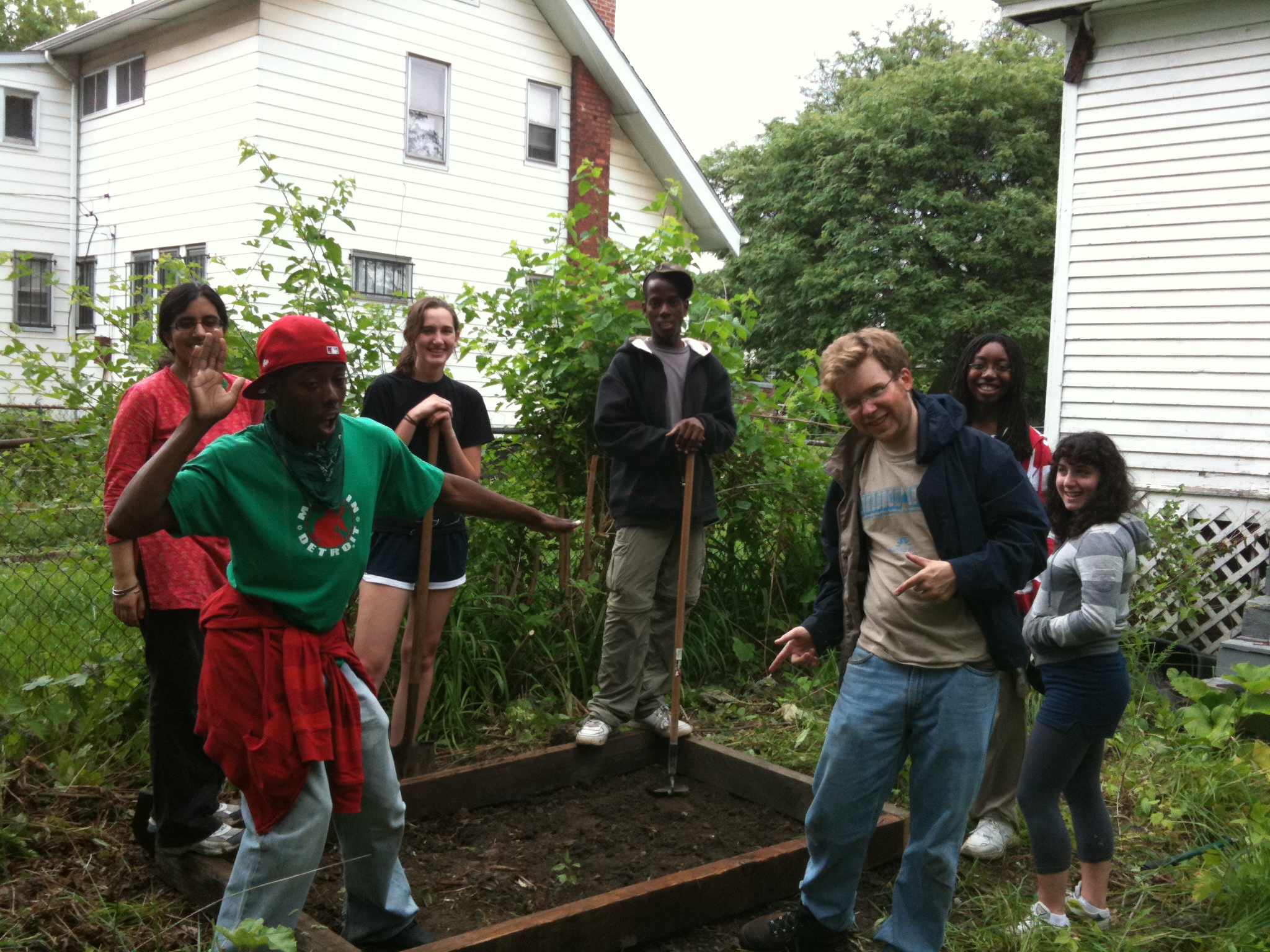
Green Economy Leadership Training (GELT) has been filled with varied challenges. One day we’re constructing raised beds out of wood reclaimed from abandoned houses. The next, we’ll discuss applications of permaculture and the dangers of nuclear power. Since we are constantly defining and redefining our goals as a group, our activities tend to be hectic. Last Friday afternoon, we took on yet another challenge: canvassing residents to find candidates for free home energy improvements.
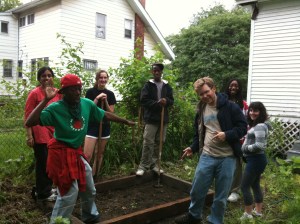
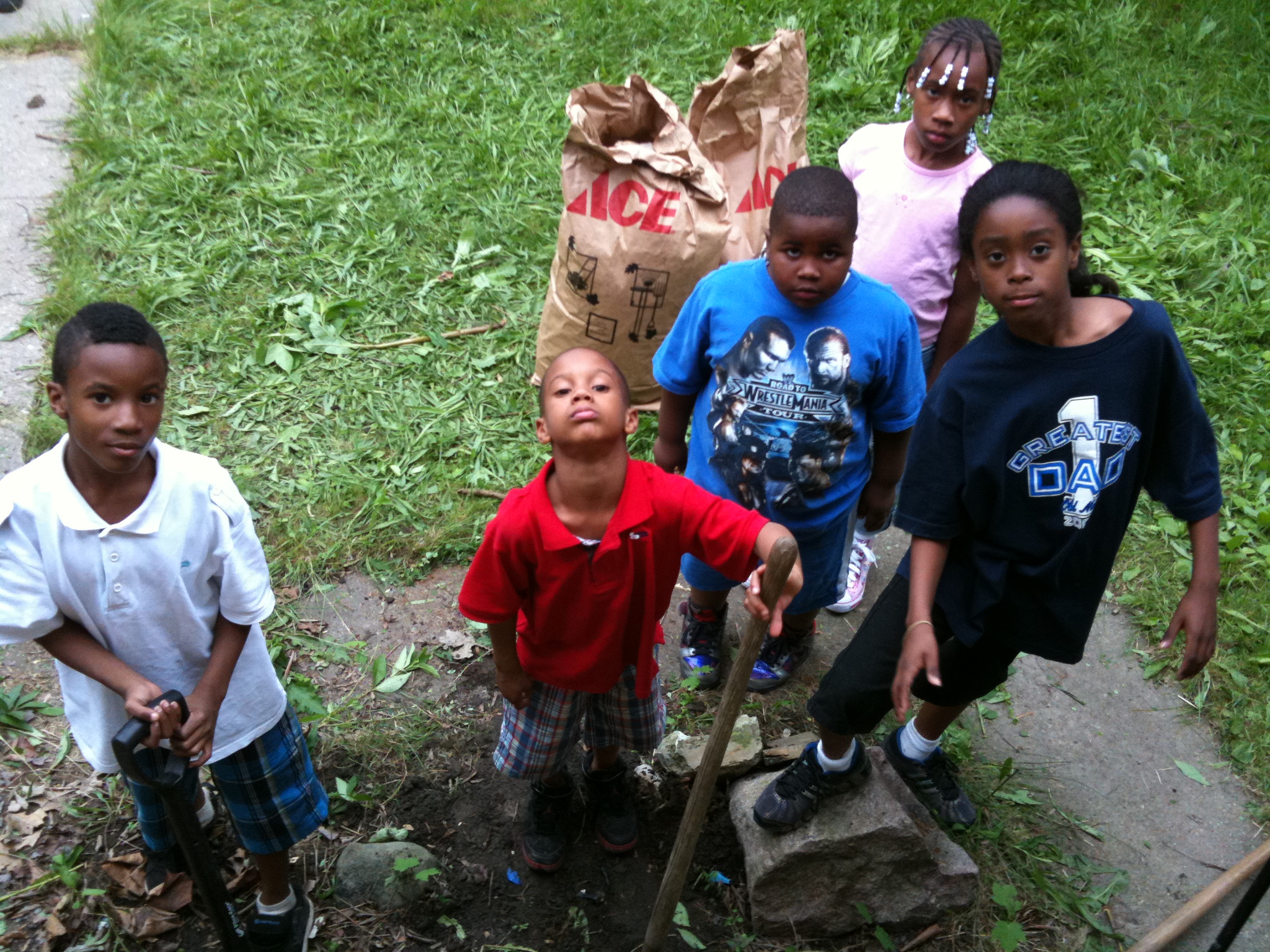
Hitherto that sweltering afternoon our primary interaction with the Highland Park community involved people from the neighborhood coming to us. Kids helped us pull weeds and remove bushes. Adults sat in on classes, sometimes, or walked around, carefully observing our work. Friday was the first day that we, the participants of GELT, collectively went to meet the people we’ve been working to serve. Armed with clipboards, sign-up sheets, and flyers, we fanned out.

Upon reaching the first household in my assigned turf, the southernmost region of Highland Park, I was stunned to discover that the words I had so smoothly recited that morning were not so smooth anymore. It was as though I suddenly had no clue what I was doing anymore. Luckily, my inner nervousness and confusion didn’t flow outward enough to repel absolutely everyone, and I was able to gather a few signatures in the first hour or so. I eventually tweaked my spiel to something that was comfortable for me to remember. But still, in the journey between each door, I kept scrutinizing my tactics. Am I talking too fast? The way I stammer is so embarrassing! Am I saying too much? Did I forget to say ‘thank you’ to that last lady? Is there something in my teeth?

Even when I was able to overcome self-consciousness, though, I felt that there was a moderate disconnect between me and the people I visited. Thankfully, most were friendly, and no one slammed a door in my face, but the people appeared wary of me sometimes. Given my unfamiliar face and the clipboard I was carrying, perhaps I was mistaken for a census worker or a salesperson before I opened my mouth to speak. Some were incredulous that the home energy visit I was describing was free. Others seemed suspicious of me, and they asked me where I was from and whether I worked for a utility company and was trying to get them to switch their service. It was as though there were walls of thick glass separating us, sometimes, making communication challenging.

In addition to reflecting on my own actions those of others, I was also mindful of my physical surroundings. My canvassing partner and I covered a total of three streets in that afternoon. Each street had its own character, its own look. One street was filled with lovely houses and breathtaking gardens, but there weren’t that many people outside enjoying them. The next had houses that were shabbier, but more people were congregating and conversing on porches. The last one was a mix of the two. What a contrast from my neighborhood, where every house, every street is a copy of all the others.

Despite the many abandoned and decrepit houses I saw everywhere, I noticed that immense vibrancy existed among the pockets of squalor. People were walking around, greeting their neighbors. Kids played together and adults watched out for them. What’s more, there were plants growing EVERYWHERE. Lawns, left untamed, exploded with greenery. Leaves and vines grew out of stairs and floorboards. It’s as if millions of sinewy green hands are emerging from the ground to pull the houses into the earth. How ironic it is that places like Highland Park are often thought of as sites of urban decay, when so much growth is taking place.

Since our goal in GELT is community building, not gentrification, it is vital to tap into the positivity that already exists here, rather than assuming that we have all the answers and that we’re here to rescue the weak and the downtrodden. On Friday, we GELT-ers made connections through our canvassing work that I hope will evolve into a strong network of people who will shape their neighborhoods into comfortable, sustainable living spaces. Together, we’ve already gathered about 50 signatures from people who want to make their homes more energy efficient. From here, our impact shall grow.

Reimagination: When Recovery Doesn’t Cut It

A number of big-picture things are not going to well recently. The Gulf Oil spill shows no signs of ceasing, and now the Atlantic hurricane season threatens to halt control efforts and spread petroleum around the American South (perhaps even through rain!?). Despite massive youth electoral efforts in 2008 to place climate champions in political leadership, policy efforts towards climate and energy solutions have been lethargic at best. And despite over a trillion dollars in economic stimulus spending, recent data shows that the national economy is still slipping steadily deeper into decline.

These three cases display a common pattern – failure (of energy companies, the political process, and our national economy) is being treated like an accident from which we need to recover to normal working order.

The accident-recovery story is holding us back in three very important ways:
1. It helps erase our memory of the ways that business as usual hasn’t been working for a great many people for a very long time.
2. It disguises the fundamental and systemic nature of the challenges we face and legitimizes management of the problem using the ways of thinking that created them, even when this way of thinking proves ineffective repeatedly.
3. Because it normalizes business as usual, it mystifies reimaginative approaches that shift power and agency, making them seem unrealistic or irrelevant.

In this blog post, I’ll demonstrate how this happens in the context of my current work in the Twin Cities Summer of Solutions in Minnesota, and how we’re trying to overcome accident-recovery stupor.
Continue reading

A Critique of the United States Social Forum

Authored by Monika Kothari: Her 2nd installment during the GELT

The USSF has a list of “principles”  at the beginning of its program that almost nobody reads. I didn’t even know that these existed until a woman in one of my workshops began quoting from it (and was met with looks of confusion). To me, this fact alone, the fact that few people read these principles or even know that they existed, inherently means that not everyone—perhaps not even a majority—agree with and adhere to them. Actually, I found that one of the clearest underlying problems of the USSF is the lack of vision, unity, and shared goals. The forum succeeded in bringing together people of diverse backgrounds, and with diverse agendas, into the same space in time…but more often than not, failed at allowing these interest groups to confront and interact with each other in a meaningful and productive way. Even with all of these thousands of socially conscious people on the same plane, it is virtually impossible to make important breakthroughs as the “artists,” “feminists,” “environmentalists,” “socialists,” and “anti-Zionist Jews” section themselves off. More than that, there is an overwhelming sense of personal isolation and aloneness, both physically and mentally. Some people withdraw from the massive crowds, while others become so tightly wrapped in the cocoons of their organizations, logos, t-shirts, causes, and identities that the human beings disappear behind all the politics. Many of us found ourselves confused, disoriented, and frustrated, and in those moments of mental exhaustion, felt incredibly alone, removed, and isolated.

Continue reading

The Answer is Blowing in the Wind


See car on the road for scale

Last Sunday afternoon my day was rudely interrupted when the power went out. It was off for less than three hours but for that time I felt completely incapacitated, disconnected from the rest of the world and lost, not being able to do anything productive. Though logically I knew it was true these three hours demonstrated, more then all of the facts and figures I have learned, just how dependent we are on power to function on a most basic level.

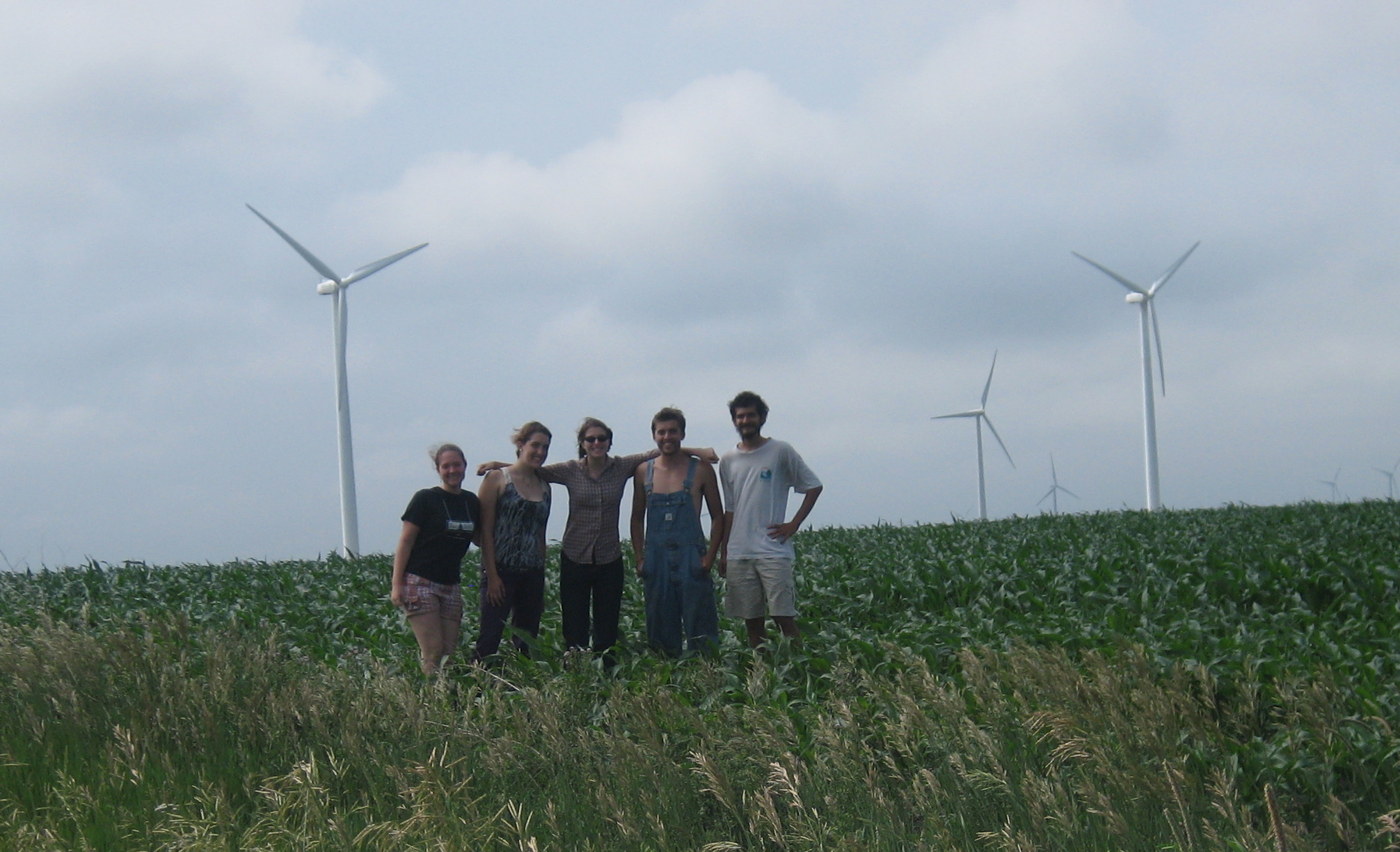
This realization was quite timely, just after our visit to rural, Western Minnesota and one of the largest wind farming areas in the country. Minnesota is leading the country in wind power. Driving by farms of corn and beans we could see hundreds of wind turbines all around, it almost seemed like the cute baby .75MWs were slowly growing into larger adult 1.5MW turbines as we continued down the road. While impressive from a distance I was not prepared for the sheer magnitude of a wind turbine up close.

Continue reading

“If we don’t do it, who will?”

That’s the question we asked earlier this week when discussing who should research possible alternatives to the high-voltage transmission line slated to cut through the neighborhood we work in.

Transmission lines are necessary, you may say. For the most part I agree. There have been a few brown-outs in South Minneapolis, and the utility claims there is a significant shortage. (Although no independent studies have confirmed this) It’s true: we need to get energy from where it’s captured to where it’s needed.

What I’m thinking about this summer is: What if neighborhoods could produce, consume and manage their own energy, and grow to be independent of private and public utilities who often ignore their needs and experiences? There has has been little to no consultation of the people who live in this mid- to low-income, diverse neighborhood.

Why aren’t new highways, transmission lines, railways,  power plants planned in Mac Groveland? Northwest Portland? Why are they in South Minneapolis, in Vanport? I won’t go too far into the environmental justice implications here.


An example of high-voltage transmission lines

Some of us attended a meeting about the possible alternatives that included state representatives, non-profits, state university researchers, community groups etc. At the end of the day, none of the well-established entities would accept the task to research alternatives. The funding has been unalotted for the research, and no one will accept the project A) because there is no money for it, and B) pitting oneself against one of the largest private utilities is (“potentially”) political suicide.

Who better to take on the project than a bunch of enthusiastic, naive college students? Exactly.

In this case, (and perhaps others too) youth is an asset. Keep you posted.

The next step for environmental justice.

I love eating fresh veggies and fruits when I know where they grew and who grew them.  There is a large assortment of photos of me at various ages crouched in a strawberry field with my hands and face stained red.  I’ve got some tomatoes and peppers and herbs going in the backyard here.

So it might be disconcerting to hear I’ve felt a lot of resentment for the local food movement.  As the “eat local” push was gaining momentum the enormity of climate change was consuming me.  The local food movement I experienced up to this summer was mostly white, relatively privileged and, as I perceived it, somewhat self-indulgent.  Modern agriculture isn’t the only root of climate change, so why pour all your effort into an alternative only a few people can afford?

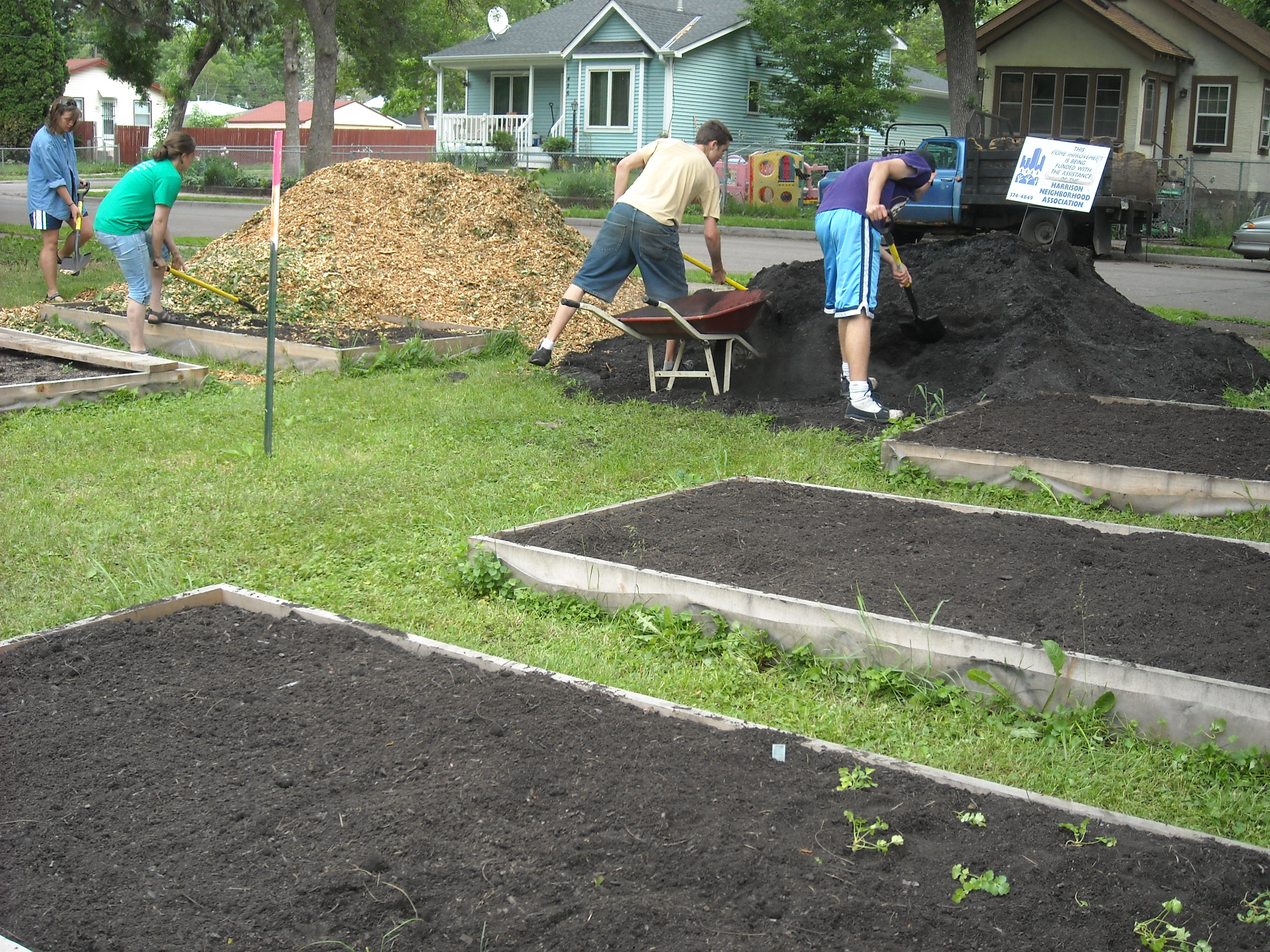
I got off the phone last night with Annie Young, an Environmental Justice (EJ) organizer for the Harrison Neighborhood Association (HNA).  I had written the start of this post and then taken a break for dinner when she called.  While my opinions on local food have evolved significantly in my weeks here, that conversation with Annie put the last nail in the coffin of my previous views.

Planting in Process on Logan Ave


Continue reading

Have the alternatives been exhausted? (After being exhaustively explored?)

Xcel Energy has one reasonable rationale for their proposed high-voltage power line through South Minneapolis, specifically the Phillips neighborhood, near Lake Street, at first glance: there has been growth, especially in institutions such as hospitals that use large amounts of energy and indisputably require reliable energy. Blackouts in hospitals are obviously a bad thing.

However, is putting through a new power line that’s just a continuation of the current energy-production regime the only option to provide reliable energy? In the face of climate change and fossil fuel depletion and economic challenges, is that the best system to perpetuate? What about being able to use less energy through efficiency measures, many of which are relatively easy, inexpensive and can be done by the large organizations as well as by individual households all around the area? What if there were a few solar panels on homes and small businesses? These options aren’t impossible, are they?

This might not provide all of the community’s energy, but could it possibly be a method in which the energy demand gap could be made up – and provide a basis so that more of the community’s energy could be produced in such manners in the future? Could it engage the community in working individually and collectively on their own energy? Are families,panaderias, groceries, hospitals, banks, churches, mosques, YWCAs and Scandinavian gift shops limited to being consumers of energy, disconnected from its mysterious production? Or, could they be a part of taking ownership of even a small part of what daily powers their homes and places of business, recreation and worship?

More fundamentally, what are the details of the increase in energy usage? What do the various individuals and organizations in the community think about their energy usage? Are some of them already employing energy efficiency materials? Is there any hidden interest in more energy efficiency and renewables that just haven’t found the opportunity to manifest itself? Could this be that opportunity?

Essentially, do we really know if the new power line is necessary if all these questions haven’t been answered? Can we find answers to a lot of these questions? What might those answers tell us about the necessity of the transmission line?

TOGETHER WE RISE

For the past few days, my younger brother has been reading a book for school called The Fate of the Earth. If the title weren’t depressing enough, the book primarily consists of an account of the hysteria over the rise of nuclear arms, the resulting existentialism, and what those arms mean for…well, The Fate of the Earth. Supposedly, with the development of these weapons in the 1940s, humans officially became the first species in history with the potential to devastate not only our own population, but every other species, and quite literally the entire planet. Even today, nuclear annihilation is on the world’s mind as the greatest potential manmade disaster.

The truth is that humankind developed destructive potential long before the rise of nuclear arms, and the greatest threat to our extinction today is not a nuclear threat, but an ecological and environmental one. We are the only species that is knowingly and voluntarily causing its own demise…literally. Okay, so I know we all know the story. Everyone and their mother has seen An Inconvenient Truth, heard politicians use catchphrases like “green energy” and “sustainability,” and thrown things at Glenn Beck. But too many of us, like me, are used to sitting on our butts at home, preaching from a high horse about turning the tap off while brushing our teeth.

The most difficult part of “environmentalism,” from my point of view, anyway, is internalizing it. Learning to see it as a movement that is not foreign or outside of oneself is difficult. When we watch the news, we are passive creatures, mentally absorbing oil spills, holes in the ozone, floating piles of garbage by the Great Barrier Reef, and distancing ourselves from them. But when we encounter those things up close and personal, and when we can physically see the differences our personal choices make, we realize how big and important this whole thing is. And it becomes most evident on a local/community level. I know it all sounds cliché, but it’s true.  And that is why I have decided to spend my summer in Highland Park, Michigan as part of the Green Economy Leadership Training.

Continue reading