Canterbury Garden in the Works

An update from Summer of Solutions Arleta!

In mid-February, we met up and discussed some visions that we have for the garden at a local elementary school which include monthly or biweekly cleanups and tree care. We took a short tour and learned some background info on what we’ll be diggin’ into and plant the growth that is deeply welcomed in our lives and those of our community. There is an application that will need to be filled out to be able to work as a volunteer during the day and after school hours. There is a lot yet to be communicated, but for the most part things are moving forward. :) We will be continuing to do some work on Fridays.  Come and share your visions and work on spreading a beautiful message through gardening to the 1000+ children attending this elementary school. There will be some milk and cookies, and maybe coffee too. ;)1

Continue reading

Insights from the Next Generation

Hello friends, and happy (almost) spring!

I’m Sara, a first-year intern at Growing Food and Sustainability. I wanted to tell you all a little bit about one of the great things I have been able to do with our team so far this year. Beginning last fall, I began working with our GFS team at Clark Street Community School; over the past few months, I have been fortunate enough to co-lead their weekly Ecology Club meetings. In our 90 minutes together on Friday mornings we have had some amazing discussions already, and I imagine they will get even better as times goes on and we move from inside the classroom to outside in the garden.

A lot of what we have been talking about over the winter season has related to general questions of sustainable living. Currently, they are working away at a bottle-recycling program with other organizations in their school, and we have started some plants under light tables–just to get our hands a little dirty this winter! We have also done some great asset-mapping exercises to help them realize how effective they can really be as agents for change, and how their talents and networks really matter when it comes to making a difference.

We have about about 10-14 youth at each meeting, which is so exciting to see–it’s a great combination of returning students and new faces! These kids are from a wide variety of households and labor backgrounds, and in the first days of each quarter one of the most interesting things for me is learning what makes them tick and where their realm of experience is rooted. We have had some wonderful “get-to-know-you” sessions, where we talk about everything from where we like to go in our free time to what our ideal superpower would be (who knew there were so many people who would swim to the bottom of the ocean?).  After these sessions, I feel like we are all on the same level, all ready to tackle some really important and difficult issues.

The various backgrounds in our group have made for some diverse discussions; we have a dairy farmer who wants to make it a career, a boy who loves all things motors, a girl who loves drawing, horses, and “being outside away from the city,” a boy with a wry sense of humor and a starkly realistic view on political and global military relations, and of course, plenty of budding environmentalists–who also love their iPhones and video games. The things that these students know surpass a lot of what I was thinking about (or at least actively discussing) in high school–it’s incredible. One boy talked about methane digesters during our first discussion about current alternative technologies that are being explored; another explained that in order for ideas like composting, consuming less, or consuming differently to become popular, people simply need to start “walking the walk,” and per societal norms, the rest will follow. They have amazing insight, which is so refreshing for me, especially since I haven’t been in a high school environment for nearly a decade–and let me tell you, as much as I wish I could say so, I was not concerned about the future success of methane digesters ten years ago.
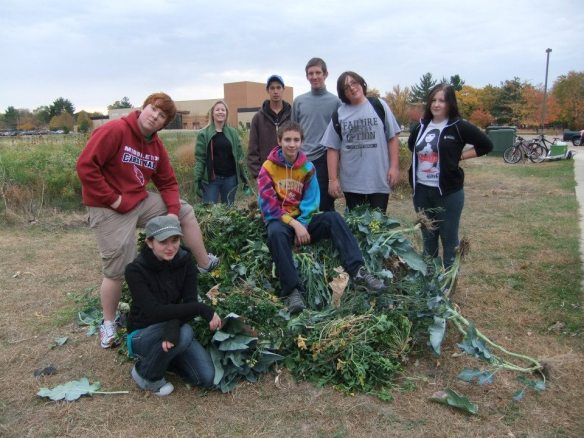
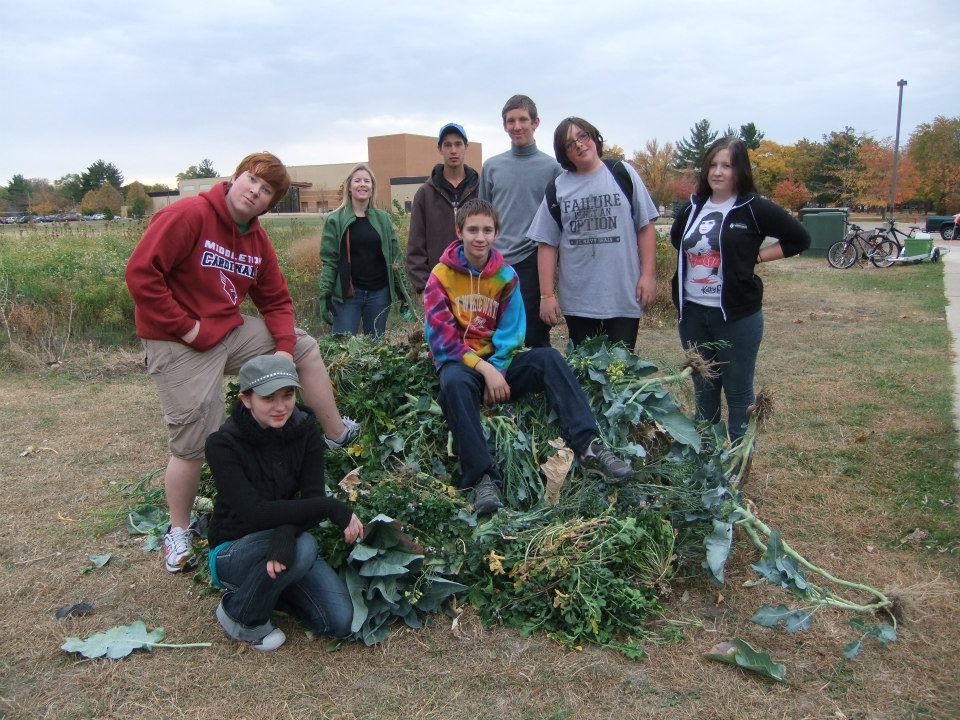
1Clark Street students helping us clean up the youth farm last fall Continue reading

Alumni Spotlight: Colin Higgins

Hello!  My name is Colin Higgins, and I participated in Summer of Solutions last summer with the Middleton, WI program called Growing Food and Sustainability.  My initial motivation for participating in SoS was that it was a project based in the community where I grew up that was focused both at youth education (which I am passionate about) and sustainable agriculture (which I am also passionate about).

I think one of the main things that I took away is that I really enjoy teaching others, especially youth, about environmental issues and solutions.  I also learned that all students have very unique motivations, interests and backgrounds that led them to our program, and I really enjoyed learning about those as well.

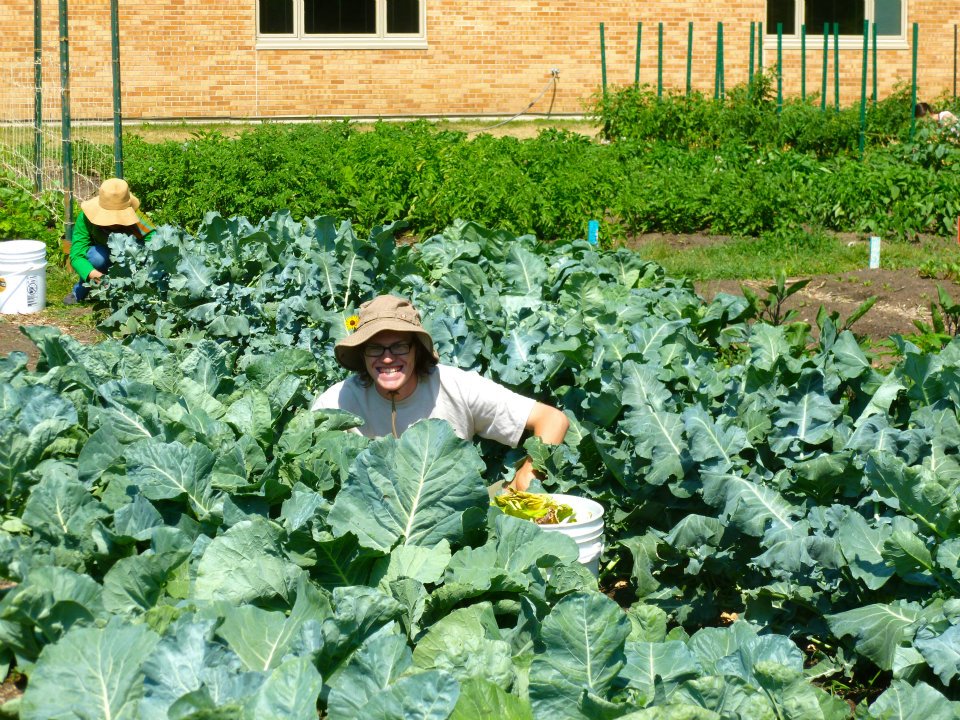
2Colin at the Youth Farm

Continue reading

Farming Bards’ February Blog

Hi everyone!

As February comes to close, we are getting close to planting season. Also, at the same time, our to-do list is longer than before. We are busy planning how to secure plots of land for our gardening projects, reaching out to schools and potential partners, as well as getting the nitty-gritty of our budget organized.

Amidst all this bustle, one of the key things which we picked up from our program leader, the incredible Peter Hoy, is that we have to be able to express our vision for our organization to everyone we reach out to. Now, that to us seems like a huge task! Not only do we have to be precise on point when we are doing this (Let’s face the truth: Potential partners are not always our friends from high school who would happily stay up hours listening to our ramblings), we also have to be able to reach out to community members at different age groups—kids from middle school to high school, their teachers, personnel from our partner organizations, members in our Church community, and so on. In other words, our message should be packed tight and snug in slightly different but equally attractive bottles. Continue reading

Alumni Spotlight: Nathaniel Cook

Hello! My name is Nathaniel Cook, and I participated in Summer of Solutions in 2009.  I became involved in SoS after having a discussion with Summer of Solutions leaders at the 2009 Nobel Peace Prize Forum at St. Olaf College.  I left the conversation thinking that SoS would be an informative experience that would allow me to grow as a young, student leader while making real, substantive change in how we, as a society, approach environmental sustainability. The experience proved to exceed all of my expectations.

Through SoS, I developed the skills necessary to talk about sustainability-related issues with people from all walks of life, and gained the knowledge and confidence necessary to do so. Summer of Solutions also gave me a new, better-informed perspective on environmental and social issues that helped formulate my values. My favorite memory is working alongside students who exemplified what it meant to be well informed, proactive, and inspiring young leaders.  Their mentorship empowered me to meet with community leaders and develop plans for collaboration.  I was so inspired by my experience that when I returned to my college campus as a sophomore in the fall, I helped lead an environmental movement that changed the campus’ ethos and physical operations. By engaging our peers, we helped start the campus’ first student-led organic garden, an “eco-house” for student living, improved campus operations, and made sustainability one of the core focuses of the college and its curriculum. Continue reading

Ideas All Around

Greetings to you all out there in blogging land!  I hope that all is going well for you this February.  In Middleton, things have been going extremely well!

January 17th through February 8th has been a glorious rush of ideas and planning for us.  This all began when we arrived at the United Church of Rogers Park in Chicago.  This was the location of one of Grand Aspiration’s January Gatherings this year, where all the leaders of programs throughout the Midwest (and this year from Hartford, CT, too) gathered to learn, teach, and enjoy each other’s company.  Though I have been involved in Growing Food and Sustainability for over a year, this was my first January Gathering and it was quite an experience.  The week contained trainings on everything from the abstract early in the week (the green economy, and the larger systems organizing our world) to the concrete towards the end of the week (such as the best way to message and frame the work that we are doing). I also helped to facilitate a community organizing training, which was a relatively new and informative experience for me, as I had never facilitated a training for such a large group of people before.  Towards the end of the week, we had some time to get together as a team and begin to create plans and share our ideas for our summer, and everything that goes into making it possible.  It was a process that was slightly overwhelming, but in the end yielded many great ideas and much excitement for the semester ahead.

1Facilitating the Community Organizing Training Continue reading

Getting to Know Our Community

Project Youth Green provides 60+ farmers with plots for a small fee that creates a sense of community in the city of Pacoima.

Last weekend Jackie and I (from the Arleta SoS program) had the opportunity to meet a couple of folks who have planted some veggies on the land supported by Project Youth Green. PYG is a part of the Youth Speak Collective organization. Youth Speak Collective has many branches that engage the youth on productive projects. These projects are long-term in scope and involve the community along the way.

We took a look at the gardening branch of PYG which allows for members of the community to rent a plot for the year with a small fee of ten dollars a month. Located on a hillside, this garden space gives us a sense of serenity. The streets below hold bustling cars and the fast pace of a busy city. In the garden we see bees pollinating, families enjoying nature together, lots of good energy emanates from the people around us and the plants that welcome us to this lovely place. A fruit tree orchard is found on one of the hills. Seeing the avocado trees makes me crave some yummy homemade guacamole. Now I see what the modest fee is for. This cost covers the plants most essential element for nourishment, water. This allows for residents who live in a place where there is little to no space for gardening the opportunity to grow something of their liking on a piece of land. Farmers can either consume the food they grow or trade with the 60+ farmers growing food there.

asos1

Its not the first time I see something amazing like this happening in our own Valley. It is people that keep that motivation high for the rest who want to contribute to the solution. I’m glad that I had the chance to spend time with my team member and absorb the beauty that keeps on thriving with the help from people. We also met and talked to some vendors who were selling crafts, homemade dips, and citrus fruits. On this particular day PYG had a DJ and various vendors for the Farmer’s Market that they host every first Saturday of each month. Continue reading

Alumni Spotlight: Emily Stiever

This post is from our Alumni Spotlight series, featuring stories and reflections from past Summer of Solutions participants. The 2013 Summer of Solutions programs are now accepting participant applications!  Apply here!

Hi All! I’m Emily Stiever, a native of Minnetonka, MN.  I was part of the inaugural batch of Solutionaries at Macalester during the summer of 2008. As I think back now, it’s difficult to remember exactly how I stumbled across the awesome group of people that morphed into Summer of Solutions (SoS). I think I had just come back from studying abroad in Nicaragua and I heard about the first January Gathering (in 2008). I have a vague recollection of showing up for a meeting at Macaleter’s Eco House over winter break and (since I got the time wrong) everyone was still sleeping. But once we got going, the January Gathering was really interesting and I was on board for spending the summer at Macalester and working on a number of the projects we’d dreamed up.

My experiences in SoS
One of my favorite experiences was riding back from a meeting at the Ford plant one evening. We’d just come from having a great discussion about ARISE (The Alliance to Re-Industrialize for a Sustainable Economy), “a coalition of local stakeholders, advocacy groups, and students seeking to create a sustainable redevelopment plan for the closed Ford factory in Highland Park, St. Paul.”  (The Twin Cities SoS program will once again be working with ARISE this summer!)  It was warm, and we all biked quietly home along the river trail on the Mississippi. It was one of the first times where I could see what my life could look like in the future: the ability to work on social issues that I cared about and to live sustainably in community with people who shared a similar passion. SoS helped me translate a general feeling of, “it would be cool to work on these issues at some point in my life” to a much more tangible, “this is how my life could look now.” The experience helped me clarify what I am looking for, both in my professional life and how I want to live personally, and has guided me as I’ve sought out living arrangements and jobs in recent years.

1The other big take-away from my experience with SoS was the need to ground my activism and social justice work in extensive background knowledge about the issues. Throughout my summer in SoS, I learned a lot about climate change and renewable energy. Timothy, one of the program leaders, taught an ExCo (Experimental Community Education) class on climate, we met with multiple speakers, got into the nitty-gritty details of how to implement an energy efficiency program with Cooperative Energy Futures, and I borrowed a couple of great books from others in the program. I learned a lot of information that summer and I am surprised even now how often I use that technical and philosophical information even today. Continue reading

National Participant Application Open!

Calling all Solutionaries!  The National Participant Application for all Summer of Solutions programs is now open!

During the Summer of Solutions, you will receive training in community organizing and sustainable community development techniques. You will use these skills to demonstrate the promise of energy efficiency, community-based energy, green industry, local food production, and/or smart design as described in the locations you choose. Beyond the concrete skills you learn, Summer of Solutions will be a really fun community-based experience. It is a great chance to grow with, learn from, and work with other incredible young people and community leaders who are building a better future.

Not sure if you should apply?  Follow our new blog series, Alumni Spotlights, to hear from past Summer of Solutions participants about how their experience changed their life and prepared them for a life of solutionary work!

Now accepting participant applications: Arleta, CA; Chicago, IL; Hartford, CT; Iowa City, IA; Ithaca, NY; Johnson City, TN; Lexington, KY; Little Rock, AR; Middleton, WI; Oakland, CA; Raleigh, NC; Southern West Virginia; Twin Cities, MN; and Washington, DC!

Applications for the priority round are due on 3/3/2013 and applications for the final round are due on 4/14/2013. Some programs may keep their local applications open beyond 4/14, but there is no guarantee that any specific program will do so.

Find more details and the online application here!

Lexington Gearing Up for Year 2

Full Circles Foundation Lexington has begun talks and preparations for 2013’s summer program. As we enter our second year, we are so excited and thankful for the success of our inaugural year. In less than a year’s time we were able to build a program for Lexington middle school girls encompassing curriculum for a strong self, a healthy earth and a fair economy. What did we do? Everything from self-defense classes for a strong and prepared self, a photography project to build local pride in our community, to trash to treasure micro-ventures to support camp finances, and even swimming in a creek at a local nature reserve. Our summer was filled with community building and memory making for instructors and campers.

1 Continue reading